An ode to Olle

I first met Olle Bergman on a crisp summer evening in 2018. He was visiting our university to present at a TEDx event, but some of us – members of the biochemistry & cell biology club – got the opportunity to attend a special session with him, before his presentation. My friend and I were running a little late to the event, and much to our chagrin, the only seats left in the seminar room were the ones in the very front row, right under Olle’s gaze.

Within minutes, Olle had the whole room mesmerised by his passion for language, semiotics, science, and communication. He was extremely animated and charismatic and unafraid of asking deep, open-ended questions to the audience. So when he asked, “Does anyone here write? Perhaps on a blog?”, I knew I had to raise my hand to tell him that I did and that it was fundamental to my being. He looked right into my eyes as I was speaking, beaming with pride – a kind of pride that emanates from someone who has nurtured you their whole life. He didn’t know who I was, what I wrote, or why I was brave enough to tell my story. He then said, “Send me the link! And keep up the good work!”

It was in that moment that I knew he was going to change my life profoundly. And change he did.

For the past year, I have struggled to finish this piece. I have written it out on paper, in many journals and notebooks, in my notes app, and here, on this blog. Not only was I in complete shambles by the second paragraph every time I tried, but I also felt like my words wouldn’t do him justice. And I also wished he’d be here to read this, to give me constructive feedback, and to tell me how glad he was about our paths crossing. The grief hasn’t left me or quietened down. I have struggled to write anything at all, knowing that he’s not here to edit it for me or inspire me with bigger and better ideas.

But then I realised that he wouldn’t have wanted me to slow down like this, to feel any sort of obstacle in the way of doing what I love the most – writing. He would have wanted me to continue putting my thoughts on paper, sharing them with the world, growing, learning, and staying curious. So I have decided to do just that, and what better way to pick up the pen again than by remembering the person who was a guiding light for me during uncertain times, and one of my biggest cheerleaders.

Olle had a zeal for life that I had never seen before in anyone I had met. He was always in the present, enjoying the big and small moments, but also constantly looking forward to the next exciting thing. He could be working on a lecture series, but he would already be thinking about his next book. He would write letters to those he cared about, documenting in detail the events of his life, not ever expecting one in return. He was just happy to share a bit of himself and the beauty of the world through his eyes. His goal in life was to never be boring.

He was also a deeply compassionate man, unafraid of sharing it with anyone he met. There is an army of people dotted across the world who have the most endearing stories of their encounters with Olle, and how he would always remember to check in on them and remember the little things in their lives. You could rely on him without having to ask, and he would be the first person on your doorstep if you ever needed help. If you were on a call with him talking about your life in London, he’d give you a list of approximately 20 people he knew in London who would be willing to give you company, out of goodwill for Olle.

Anyone whose life he touched turned into magic.

And oh, was he grateful! Through every good and bad day, Olle would find reasons to be grateful for the better things he had experienced, for the life and family he had, and for the wonders of nature. He could be upset about something and still be grateful for the people he was surrounded by, the woods behind his house, and how the evening felt the day he welcomed Midsummer with his family.

I have many, many more adjectives to describe the man he was, but these were the qualities I want to remember him by because he helped me appreciate the little things in life, see beauty in the mundane, and keep loved ones very close. To this day, the latter is a resolution I make at the start of every new year.

I could share more anecdotes about Olle and our myriad conversations, but all of this is now deeply sacred, stored away in a special place in my heart, to be cherished for the rest of my life.

Thank you, Olle, for your brightness and your wisdom, and for being an unlikely pillar of support. I think about you every day, and I do hope you are proud of me.


Read more about Olle and his life: In Conversation – Olle Bergman

Long time, no see.

It feels surreal, to sit in front of an empty WordPress draft, trying to find the right words after what seems like eons. Perhaps the end of my hiatus will inspire One Direction to end theirs. We’ll see.

Why this website has cobwebs on it, I will never know. The excuse I have been giving myself this entire time is that I have been busy. Between work, feeding myself, cleaning my surroundings (my singular room in a flat share, might I add) and seeing friends and family at regular intervals, I’ve been running from one thing to another, and reflection and creativity have eluded me. I have pushed all inspiration aside and told myself I would find the time another day. It took me nearly 6 months to find the day and only I am to blame.

WordPress sent me monthly stats and the low numbers had no effect on me. I was telling people I loved writing but then bit my tongue because I was lying; I had nothing to show for this so-called passion.

However, the greatest force that has been stopping me; making me ignore this project, is the loss of someone exceptionally important to me. He was a muse, a mentor and everything in between. The words on this site and everything I have written over the past six years would not exist if it weren’t for him. Someday I will find the courage to write about him and his legacy, but as I revive the blog, I realise that this is what he would have wanted; for me to never put down the pen, no matter how difficult it gets to say what I want to. I find peace in knowing that through this blog and all of my other recent achievements, he was proud of me in ways I never really understood.

I’ve spent all this time reading a lot, spending quality time with loved ones, trying out things outside of my comfort zone, but mostly unlearning a lot of behaviours I had internalised in the past six or seven years, and opening myself up to learning new, healthier ones. While it’s not easy, I have enjoyed myself grow and glow in the process. I am nowhere near the end (are we ever?) but I am allowing myself to take it one day at a time (close friends and family will say I am in fact, not, but I like to believe I am). I waited many months to go to the Eras Tour and it was truly a crowning moment. I cheered my sister on from the sidelines as I watched her accomplish important milestones and grow up, I met my best friend after seven years and we picked up where we’d left off. It’s been eventful, and I’ve been happy.

We’re here now though, and you’re reading the first post in many months. I don’t know when I decided to quit being lazy and stop looking for excuses when there were none, but writing this post, I’m glad I did.

This post is shorter than most of what I house on this website. But as always, I have lots to say, and it will come to me, and to you, in good time. For now, all I can say is that it’s good to be back.

Yours,

Ushashi

Featured image by Nithin Anand

Review: Atomic Habits

I systematically avoid reading self-help books, or any book that promises to dramatically change my life on the cover. This is not to say that self-help books haven’t ever worked for anyone, or that they are all entirely baseless — they’re just not for me. I struggle with the authority these books tend to establish and as I walk past the self-help section in a bookstore, I cannot help but ask, “why should I listen to you?” or “what is the truly groundbreaking advice you have to offer, that my mother hasn’t shared with me in the past 25 years?”

For many years, that is what I thought about Atomic Habits and I refused to even read its blurb, in spite of recommendations from people I trust with book recommendations. But one life-changing event and plenty of time on my hands to suddenly focus on myself, Atomic Habits landed impulsively on my nightstand. And while I determined that I had nothing to lose at the time, I find myself on this public forum today, ashamed to declare that I actually enjoyed the book.

James Clear, blogger (now author) and former baseball player, has compiled an easy-to-follow manual of how to implement new good habits into your life and maintain them to the point that they become an integral part of your very identity. He emphasises on consistency, patience and time throughout; Clear writes that consistently performing our habits and remaining patient about their outcomes has more power and impact than we give it credit for. These habits can be as miniscule as a grain of sand, and before you know it you’ll have a wonderful beach at your disposal (apologies for the cliche). That these habits are supposed to be good is a given. Clear leaves it up to you to decide what is a good habit for you and conversely, what will end up being a bad habit in your life.

Clear has laid out a very clear plan for you to develop good habits and hold yourself accountable when you catch yourself slipping. Make sure the cue for you to perform the activity is obvious and attractive, and the activity itself is easy to do. The actual habit should also be satisfying to engage in. Finally, reward yourself with something attractive after you’re done. “Easier said than done,” my brain grumbles, while also making me stick page markers to make note of the process because who knows, it might just work.

What stands out amidst all the graphs and tables and doodles though, is Clear’s humility. He doesn’t claim that his methods are foolproof and he doesn’t diminish the quality of your current life. He does not appoint himself as your life-coach either. His approach is simple – if by chance, you would like to improve a few aspects of your identity, here’s how to do it, remember to start small and not give up at the first obstacle. Based on this brief character analysis, I don’t think one would be bored and vexed out of their minds if they were to meet Clear for a cup of coffee.

However, the book does lose momentum a little more than halfway through, and in repeating himself to exhaustion by the end of the book, Clear has made sure I never pick up a self-help book after Atomic Habits. But repetition warrants routine; if you repeat a good (or bad) habit enough times, it will, undoubtedly become a natural part of your day-to-day. One could say that this narrative technique is nothing but Clear’s subtle strategy to stress on the power of repetition.

It also goes without saying that Clear fails to consider cultural and socio-economic nuances in his formula: reinventing your life by writing down your habits and scoring them based on their worth in your life — one of the methods Clear suggests — is often a distant fantasy and a privileged way of living, when you have very little choice in deciding what is good and what is bad for yourself. You are selfish. A topic to deliberate on another time.

Everything said, the converse of what I stated when started this review with is also true: who am I to challenge these so-called experts and review their hard work on my insignificant blog? I have not cracked the code to good living and I am definitely not a world class athlete. But I like this vantage point and I like the mediocrity. I think I’ll keep some of my bad habits.

So I don’t know how far I am willing to go to implement any of Clear’s methodologies in my life (I can report back in a year), or if I will remember any of this in a few months’ time. If I find myself at an impasse, my wise mother is only a phone call away and Atomic Habits will become a mere breezy summer read.

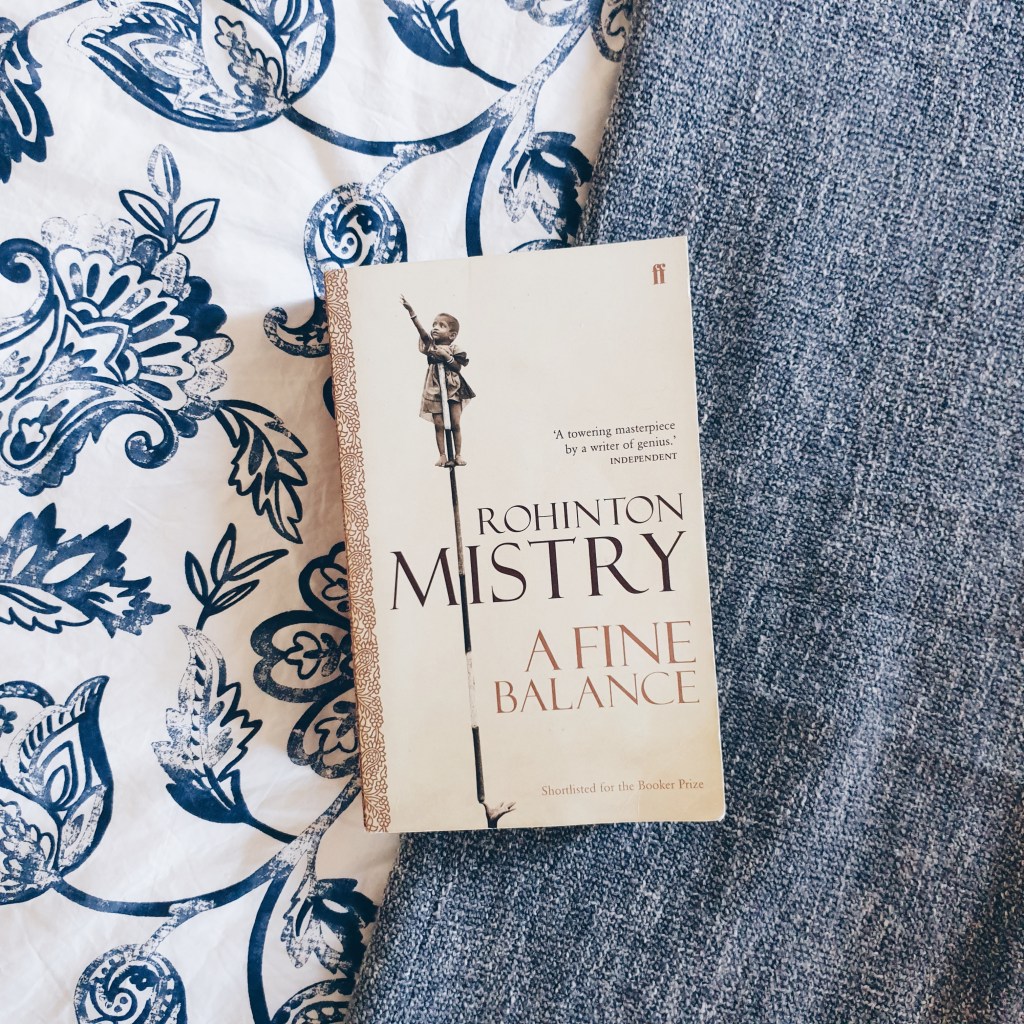
Review: A Fine Balance

It has taken me a while to come around to writing this review. Rohinton Mistry’s A Fine Balance has left me at a complete loss of words to put my thoughts into. But it also wouldn’t be right to not say anything about this remarkable novel and its all too real portrayal of the human psyche and the ways in which it justifies its most atrocious tendencies – it is a masterpiece in every way imaginable.

A Fine Balance opens simply: uncle and nephew duo Ishvar and Omprakash Darji are headed to an unnamed but busy city for jobs; specifically, jobs from a Dina Dalal who is looking to hire skilled tailors. On the train, they meet Maneck Kohlah, who, unbeknownst to Ishvar and Om, is also on his way to Dina Dalal’s flat; his mother and Dina were old school friends and they have arranged for Maneck to rent a room in Dina’s flat so he doesn’t have to live in the rowdy student hostel. Over the course of the next year or so, the lives of these unlikely characters become inextricably and they change each other’s fate in the most gut-wrenching yet poetic way.

Set against the backdrop of the State of Emergency declared in India in 1975 under prime minister Indira Gandhi, A Fine Balance explores how the political environment of the country and the rampant violence and corruption during those 21 months affected the different socioeconomic classes of India at the time — depicted through Dina, Maneck, Ishvar and Om who come from strikingly different backgrounds and whose outlook of society varies by the injustices meted out to them. Mistry’s novel provides a very vivid glimpse of a highly controversial time in independent India’s history and as a passionate fan of historical fiction, reading this book has been as educational as it has been emotional.

A Fine Balance shines the brightest when, in describing the minutia of the lives of our four protagonists, it brings out the nuances of their characters and lays bare the methods in which humans go about strengthening their relationships with each other: with humour, food, trust and storytelling. Dina, Maneck, Ishvar and Om all have fascinatingly different stories to tell, of their past, of their trauma and of their standing in society and yet this is what brings them closer and closer together as the novel goes on. Mistry also focalises his narrative exceptionally well, outlining every character’s association with the society they inhabit and their understanding of its shortcomings with great subtlety.

Through these four characters, Mistry also explores the transience of life, gratitude for all it has to offer and regret for moments gone. The juxtaposition of their exhilaration and their despair that stems from deep-seated trauma gives further dimension to their characters, and makes their triumphs and losses feel almost personal. It is not an exaggeration when I say that the character development of this novel is one of the best I’ve come across; I know I will come back to Dina and her rag-tag gang and their unusual bond over and over again just to focus on the individual characters and their growth (or the lack of it) through 800 pages.

No amount of remembering happy days, no amount of yearning or nostalgia could change a thing about misery and suffering — love and concern and caring and sharing came to nothing, nothing.

A FINE balance, rohinton Mistry

In a A Little Life-esque fashion, Mistry doesn’t shy away from elaborating on the grotesque details of the misogyny and casteism the characters face and the consequent impact of such unfathomable cruelty on their mental wellbeing. Admittedly, I found this to be rather emotionally exhausting and it took me several months to get through the middle sections of the novel — the book spent long stretches of time gathering dust on my nightstand before I could find the courage to continue reading. Don’t let this deter you from exploring Mistry’s heartbreaking Booker Prize shortlist though; its emotional depth is what grants it masterpiece status.

While I am not a fan of Mistry’s prose — verbose and difficult to pay attention to for long periods of time — The Independent lists A Fine Balance as one of the 12 best Indian novels that everyone needs to read, calling it ‘beautifully written’. I’ll leave it to you to decide whether the way Mistry writes brings out the simplicity of his characters and the lives they lead better, or if his staccato style of writing takes impact away from the novel. In any case, Mistry has created a piece of work that will be a reflection of humans and our crooked society for many generations to come and for that he is a genius.

Life truly is a delicate balance of difficult emotions, experiences and relationships, and Mistry comes spectacularly close (and how!) to answering what it means to be human, wading through this journey, sometimes with purpose and sometimes without.

TW: This book mentions and describes abuse, depression, PTSD and suicide. Please read at your own discretion.

Onwards and Upwards: 3 years and 1 journey later

Are you even a blogger-aspiring writer if you don’t write about your personal growth and experiences to share with a barely existing audience? I don’t know if I am, but this is something I am going to look back on, a few years down the line, and I’m putting this up on the internet, if you want to read it and draw even an ounce of motivation from it.

Graduation from an institution where one completes their undergraduate studies is not the greatest accomplishment in the world, nor is it worth endless appreciation and applause. It is an entirely different experience for everyone, in every generation of college students. But it is worth something — perhaps, a recognition for transitioning into adulthood and cultivating the ability to at least try to overcome the challenges life throws at us.

Three years ago, my choice to pursue an undergraduate degree in a place far from the comfort of home (but still incredibly comfortable), gave me the opportunity to turn over a new leaf and create an identity for myself — an identity that was still true to myself but past the trauma of my early adolescent years.

Campus Green, Jacobs University Bremen. Photo by: Haseeb Ahmed

In the beginning, things were more complex and volatile than I had ever imagined, and my deliberate, desperate attempts at changing my personality for the better were failing miserably. I was not going anywhere I wanted to be, I did not have a promising group of friends and my over-the-top university romantic comedy dream was nowhere close to being fulfilled. Top that up with advanced level organic chemistry no one prepared me for, a literal plethora of people and sentiments from countries I couldn’t even name, a constant homesickness and a sprained ankle that confined me to bed for three weeks. Quite naturally, within five months of being at university, I plunged into a kind of profound, confusing sadness; one that made me lock my doors and windows and hole myself up for hours on end.

But that, I can proudly say, is a thing of the past. With the understanding that only I could demolish the romanticised university experience I’d constructed for myself, I took a step back and realised that this here, was a group of people who knew nothing about my past and that they saw only what I showed them in the present. I could, in theory, be unabashedly myself and no one would know if I’d changed from the past or not. It took me a while to completely implement this: every time I made any sort of mistake, I felt the need to explain myself to someone, to show that I could do better, that I was better. I didn’t have to. We all err, and we all ask ourselves “why did I do that?”, but that’s an entirely personal conversation.

And that epiphany, I think, was really the turning point of my short university life. I did what I wanted, I liked, loved and disliked anyone I wanted, I pursued whatever and whoever I wanted — all of it, without hurting myself or the people around me. My unapologetic and somewhat fearless expression of myself brought me closer to the people I appreciated and needed, and took me away from those I didn’t. And today, I’m extremely happy with the people I am taking with me beyond the gates of the university.

During this process of learning about all that I was capable of and all that I wasn’t and throwing myself to things I loved, I fell in love with planning and organising, networking and applying. I fell in love with what my career could bring me if I prioritised, planned and executed. Some extremely ambitious friends and my professors propelled me further. This newfound appreciation and ambition put me on a path that is beautifully tailored for me, and even though traversing it is not going to be easy, I am truly and madly excited to do so.

Nearly everything about the intercultural and competitive environment that my university is set in, accumulated over time to make me the person I have become. And wherever I go next, I don’t think I’ll have to try so hard to ‘turn over a new leaf’ anymore.

And who thought we’d graduate amidst a pandemic? Photo By: Usharvi Basu

At this point, I don’t want to give out unsolicited advice; I am no motivational speaker and I haven’t conquered anything much in life. However, I do want to say this: university is a little crazy and lots of wonderful. It’s difficult, without question. But what’s on the other side, doesn’t matter for now, because it’s important — imperative, almost — to take, understand and cherish every day of the journey. And the worst of times will get better, if you work for it. You truly have to be the change you want to see in your life and also the world.

So, in conclusion, through many conventional and unconventional firsts, waves of confusion and sadness mixed with ecstasy and love, unspeakable (false) rumours, buckets full of all kinds of tears, high school like infatuations, grades that I’m proud of and not proud of, and, finally, odd amounts of spontaneity, I made it. It’s a bittersweet feeling: the past three years have given me space to fail, learn and grow and has kept me unscathed by the brutal world outside, but now, and rightly so, it’s time to move on.

Oh, and I found my rom-com dream, in case you were wondering.


P.S. This is what I wrote when I first moved to University: https://themisfitssite.wordpress.com/2017/09/02/the-unusual/ (cringe)

Review: Salvage The Bones

Salvage The Bones is a visceral, true to reality novel of a poor family of six in the eye of the storm – Hurricane Katrina.

Hurricane Katrina made landfall in the United States of America in August 2005. The costliest tropical cyclone on record, the aftermath of the storm was nothing short of catastrophic. After having taking nearly 2000 lives and causing hundreds of billions of dollars in material damage, Katrina displaced almost one million people in the gulf coast region [1].

Salvage The Bones is also a story of love in the ugliest of places, filial affection amidst gut-wrenching poverty and strength where there is no strength to find.

Esch is 15. Esch and her brother, Randall are default parents to their youngest brother Junior, who doesn’t know what it’s like to have a mother. Esch adores her brother Skeetah, who in turn, only has eyes for his prized pit bull, China — so much so that he often sleeps in the dog shed. Esch is also pregnant and the father of the child won’t look Esch in the eye, won’t acknowledge Esch.

As the motherless family that lives among abandoned cars and chickens prepares for the disaster that’s about to hit them, there are other matters at hand that need to be dealt with first: an alcoholic father, a basketball match that could give Randall a much longed for scholarship, illegal pit bull matches, and a not so secret teenage pregnancy. But for the Baptiste children, it’s all going to be okay, because all that matters in the end is their unbreakable relationship with each other.

Jesmyn Ward writes like she’s not afraid, like she wants to rip open wounds. She uses extremely powerful prose and sets graphic scenes; so graphic that you will shudder in disgust and get carried away in the deluge of it. But this graphic setting is important, because it forms the backbone of Esch’s world. In Esch’s world, there’s parallels with China, because China is a mother and a fighter and that’s what Esch wants to be.

“She is her mother’s daughter. She is a fighter. She breathes.”

– Salvage the bones

Esch is an unlikely heroine, unlike the teenage girl stereotypes we are faced with. She’s the kind of heroine that strikes a chord in you, one that you’re going to root for even when the book is over, one that the world needs right about now.

From forceful depictions of reality, Ward dives into poetic metaphor, describing everything, from Oak trees and magnolias and the wood, to Esch’s undying love for the father of her child, Manny. “Seeing him broke the cocoon of my rib cage, and my heart unfurled to fly.”

But this book’s most striking feature is not Esch’s confusing yet love-filled world, but Skeetah’s undying passion for his beloved dog, China, feelings that are mutual. Here, the story is about the unconditional bond forged between a man and his dog. Ward is a magician in describing the relationship that Skeetah and China have.

Ward’s expression is so vivid and raw that you will feel the sultry heat of the fictional Mississippi town of Bois Sauvage stick to your skin and you will feel the ache of unrequited love in your heart. When the storm finally arrives, what Esch calls home — The Pit — is home no more, but war zone. Ward, who lived through Katrina herself, describes the storm with never seen before intensity; an intensity that almost hurts. When the sky is finally clear and the residents step out of the debris, you cannot help but imagine yourself standing in the rubble. And from Katrina too, Esch draws inspiration, for she is a female with unprecedented strength.

“Katrina is the mother we will remember until the next mother with large merciless hands, committed to blood, comes.”

– Salvage the bones

Salvage The Bones is an urgent book, a book that, above everything, unties the box known as privilege. In times like these, Ward’s narrative stands out because she has a story to tell, and she wants the monstrosity to show. She demands strong emotions from the reader. Ward does not shy away from having an uncomfortable conversation whilst also drowning you in poetry, and in the process, she creates a masterpiece.

~Ushashi

[1] https://www.history.com/topics/natural-disasters-and-environment/hurricane-katrina

Review: Origin

Each time Dan Brown writes a new book, he speaks in detail of a new socio-religious conundrum or an unanswered question at the cusp of Science and Religion: the usual these things that make his books worth waiting for. What’s the question going to be? But then you hear “Robert Langdon” and your expectations lower a little bit.

It’s always exciting to learn what new race-against-time our favourite professor of ‘symbology’ is going to be involved in this time around, but the entire premise is a bit redundant – an overbearing amount of information on religious symbols, a guided tour of a historically relevant city and a gorgeous independent-not so-independent woman cast opposite Langdon (or Tom Hanks, as you like it). Origin, Brown’s latest addition to “The Adventurous adventures of Robert Langdon” is no different.

Origin, 2017

Langdon and his lady (here, Ambra Vidal, the director of the Guggenheim Museum in Bilbao and engaged to the fictional Prince of Spain) aside, Origin’s co-protagonist is Edmond Kirsch, a futurist and an all-knowing master of technology. His predictions of the future have always been accurate and he has created technology beyond a 2017-human being’s perception or imagination. Kirsch is also a devout atheist and doesn’t shy away from publicly deriding and denouncing religion; he ardently believes that one day, the religion of science will dawn upon us. So, when he tells the leaders of the world’s religions that he has discovered something that will shatter the foundations of their faith and shake humanity to the core, you’re on the edge. Edmond’s dramatic narration in the first half builds up nearly all the adrenaline in your body.

But between Edmond’s introduction in the prologue and his much anticipated announcement, there’s almost a 100 pages of a very detailed and meticulous tour through the Guggenheim Museum. For those entirely uninterested in modern and abstract art, I suggest you skip.

Basilica de La Sagrada Familia, 2017. Photo By: Ushashi Basu

So let’s say you’ve finally arrived at the point where Kirsch appears out of smoke and is literally *this* close to his “stunning” reveal. Enter religious zealot hired by a shady, anonymous organisation who shoots Kirsch in the head and runs. What follows is the most intriguing yet boring plot ever: a high-stakes chase through Spain’s coveted tourist spots, explained like you were on a Wikipedia page.

For nearly 7 pages in the middle of a hunt, Brown describes Basilica de La Sagrada Familia, its architecture, its history, its social influence, its contribution to…you get the point. And Sagrada Familia isn’t the only one victim to Brown’s exposition – there’s the Casa Mila in Barcelona, the Royal Palace in Madrid, bridges in Budapest, Winston Churchill, Antoni Gaudi and so on. Every time there’s something like that, you hit a lull in your reading momentum.

You get there though, to Kirsch’s discovery. And by the time you get there, there’s also almost 200 million people tuning into the revelation, thanks to Edmond’s posthumous fame and Ambra, the future queen of Spain.

The discovery is beautifully penned and unquestionably explained. Brown has done more than enough research and it’s visible. Here, there are no loopholes and all the pieces of the puzzle fit. The questions Brown addresses are questions we’ve all asked at some point: Where do we come from? Where are we going?

Edmond Kirsch, however, makes it sound like this is something entirely unprecedented and that our fundamentals as human beings will be doubted. After nearly 400 pages of stalling, exploring and feeling foolish every time Kirsch’s research was mentioned, you hear what Kirsch had to say, albeit through a pre-recorded presentation. But it isn’t as crazy as it’s made out to be. Anyone with the knowledge and memory of high-school biology and any technological skill whatsoever would’ve been able to tell. Once you sort of crack one code, it all seems rather obvious (this includes the identity of the anonymous caller). It is commendable though: Brown keeps you guessing even though you knew the answer all along.

In retrospect, if Brown had really written a discovery that would’ve shaken us, he’d have received much more media attention than he is used to.

Dan Brown exaggerates and uses hyperbole all too much. He pulls a lot of things out of proportion and gives us part-novel, part fact-sheets. Instead of using character development, he uses 2-pages of modifiers to establish his characters. But he also brings to light questions that are central to human existence and our civilisations and writes a book that’s well paced and factually accurate. And through the good and the bad and the predictability, Brown’s books are as entertaining as ever.

A Pandemic, Digitalisation and Us

So here we are — in the 4th month of the new decade, a year where we all thought we had 2020 vision. But things couldn’t have possibly gone anymore astray. We’re caught in the middle of something that is spreading by leaps and bounds and will undoubtedly change the course of our lives, society and the future.

The first wave of COVID-19 news came in January, after having been identified in December 2019. But in January, we were worrying about the Australian bush fires and discussing Brexit.

And before we knew it and at a speed we are all still trying to fathom, the virus was everywhere. Literally everywhere, resulting in this global health emergency. It was declared a pandemic by WHO on the 11th of March.

COVID-19 is the name that has been coined to refer to the respiratory illness caused by the novel Coronavirus, also known as the Sars-CoV-2. Indicative symptoms include shortness of breath and dry cough, accompanied by fever and fatigue. Whether the disease is air-borne is still under debate, but it has been confirmed to be spreading through close contact and respiratory droplets from sneezes and coughs [1], and is most contagious when the person is symptomatic [2]. As much as we all are vulnerable to the virus, senescent people and people with underlying medical conditions are at the forefront. Not to forget all the healthcare workers, who are constantly in contact with those exhibiting symptoms.

As a result, the scientific community, universities and biological companies across the world have come together at an unprecedented speed to understand the virus and to develop a vaccine that could bring things back in control.

But then again, aren’t so many things about this entire situation unprecedented? It’s overwhelming and just the right amount of chaotic.

And here’s why: the mass digitalisation we’re all subject to. This is our battle not only with a virus (that you can kill with soap, when outside your body) but also digitalisation.

Because of the pandemic, we’re all more connected than ever. Our potential — as creatures who’ve developed this level of connectivity and as organisms who will stay connected with each other no matter what — is being realised at a behemoth scale. With every online class and midterm, with every online homeschooling lesson, with every grandma calling her grandchildren, with every star live-streaming their concert, the world is becoming a little more connected; each of these activities reinforces the fact that no one is too young or old to learn how to use technology. We’re all learning through innovation and creativity. It’s almost Utopian on certain levels. Alan Rusbridger, chair of the Reuters Institute for the study of Journalism, has described this as an opportunity for people to imagine “a world recast through virtual networks.” [3]

We’re all trying our level best to keep up with one another and loved ones; the situation has given me the chance to reconnect with people I thought I’d never hear from again. And I’m sure we’ve all discovered that there’s nothing that we used do on a regular basis that we cannot do online (all those meetings that could have been emails…).


But to every bright and beautiful thing, there is a deep seated ugliness. And this time around, this ugliness is disguised as misinformation and panic. Thanks to the entire internet at our fingertips, immense amounts of time in our hands and uncertainty induced fear in our heads, misinformation is on a rampage.

As if daily updates from the WHO, our work institution and news outlets weren’t enough, there’s unsolicited chain messages on WhatsApp, conspiracy theories (fun to read, not to believe) and our friendly neighbourhood YouTuber ready to inform us of something new and share with us opinions, when all that matters right now are facts, correct scientific facts. In a time where we don’t know how each day is going to turn out, panic because someone couldn’t hold their breath for more than 10 seconds is the last thing we need [4].

Avoiding misinformation may seem difficult — how do you separate wheat from chaff? Almost everything on the internet seems reliable and there is always the looming trap of confirmation bias.

Trust the experts. Trust the experts writing for established sources – The New York Times, The Guardian, the World Health Organisation etc. Trust in science. If any piece of information seems even slightly off, cross-check it with these sources. And most importantly, treat the misinformation like the virus and don’t pass it on [5]. It’s really not that difficult to tell fake news apart — drinking truck loads of alcohol is NOT going to disinfect our systems.

If we cannot fight digitalisation at its worst, we do not deserve it at its best.

It is imperative that we use the means of communication at our disposal in the right ways – to work from home, catch up with friends over video calls, watch Netflix and stay optimally informed – not too much, not too little.

If we cannot fight digitalisation at its worst, we do not deserve it at its best. How we emerge from this pandemic could change how we communicate in the future, and this change is going to be for the better.

Use these mediums to spread positivity, if anything. Emphasize the need to stay at home, share with people how you’re keeping yourself entertained during isolation. Articulate through videos and messages that every single one of us has the power to save the world and that our social responsibility is greater than we can imagine. This is our chance to live our childhood dreams of becoming a superhero, crazy as that may sound. This is not just about protecting ourselves, but also our communities and everyone around us. Highlight the fact that collective decisions we make today will impact millions of people in the next year. [6]

All of this will pass and we will be reunited. None of our brunch mimosas or arcade dates are going anywhere. Everything will fall back into place but in due time. And the sooner we mutually agree on that, the better. And among the many things we will gain out of this, our understanding of human relationships will particularly stand out. We will love each other a little more, hate each other a little less. We will cancel fewer plans and we will worry less.

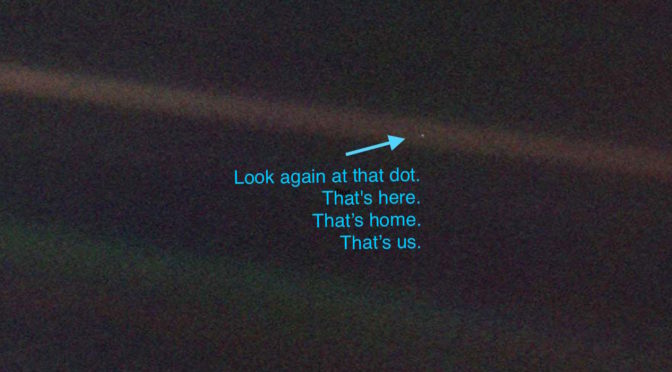
About a very distant image of the Earth, Carl Sagan said, “…it underscores our responsibility to deal more kindly with one another, and to preserve and cherish the pale blue dot, the only home we’ve ever known.” It couldn’t be more appropriate than it is today.

Pale Blue Dot, as taken from the Voyager Space 1 probe, 1990


References:

[1] https://www.livescience.com/how-long-coronavirus-last-surfaces.html

[2] https://en.wikipedia.org/wiki/Coronavirus_disease_2019

[3] https://www.theguardian.com/commentisfree/2020/mar/29/coronavirus-fears-rediscover-utopian-hopes-connected-world

[4] https://www.who.int/emergencies/diseases/novel-coronavirus-2019/advice-for-public/myth-busters

[5] https://medium.com/@alicefleerackers/covid-19-misinformation-more-viral-than-any-virus-a3b4d3e07890

[6] https://www.imperial.ac.uk/news/196496/coronavirus-pandemic-could-have-caused-40/

Review: A Man Called Ove

In 6th grade, my friend told me that “cute” wasn’t really an adjective, that anything could be cute without any meaning. But if someone asked me to describe A Man Called Ove in one word, I would, without question choose “cute”. It is nothing but heart-achingly cute.

Frederick Backman’s 2014 debutante was not an instant hit: nobody really wanted to read the story of a Swedish curmudgeon waiting on his death. The book only became popular by word-of-mouth; someone must have read it and told all his acquaintances, “You have to read this book! Ove is horrible but you’ll love him!”

A Man Called Ove, 2014

Ove (pronounced “Oove-eh”) is a despicable man doing despicable things in his neighbourhood — kicking cats, calling people names, barking orders and thinking everyone is complete idiot. Simply put, he hates everyone and everything. He’s never known anything beyond his principles and his routine. All of this grumpy and inflexible behaviour changes however, when a noisy family of four moves in next to him, and knocks on Ove’s door at every step of the way. Suddenly, Ove’s quiet

life turned upside down and he is doing things he’d always grumbled about. The matriarch-like figure in the house next door, Parvaneh, makes it her responsibility to thaw Ove’s heart the minute she meets him and the relationship that evolves is incredibly heartwarming.

Over 340 pages, Ove’s story beautifully unfolds, going back to a time when his life wasn’t as black and white as you’d initially make it out to be. There is longstanding sadness and frustration within him and beneath the many layers of anger, there is softness, warmth and a soft spoken man who was once in deep,deep love. How he got to his present state is a detail I will not indulge in. I must mention Ove’s relationship with his wife, because it will, undoubtedly restore your faith in the immense amount of love we’re all capable of, loyalty and strength, especially in times of adversity.

โ€œLove is a strange thing. It takes you by surprise.โ€

A MAN called Ove

Backman writes with a tone of softness that is contagious. There is simplicity in his prose, making the book an emotional yet light read. He knows just when and how to pull at your heart strings and when you make you laugh. The balance between sadness and happiness in the book is almost perfect.

Although the book doesn’t take the reader through much of a journey, the journey here is Ove’s; it is his coming-of-age story, albeit at 59. All sorts of endearing, A Man Called Ove creates a soft spot in your heart and a filial bond with Ove. It’s one of those books you cannot predict anything about after having read only a few pages but it is also those books you cannot give up on. Once you get a glimpse into the gears inside Ove’s mind, you’ll want to see the book to the end.

A Man Called Ove is a book about love and loss, frustration and triumph, confusion and clarity and breaking and fixing — all of which leaves you a bit fuzzy and sad on the inside. Pick this book up if you want to fly and cry through unconventional and conventional love in the most unlikely of people and places.

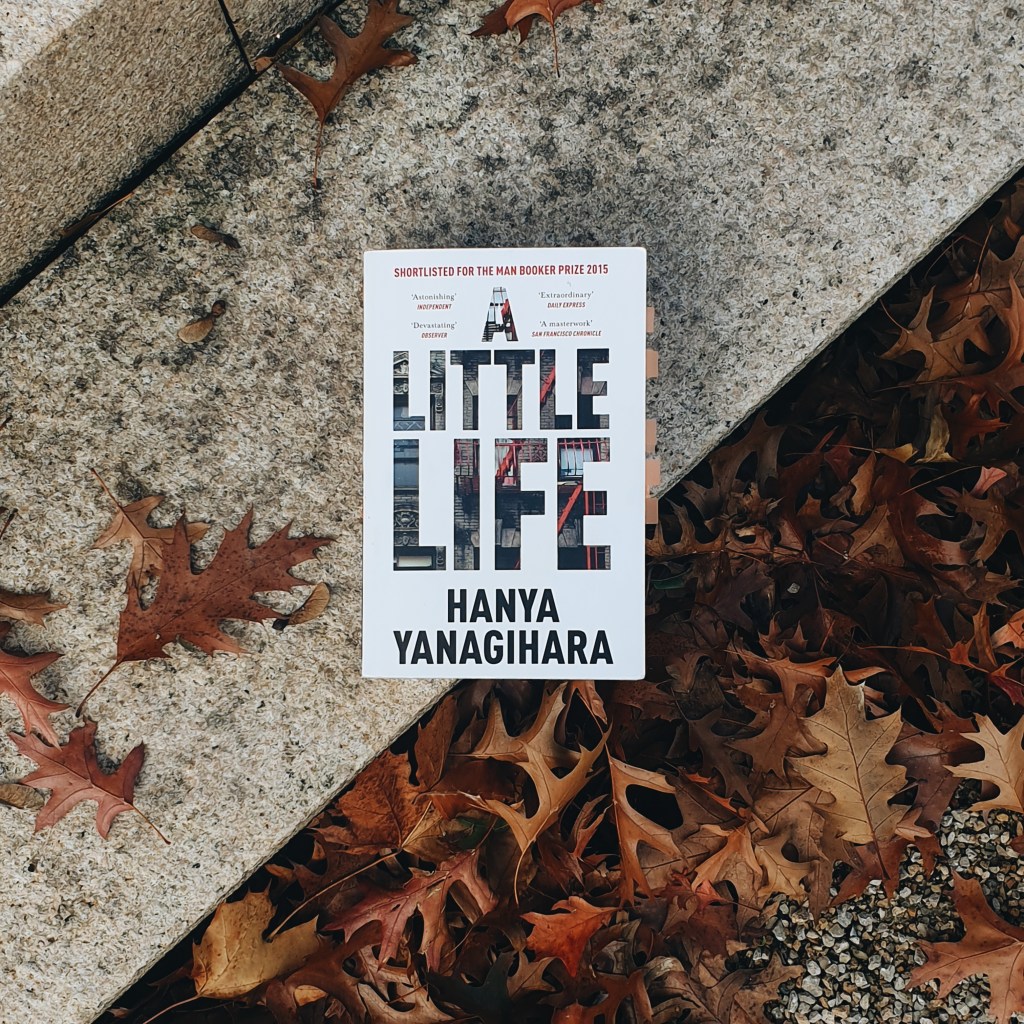
Review: A Little Life

“Of all the books in the world, why did you choose to read this one?” screamed my friend at my face as I pulled the big book out of my bag while we waited for our appointment. I told him that it had been recommended to me by someone I trusted wholeheartedly with book recommendations. I was barely 20 pages in and extremely excited for what the book had in store for me and so, I scowled at my friend for crushing my hopes. Little did I know that I was in for a read of a lifetime – yes, read of a lifetime.

For the first fifty or so pages, A Little Life seems like any other book set in the heart of New York – big city, big dreams and four friends fresh out of college, maneuvering their way through this chaos. They work, they complain, they go to parties and they go to art galleries and they throw parties – a standard but well painted picture. But 50 pages out 720 tells you nothing. What unfolds through the rest of the book is perhaps, one of the (if not most) harrowing and painful literary journey.

Jean-Baptiste Marion (JB), Malcolm Irvine, Willem Ragnarsson and Jude St. Francis (I’ve added their full names for dramatic effect) are out of university and…lost. They hold on to each other while the tide plays with their ambitions. We know that JB is an aspiring artist and Malcolm a budding architect, that Willem wishes to become an actor one day and Jude is a lawyer and mathematician. However, the book, that took Yanagihara eighteen months to write, spans over a time period of thirty years and so, friendships and relationships and careers and houses are fleeting.

โ€œWasnโ€™t friendship its own miracle, the finding of another person who made the entire lonely world seem somehow less lonely?โ€

A Little life

As the book progresses, two of the characters achieve their dreams and some characters slowly step away from the limelight of the narrative and it becomes evident that everything – the past, the present and the future – revolves around one character and one character only: Jude St. Francis. The book becomes a biography of a fictional character, stitched together by his friends, his colleagues, his doctor and confidante, his adoptive parents and most importantly, his past. Nobody really knows Jude (for a significant part of the book, at least), who he is and where he comes from and why he is so incredibly reclusive – and yet, they exist for as long as he exists; they exist because he exists.

Through hyperbole and exaggeration that she has admitted to using, Hanya Yanagihara describes the battle that life is when one has to live with chronic trauma and depression. She explores human suffering in all its forms and its origins and whether it truly ever ends, but at the same time, takes on unconditional friendship and what it means to be a true friend in a time when deteriorating mental health and anxiety is rampant. The extent of the trauma and the countered friendship are both grossly overstated – to the point that both of them are equally painful. The author tends to drag her readers through a bed of nails to truly emphasize her point and very often, this feels rather unnecessary. There’s only so much devastation and ache one can take; I found myself vomiting after certain parts of the book.

A Little Life, Hanya Yanagihara, 2015

A Little Life forces on you emotions and thoughts so profound and so tormenting that you’re often frantically searching for consolation in any form – either in an acquaintance who has read the book or cute kitten videos. There’s also a dearth of emotional counterpoint in the book – there is no relief or moment of deliverance anywhere. At about the 430th page begins the segment “The Happy Years” and one would think those years are truly happy and things look brighter for every character. It does and there’s a weight that’s lifted off your shoulders, but this is only the calm before the storm; things only get inexplicably worse. The lack of redemption creates an intense feeling of frustration that could drive you mad. You’re searching for a glimmer of hope like a child at a treasure hunt which keeps you turning the pages until you realise its over and you made it through Yanagihara’s ultimate test of patience and tolerance.

Without question, the prose is exceptionally eloquent, shifting smoothly between the past and the present. It takes immense artistic capability to able to write the way Yanagihara has and she truly makes the most of her role as a puppeteer. She wields her power to the most of her capability, which in turn, gives the reader a guileless experience. It took me a whole month and two days to finish the book – the most it has ever taken me to finish a book – and I cannot say I am disappointed. The story is no Pandora’s box, but more of a very difficult maze that one is navigating while also profusely crying.

A Little Life took a little part of my life with it when it was over. It taught me a great number of things, especially about friendship. I have a tight group of friends and the three of us have been kindred spirits for a long time now, in spite of having been separated by cruel distances. It’s one of the most unconditional expressions of love I have known and this book taught me how much more I need to love them, how much more I need to trust them and how much kinder I need to be to them; that life won’t let me say goodbye when I would need to.

Crying with Jude & JB & Willem & Malcolm is a very emotionally expensive task but there’s no other way out of this book other than completely immersing one’s self in the misery and magic of it all.

Remember how in The Fault in Our Stars Hazel Grace says that The Imperial Affliction (her favourite piece of fiction) was the kind of book “that fills you with this weird evangelical zeal and you become convinced that the shattered world would never be put back together until every living human has read the book”? A Little Life is one of those books.

No review, no movie and no verbose explanation could do justice to the emotion that this book is. It’s nearly impossible to capture the essence of the book in any way other than reading it. I just hope I’ve been able to inspire at least one person to read the book. Despite the excessive and awe-inspiring melodrama and the disgusting amounts of pain, everyone (except those going through any kind of physical or mental distress, in which case I very strongly recommend against it) needs to pick this masterpiece up. It’s entirely worth it.

Ushashi Basu