In 2017, a close friend coaxed me into watching an obscure period drama called Medici: Masters of Florence with her, citing its score and casting (of Richard Madden, to be precise) as reason enough. I begrudgingly agreed, purely out of my infatuation for period dramas, not knowing that it would spark an unhealthy and lengthy obsession with the Medici Family and their influence on epistemology and culture.
At the end of the final season (the last two are called Medici: The Magnificent, for those interested), I found myself seeking out books, essays, and frankly any written accounts of the Medici to fill in the gaps of information created by facts left out for the screen adaptation, because as much as I love a good dramatisation of a time long gone, I also like to bore people at parties with niche knowledge (who doesn’t?).
Having perused several short and poorly referenced books on the topic, I came across Paul Strathern’s The Medici: Godfathers of the Renaissance, and after an in-depth study and 50 page markers, I can finally state with confidence that I’ve found just the right book to learn about this family — the most well-rounded and detailed narration of a convoluted timeline and myriad people.
Strathern begins his chronicles of the Medici with Ardingo de’ Medici, the first in the family to become gonfaloniere (high civic magistrates of medieval Italian city-states) in 1296 and ends with Anna Maria Luisa de’ Medici, who died in 1743, taking the Medici bloodline to the grave with her. In the 500 years in between, lived some of the greatest men who towered as godfathers of all they saw and liked and left a legacy whose impact we still see today, and some horrible men who brought incredible shame and tarnish upon the same legacy.
Apart from lending money, governing the Florentine Republic, and controlling trade across Italy, nearly every Medici generation also funded and inspired various facets of the Renaissance. While at the time they were famous (or infamous, depending on your interpretation of their reign), as a political and economic dynasty, today they are most famously known for their extensive patronage of the Renaissance and commission of works that formed the backbone of the movement.
The Medici had humble beginnings — known to be God-fearing men, they were extremely cautious in their financial dealings, for usury was a sin, and the likes of Giovanni di Bicci de’ Medici insisted on keeping a low profile at all times. This caution slowly moved to the backburner, when at the height of their greatness, political agenda and a desperate need to hold power in Florence came to the forefront for Cosimo Pater Patriae and Lorenzo Il Magnifico. It was at this stage that their patronage of the arts and the sciences flourished, a way to cover up for their growing sin counter, thereby permanently linking themselves to some of the greatest artifacts of the time. By the time the great Medici reputation was run to the ground by less ambitious and honestly, horrific Medicis, usury was no longer the only sin they needed to be worried about.
Strathern peppers the long and twisted timeline with notable figures — the lives and works of artists (Brunelleschi, Donatello, Michelangelo), scientists (Da Vinci, Copernicus and Galileo), politicians (Machiavelli) and religious figures (Martin Luther), described in direct relation to the Medici speaks heavily to the longevity of Medici power and its far-reaching influence. This narrative strategy serves as a helpful point of orientation for those newly learning about the Medici.
A little-known fact that Strathern highlights in this sub-plot is the role the Medici played in shaping both Italian as well as French cuisine that we all enjoy; that their understanding of culinary theory — to bring out native flavours of meat and fish, instead of concealing them — changed what was initially a rather rudimentary of cooking and eating.
Strathern’s research for this book and the level of detail he chooses to indulge in ties the messy history together remarkably well; he focuses on the minutia of the lives of the Medici as well as those inextricably bound to the Medici family, bringing out in explicit detail, what it truly meant to be a Medici and also, to be inspired, encouraged and supported by such a family. His prose is simple but strong, which is what makes the difference between Medicis such as Cosimo Pater Patriae & Lorenzo Il Magnifico and Cosimo III & Gian Gastone all the more stark and revolting.
The aspect of the book that I am not a fan of is the lack of in-text citations and references; Strathern’s research is well-done but not evident. He explains in his author’s note in the end that he meant his book to be a popular one and not laden with heavy referencing, but I believe it would have served the book well to provide references. He does provide an extensive reading list in the end, however, and I for one, am quite excited to go through the list.
My brain does not naturally retain too many dates or too many events in chronological order but Strathern makes it easy to remember the overarching themes and then orient dates and times to those themes. The never-ending dates and wars don’t feel overwhelming at all — perhaps the biggest reason why I will recommend this book to those even remotely interested in the history of the Medici and the Renaissance.
Pair this book with Paulo Buonvino’s impeccably composed soundtrack for the Medici Netflix series and you’ll find yourself reveling in the highs and the lows, the grandeur and the austerity of life in Florence in the 15th century, alongside the Masters of the Renaissance. Meanwhile, my next Medici read will be The Bookseller of Florence by Ross King.
I met Mike when I first started attending PubSci – an enthusiastic, welcoming persona waiting by the entrance, ready to greet you, cross your name off a list, and direct you to the best seat in the house. What I didn’t know at the time was that Mike was a proficient science communicator himself, with extensive experience using various media to bring science to the public, particularly through science photography. After a deep dive into Mike’s work, I decided that I just had to interview him, even if for just one reason: he’s insanely cool. And that he’s a science communicator.
Currently Media Relations Officer at University College London, Mike has had every science communication experience possible – from writing newsletters for the American Physical Society to reporting science directly from the US Antarctic Program to hosting Resonance FM’s new radio show, The Science Show, with none other than Richard Marshall.
For this interview, I sat down with Mike to learn more about his wide-ranging experiences communicating science and to hear his one piece of advice for anyone hoping to share science with others.
Tell me a little bit about yourself and how you became a science communicator. Was it something that you have always carved out for yourself, or did it just happen over the course of your career?
I got there through a little bit of a circuitous path. I have always liked science, but when I went to university, I studied journalism, and it wasn’t really focused on science or science communication at the time. I was also able to enrol in an applied physics minor, and that appealed to me a great deal. After I graduated, I got an internship at a physics organisation that needed someone to do outreach and communications and that eventually turned into a job.
That’s how I got started. Science communication wasn’t something I set out to do, but once I found my way into it, I enjoyed it immensely, and I have stuck with it.
You were a part of the US Antarctic Program as a staff journalist, photographer, and podcast producer. What was that experience like?
The experience itself was huge because it’s a big, dynamic programme. One of the things that really appealed to me was that there was a wide range of scientific research happening, and I had the opportunity to ask the researchers the right kind of questions to understand their work and then write about it.
The other thing was that when you’re working in a research station like that, there are very limited resources. So, you have to be very resourceful about a lot of different things and build a lot of flexibility into plans. For example, the weather out there is very unforgiving, and you need to have a plan B, which also might not work and you keep going down that line for a bit.
At the same time, you’re living in dorms and eating in cafeterias together. The whole experience was a little bit like a national laboratory meets a mining town meets a college.
Do you have a particular highlight from your time there?
One of my favourite moments or trips was out to a place called Shackleton Glacier, where a field camp was set up for a couple of seasons for some palaeontology research and I was able to go out there with the team to take photographs and shoot some video. And we were the only human beings for nearly 200 miles. So, it was a very remote area. It was wild to think how few people had been to this spot and just how empty the vast landscape was. And amidst that, there was this research effort that was able to do what it needed to, pack up and go home.
Photo credit: Mike Lucibella
Is it something you would do again – perhaps in a different locale?
There are two aspects to that.
I’d love to go to because I love to travel, so I would love to go see deserts, mountains, rainforests. I also like going there and being with researchers because it’s very meaningful to be able to kind of go and see this kind of thing.
What was difficult about the Antarctic deployments was that they’re very long. I would be deployed for about four months at a time and that’s very difficult personally. You’re away from your family and the Antarctic summers are over the Christmas period, so I missed a bunch of Christmases and things like that at home. And it’s very difficult on family and friend relationships to be gone for so long, especially in such a remote place with limited communication.
You have shared the photos from your US Antarctic Program work extensively on your website, along with other photography. I wanted to ask, do you think photography is an effective medium of science communication?
I don’t say this to be a generalist, but what I like to do is not just focus on photography, or writing, or podcasts – instead, I like to tie them together. I think that’s really important for storytelling. They’re each different tools for different aspects of scientific storytelling.
Photography in the Antarctic tells you a good story of people working in dramatic landscapes in a harsh environment to do science. At the same time, it’s also very humanising. The people doing the research are like many of us, and a diverse group as well. It’s good to be able to show that anybody can do science. Science is something that can happen to anybody. Science photography is a good way to do that.
Writing is just as important to show what research is happening, what research tax dollars are being spent on. Podcasts and radio shows are good for telling a story and further humanising things, where you can delve a little bit deeper into what researchers do and what their experiences are like. Someone once half-jokingly said that radio is a visual medium, but it’s true; when you hear a podcast or a radio program, you can create images in your mind that can make something seem so much more real.
Speaking of varied media, you have noted that you are always looking for different ways to bring the excitement of science and research to diverse audiences. What does diverse mean in this context?
There is a very traditional view of science as being done by old white men. In my experience, working with scientists is anything but that. Some of the best research in the world is being done by women, non-binary individuals, people of all ethnicities and backgrounds. And that is very important to show and communicate. Science is a very diverse field, with people from so many different parts of the world contributing something.
That’s the remarkable thing, too, if you kind of step back and look at it, science is this field where more so than almost anything else, different people from around the world can put differences aside and work together on projects and that kind of thing in a lot of ways.
That’s something you see a lot of in the Antarctic programs, where there are national stations, but there’s a lot of collaboration happening. And then if there’s an emergency, any pretence of differences in national politics is dropped and people just run to help people when they need it.
“Science is this field where more so than almost anything else, different people from around the world can put differences aside and work together on projects.”
MIke lucibella
You also media train scientists and researchers – why do you think it’s important for them to speak to the media? And when you are standing in a room full of scientists, what is one thing you always tell them?
It’s imperative for scientists to talk to the media because there’s an inherent kind of credibility that a researcher is given. These are people who are experts in their subject, people who have devoted their lives to understanding the ins and outs of a very particular topic. And there is a level of credibility that’s afforded to them. That level of credibility can make a big difference in policy spheres and understanding of the world.
They also have to be able to speak to the media well. It’s important for researchers to communicate the significance of what they’re doing and why they’re doing it, for a range of reasons. It’s to inspire people to do more science, to understand the world around them, and also to effect change.
There’s a lot of research being done to make the world a better place. And this needs to be broadcast. So, helping scientists broadcast their messages and their findings is necessary to effect that change.
To the second part of your question: I think at the core, the number one thing is to think about and empathise with the audience, and try to put oneself in the place of the audience. Presume that you are speaking to intelligent people, but they may not have spent as much time as you studying that particular subject. Your audience wants to know, wants to understand – but you have to help them get there. So, take a step back from what you know and your background in the subject, and instead go to what is an easy entry point to the topic and how you can describe your findings.
Going back to the topic of science communication, you have worked in science stand-up comedy, podcast, radio, photography and writing. Is there a medium you haven’t worked with yet that you would like to?
I mean, I would love to be a movie star!
I have done a little bit with filming and video, but not a whole lot. It is a very powerful medium, but it’s one that takes a lot of resources to do. I would love to be able to be part of a big team working on a science TV show or documentary and helping to shape it and tell a story that way. That seems like something that would be a lot of fun.
There is other stuff out there that I haven’t really considered, so I’m always keeping an eye out for future opportunities as they show up.
And your favourite medium so far has been?
I really enjoy photography on a level that’s different than most of the other kinds of stuff. Photography is a lot of fun because it’s very versatile. You can do anything from taking vast landscape images to tiny images of an insect or a spider. And I really appreciate that. It’s also a very good excuse to go out and find something interesting to take a picture of. That’s always something that I’ve enjoyed, the combination – being able to put the exploration side of science with the communication side of photography together.
At the start of my science communication career, the very first thing I published was a short reflection on the similarities between science and poetry, and how we can use the latter to communicate science. It was also the first piece of work I created under the mentorship of Olle Bergman. During this time, he told me about Sam Illingworth – a professor, science communicator, and believer in using poetry to disseminate scientific ideas – and I knew I had to someday complete the circle by interviewing Sam for my blog. I finally made it happen, and I am proud to share this insightful conversation with Sam with all of you.
Sam is a professor of creative pedagogies at Edinburgh Napier University, and currently, his research involves using poetry and games to create dialogue between audiences. Sam is also the founder of Consilience, a first-of-its-kind, peer-reviewed science and poetry journal.
In this interview, Sam tells me about his journey into science communication, how he engages different media to invite interactions with science, and the importance of tailoring messages to connect to different audiences.
Tell me a little bit about yourself and how science communication became a career choice for you.
Sam Illingworth
I started out as an atmospheric physicist, measuring greenhouse gases using satellites and aircraft. But during my PhD, I realised I was more interested in how science connects with people than in the data itself. I became fascinated by the gaps between scientists and wider society and wanted to find ways to bridge them.
That curiosity led me to Japan, where I studied the relationship between science and theatre, and then to a lectureship in science communication. Since then, I have used poetry, games, and other creative tools to help make science more accessible and more open to dialogue. Science communication was never a career I set out to do, but it became the only one that made sense.
You founded the Consilience journal, the world’s first peer-reviewed science & poetry journal. What inspired you to create it, and what do you want people to take away from it?
Consilience came from a desire to create a space where poetry and science could meet on equal footing. Too often, they are treated as separate worlds, but to me, they are just different ways of asking questions about how we live and what matters.
I wanted to build something that not only published science poetry but also treated it with the same care and respect we give to scientific research. That is why we use peer review, not to gatekeep but to support and improve. The goal is to help people feel part of a community where feedback is generous and learning is collective.
What I hope people take away from Consilience is that science and poetry are not opposites. They are complementary tools for making sense of the world. And that everyone, regardless of background or training, has something valuable to contribute.
Your current research involves using poetry and games to create meaningful dialogue between different audiences. What does meaningful dialogue look like, and what does it entail?
Meaningful dialogue is less about agreement and more about recognition. It is about listening to understand, not just to reply. When I talk about dialogue in science communication, I mean creating spaces where people feel heard, respected, and able to shape the conversation.
In practice, that often means moving away from traditional top-down models. Instead of scientists delivering information, we work with communities to co-create something together, like a poem or a game. These creative tools help flatten hierarchies. A poem written together invites shared vulnerability. A game opens up space for negotiation, for choice, for play.
Meaningful dialogue is also about letting go of the need to have all the answers. It is about making room for uncertainty, for emotion, and for different ways of knowing. When that happens, science becomes less about telling and more about asking. And that changes everything.
Books, podcasts, andgames are all media you have used in your work and research in science communication. How do you tailor your messaging to each of these audiences and their needs?
Each medium offers a different kind of conversation. With books, I have the space to go deep, to build an argument slowly, and to invite the reader into a more reflective space. A book allows me to bring together research, personal stories, and practical advice in a way that feels grounded.
The podcast is more immediate. It is about tone, rhythm, and intimacy. When I read a science poem aloud, I want the listener to feel something before they even think about it. It is about drawing people in through sound, then giving them space to reflect on the science behind the words.
Games are different again. They are not about delivering a message but about letting people explore systems, make decisions and experience consequences. The message is not what I say, it is what players discover through play. So, when I make a game, I try to create a space where people can bring their own questions and values into the experience.
In all cases, it is about respect. Respect for the audience’s time, intelligence and lived experience. I do not assume what they need. I try to listen, adapt and build something that invites curiosity rather than insists on a conclusion.
Sam, in action
Why do you think tailoring the message to fit each audience is important in science communication?
If you are not speaking in a way your audience can connect with, then the message does not land, no matter how accurate or well-intentioned it might be.
Different audiences bring different experiences, expectations and needs. Tailoring the message means meeting people where they are, not where you think they should be. It also means respecting their knowledge and avoiding assumptions. You cannot use the same language for a policymaker, a school pupil and a community group and expect it to resonate equally.
Tailoring is not about simplifying or dumbing down. It is about relevance, empathy and clarity. It is about building a bridge that people want to walk across, rather than one that just shows off the architect’s skills.
Tailoring [your message] is not about simplifying or dumbing down…it is about building a bridge that people want to walk across, rather than one that just shows off the architect’s skills.
Sam Illingworth
What role do you see your work across all these media/platforms play in (the greater) public engagement with science?
I see my work as helping to open up different entry points into science. Not everyone wants to read a journal article, and not everyone feels comfortable asking a question at a public lecture. But a poem, a game, a blog post, a podcast are all media that can offer gentler invitations.
The aim is not to replace traditional science communication but to extend it. To show that science can be emotional, playful, messy and human. It is not only about answers, but about questions worth sitting with.
Across all these platforms, I try to create space for dialogue, for curiosity, and for other voices to come in. If my work helps someone feel that science is something they can connect with on their own terms, then it is doing its job. Public engagement is not about broadcasting; it is about building relationships.
You have also worked in the education space with students, to communicate science and to understand their attitudes towards science. Over time, have you noticed a change in children’s/students’ interest in science? What about their parents?
I have worked with a range of age groups, from primary school children through to university students and adult learners. That said, most of my work with younger audiences was earlier in my science communication career. These days, my focus is more on higher education, particularly on how students engage with science and creativity within academic settings.
Because I no longer work closely with school groups, I would not feel confident making broad claims about shifts in children’s or parents’ attitudes to science over time. What I can say is that when I did work in schools, curiosity was never lacking. The challenge was often about confidence, i.e., helping students feel like science was something they could ask questions about without needing to get everything right.
With parents, I have had less direct interaction, but I imagine similar dynamics apply. People engage most when they feel invited in rather than judged from a distance. Whether it is students or parents, I think the more we focus on listening and co-creating, the more meaningful that engagement becomes.
Learn more about Sam and his science communication work here, and read the latest edition of the Consilience Journal here.
The chances of my knowing a science communicator who, like me, also had an international upbringing, studied life sciences at Jacobs University Bremen, collaborated with Olle Bergman, and lives and works in the UK were low, but never zero.
Meet Joanna Bagniewska, zoologist, prolific science communicator and author of popular science book, The Modern Bestiary, a compendium of curious animals that inhabit the earth.
Polish by birth, Joanna grew up all around the world – China, Italy, Thailand – often returning to Poland, before ending up at Jacobs University in 2003 for a Bachelor’s degree in Biology. But the study of teeny things in the lab never interested Joanna much; she found it difficult to relate to things she couldn’t see. Seeking more evolutionary, ecological and organismal biology in her curriculum, Joanna continued her journey around the world. She interned in Australia studying how roads affected wombats, wallabies and other wild animals, and spent a semester abroad at Rice University, Houston, working on Damaraland mole-rats. After graduating from Jacobs University, she found her way to the University of Oxford for her Master’s degree. The rest is history, as you will read below.
In our conversation, Joanna and I speak about the importance of precise and impactful communication when it comes to ecology and conversation, the life-changing power of science communication, and of course, our dear Olle.
Tell me a little bit about your journey into science communication.
The start of my science communication experience dates back to 2012. Three of my friends had organised a conference called Science: Polish Perspectives. The idea was to provide TED-style talks, but to a very high academic standard, in English, showcasing the work of Polish researchers in the UK and beyond. I applied to be a speaker at the conference, but I had massive imposter syndrome. I was talking about my doctorate, which was on the American mink; meanwhile, others were talking about blackholes and nanoparticles and AI – subjects that, to me, looked much more serious and appealing. Still, I went in, gave my talk, and it went so well that I got an invite to speak at a TEDx Warsaw event.
After the TEDx talk, a friend directed me towards FameLab, a science communication competition. I took part in the Polish edition of FameLab and won it. Suddenly, there were all these journalists getting in touch with me and the other finalists, asking to do interviews and to collaborate – it was very clear that scientists who can explain science to the public were a hot commodity. Thanks to these collaborations, I gained experience writing and editing popular science articles, creating quick one-liners for TV and radio, and conducting longer interviews. I’ve also done things like science stand-up comedy, science slams and Pint of Science.
At what point did science communication become a career choice?
In 2006, I came to Oxford for my master’s degree, and I stayed for my PhD. Immediately after my PhD, I got a job as a senior scientist at a startup that was looking at using bees to detect illegal substances. Really cool, but the startup eventually ran out of money, which wasn’t great. I began lecturing at Nottingham Trent University, and afterwards moved to Reading University.
That’s when the Brexit referendum happened. It was scary, because I only had my Polish citizenship, I was pregnant, and my contract was coming to an end – because that is the nature of academic contracts. I knew that, due to residency requirements, I had to return to work after my maternity leave. Still, there was no guarantee that my contract would be renewed, and jobs in zoology are not easy to come by. At this point, I needed to look at what my transferable skills were and what I could do outside of academia. I already had a significant chunk of science communication experience, so when Brexit happened, I built it into a career. For six years, I split my time between an academic job and a role in communications and public engagement; I have also been doing freelance science communication and coaching.
You’ve written a book, TheModern Bestiary, published in 2022. What inspired you to write the book?
You make it sound much more structured than what it really was! It was the beginning of 2021, and we’d had almost a year of lockdowns and the pandemic; the world was not in a good state and neither was I. At that point, I was approached by the publishers, Wildfire, who had an idea for a book about interesting animals that inhabit the earth, but needed someone to write it for them. The idea was great and after writing a few sample chapters to prove I could write, I got started on the project.
I have always wanted to write a book because I wanted to have a tangible legacy. Even though, as an academic, you produce scientific articles, they’re not read widely, unless you happen to be one of those select few to write a Nature paper. I wanted to do something wider-reaching than that.
Writing was such a refreshing, joyful experience. It was absolutely wonderful. My editor was so positive and helpful that at times I thought it was some sort of a hoax.
Dr Joanna Bagniewska Photo credit: Greg Blatchford/yewneek.com
You’re currently the course co-director of the post-graduate certificate in ecological survey techniques at Oxford University. Why do you think it’s important to be a good science communicator in the field of ecology and conservation?
We’re in a biodiversity crisis and a climate catastrophe. At the same time, we’re living at a time when people are really pinched for attention and time; therefore, any message likely to break through needs to be formulated in a clear and precise way. All you can expect from an audience is a little bit of their time; you can’t expect them to untangle the information that you didn’t bother to present clearly. You have one shot to deliver a message, don’t waste it.
I think it is important to know strategies from communication, marketing, or advertising; they can be incredibly useful for changing behaviours, fundraising, raising awareness, lobbying the government and changing narratives. For instance, right now, UK institutions increasingly have sustainability or environmental policies built into their strategies. They’re looking at metrics such as the biodiversity net gain and similar. While a lot of these are not perfect, they’re a starting point. If you think back to ten years ago, this was definitely not very high on the agenda – clear and persistent messaging can impact action.
What role do you think your work is currently playing in that public behaviour change towards conservation?
It’s a multifaceted role. On one hand, my role is to shape the ecologists of the future, who will be the ones doing biodiversity assessments and gathering environmental data. If we are to see whether management has an impact on a site or on a species, we need to know the before and after. I’m teaching my students how to do that, so that they’re able to do their own projects and teach others.
On the other hand, in my science communication work, I try to inform the public about the natural world, what they can do in terms of participation in any citizen science project, and any little contributions they can make. People like to receive a message, but ideally with a call to action at the end. Anytime I have a radio interview or I write an article, I try to add that on.
“You have one shot to deliver a message, don’t waste it.”
You may have seen that people call the blobfish the ugliest animal to exist. As a zoologist, do you think any animal is ever ugly?
People are interested in superlatives – the ugliest or the slimiest or the biggest or the smallest or the prettiest. The blobfish is unlikely to win any beauty pageants, so we might as well go down the “it’s the ugliest animal on earth” route and fascinate people from that perspective.
My view of the beauty of an animal doesn’t reflect on its behaviour or how interesting it is. It also doesn’t have an impact on its conservation status. Still, it’s important for people to notice species.
A lot of research goes into how marketing strategies can be used to promote biodiversity; even the species name can feed into it. There have been studies on species with funny names or species that are named after celebrities, how that raises their profile and whether that then translates into conservation efforts. Whatever works, use the dirtiest marketing techniques you can – let’s just get funding for conservation because it’s such a woefully underfunded field. Call an animal “ugliest”, name it after whoever you want. If there’s money coming with it, go for it!
Conservationists have a concept of “flagship species”, something that’s big, or furry, or colourful, or impressive, or just with eyes that point forward and are cute; something like the panda, tiger, or orangutan. These species tend to gain the attention of the public; it’s easier to fundraise for tigers than for blobfish. Yet because many flagship species are great apes or large carnivores, they cover quite a lot of area in their territories. If you conserve the jaguar, you also conserve the tapir, which is grey and looks a bit like a pig and nobody really wants to donate money for that. Such wide-roaming species are called the umbrella species because if you support their conservation, you’re also conserving other animals that live on their territory.
Do you have a favourite animal? Why?
Oh goodness, that’s a difficult question. I find it difficult because there are so many interesting animals. I really love hedgehogs. I also have a soft spot for the Mary River turtle. It’s a turtle from Australia that is very endangered. It can breathe through cloaca while underwater, and is restricted to a very small patch of land in Australia. And I read somewhere that it would only take about £40,000 to protect the species. So, if you know somebody who’s really rich, who has 40 grand…
I will definitely let them know if I know someone.
You have another book coming out soon called The Communicating Scientist, written in collaboration with Olle Bergman and Jacobs University alumna Sarang Park. I wanted to digress to ask how it’s been working through the initial drafts of the book with Olle, but finishing it and approaching the publication date without him?
Writing this book was much tougher than my first one. I joined the project fairly late down the line. Olle reached out to me because he was stuck in this dark forest of editorial uncertainty and said, “Oh, would you be able to take a look at the draft? We can add you as a co-author, just please deal with this.” And I thought that a communications handbook for scientists is a really cool, useful idea. The book needed a pair of a fresh pair of eyes and I was glad that I could contribute chapters.
Olle was always the motor behind the project. The book was his baby. He would always come up with to-do lists and new documents and interviews with someone and getting bits and pieces. He was really committed to this project.
In December, two years ago, I was at a conference where I was running a workshop that Olle had developed the framework for. This turned out to be the day he passed. I found out two days later, and it was really, really tough.
I reached out to Sarang, and we told the editor what had happened. We were determined to complete the writing, and for Olle’s last book to have his name as lead author on it. It was a monumental effort because he had ideas in his head that we didn’t know about, so we had to fill in all these blanks and second-guess what he would have liked, but also use our own judgment, because we’re also authors.
When I was reviewing the manuscript, it was like having Olle read it out loud to me, which on one hand was lovely, but also difficult. He had left all these comments saying, “I’ll add that later”, or “I’ll check the reference to that later.”
It was incredibly difficult, but we managed to submit the manuscript and hopefully the book should come out next month.
What impact did Olle have on your science communication career?
I met Olle when my SciComm career was already quite well established. Still, he was a wonderful personality to have around – the perfect person to bounce ideas off, to ask questions and to learn from. I feel like we benefitted from each other’s interests and presence in a dimension much bigger than SciComm: he would ask me questions about Poland (he knew so much about it anyway), I would ask about the translation of Swedish literature; we shared a passion for history, languages, analysing how people think and what motivates them. The science communication aspect almost seemed like a side gig in this friendship!
Visit https://uk.bookshop.org/shop/Bookniewska to learn more about The Modern Bestiary and get yourself a copy! And pre-order your copy of The Communicating Scientisthere, ahead of its worldwide release on 13 July 2025.
Almost every third Wednesday of the month, a group of people gather in a room on the first floor of a lively pub in London, pints in hand and an order of scampi and chips on the way from the kitchen. Everyone is buzzing and scrambling to secure the best seats in the house (I, too, am guilty of this). Their purpose there? To spend the evening learning, understanding and engaging with science. There is an equally, if not more, eager speaker at the front of the room, thrilled to share their work with people who will listen in awe.
This is Pub Sci, or more formally known as Science in the Pub. Science, in a place you’re least likely to find it. And the helm of this event is the enigmatic Richard Marshall.
For approximately five minutes at the start of the event, Richard will tell you all about PubSci, plug PubSci’s many social media channels, introduce the speaker and then sit back and let the science communication commence. A skilled science communicator himself, for those two hours at PubSci, he only serves as a medium, bringing science to the people.
I invited Richard to a tête-à-tête to learn more about him and how he makes PubSci happen. Over a double macchiato at the Science Gallery Café a few weeks ago, Richard gave me a glimpse into the PubSci backstage, how he came to run the event and why good science communication is important.
Before we get into all things PubSci, tell me a little bit about yourself, how you started out in science communication.
Richard Marshall. Photo credit: Juliana Velasquez
I took a very circuitous route into science communication. I studied engineering, sort of an interdisciplinary engineering, which had very little design aspect. The bit that I enjoyed most really was all the ancillary stuff. Planning, public speaking and giving presentations. I nearly switched to a language degree and then also thought about doing theatre. But I stuck with it and I worked for a company called Schlumberger in Germany, both in my industrial placement and then back in the UK after university. But I had itchy feet – I felt that I wasn’t fulfilled with what I was doing, so I went and started working in tourism. And then after a while, I got frustrated with that as well, because I wasn’t using my brain sufficiently. I also felt slightly uncomfortable about the tourism industry in general because you’re taking people to beautiful, unspoiled places and then essentially either gawking at them or spoiling them. Then I went travelling for a while to Central America, learnt Spanish and had some wonderful experiences. After that, I started attending various classes at The City Lit and Morley College, trying to understand what it is to be a viewer. Oh! And I missed the part where I studied photojournalism at what is now the University of Arts London (UAL).
So, let me get the chronology right: engineering, work placement, tourism, travelling, photojournalism?
Yeah. You know, I have an eclectic mind that’s interested in a lot of things. And I wanted to satisfy quite a lot of it while I was still relatively young. So, as I’ve mentioned, I studied anthropology and attended various classes to understand what it is to be a viewer, to be a photographer, whether you can ever have an outsider perspective as an insider and vice versa. And I also discovered some wonderful courses on physics and philosophy.
How did you get back into STEM and Science Communication after the digression into tourism, travelling and photojournalism?
My return to STEM began when I was invited to give a series of guest lectures at London South Bank University for a BEng and MEng module that serves the same “soft skills” role as the topics I’d enjoyed most in my university days. Ethics, Critical Thinking and Project Planning are three things I’m rather passionate about and had done some work on previously, so it was easy for me to adopt them for Engineering students.
The lectures were well received by faculty and students and, when a key staff member retired, I was asked to run the whole module. So I became a university lecturer and module leader, which was my first taste of formal teaching. I really enjoyed it, and the students excelled in their exams. When another staff member retired, I started running tutorials and labs, teaching technical subjects that took me back to the basics of Engineering maths, mechanics and electronics – a skillset I’d largely put aside in my years of tourism, photography, and non-science event work. And so I got my STEM mojo back!
I enjoyed lecturing for several years until – as for many people – the COVID pandemic gave me an opportunity to reflect. I emerged from lockdown no longer a lecturer but a science communicator and event manager, which I continue to this day. I absolutely love it; for example, I get to spend several days a month doing science shows and workshops with primary school kids, watching their faces light up with wonder at a new fact or an exciting experiment.
It’s really important to plant the seed of wonder early. They will have plenty of time to learn that bench science is often slow, repetitive and frustrating – but it’s the seed of wonder that keeps us going in a career when things get tough. It’s easy to engage the kind of kids you’d expect to have career in science – they always make themselves known in a workshop, and that’s great – but it’s even more important that we engage the arty ones, the sporty ones, and especially the ones whose home life hasn’t encouraged them to dream about their futures.
How and where did PubSci originate, and how did you come to run it?
PubSci was started in 2011 by Paolo Viscardi and James Robson. It started as an event that involved putting on science talks that they would want to go to themselves. At the time, Paolo was a museum curator, and James was working with live animals. It started off as just a thing that some friends do.
I think I went to the very first one because it was very near where I lived in Brixton. And eventually, I got really involved and became good friends with Paolo. When Paolo got a job that required him to move to Ireland in 2016, there was a risk that PubSci wouldn’t carry on. At this point, I’d already been asked to host a couple of the PubSci Christmas quizzes, and I realised I enjoyed hosting events. After Paolo left, it fell on about five or six of us to take turns running PubSci. But we were various people with different time commitments and some people moved away. Eventually, it kind of fell on just me to decide whether I wanted to run this myself or let it go.
So, from around 2018, I started hosting, programming, planning and marketing PubSci myself, as a kind of one-man band. In 2020, we went online for a little bit because of the pandemic, and it took me a while to restart the event in person. I restarted it in 2023, I think, when I had the brain space to start it again.
But I must mention, I’m not the owner of PubSci; I think of myself more as the current steward of PubSci. Whilst I do all of the above, it couldn’t have happened without the community. Friends, regulars and volunteers help to set up chairs before the event and return the room to its original state afterwards. Because PubSci doesn’t charge entry, but invites contributions, everybody who comes along is invested and involved in some way, making the audience very much a part of PubSci. Regular attendees will know Mike Lucibella, for example, he’s the first face they see on arrival. Mike is a science communicator himself and got involved with PubSci before the 2023 restart. It’s really important to have friends you can bounce ideas off, and we often meet to discuss things over a pint. Behind the scenes, there’s an unofficial ‘committee’ (more a family) of dedicated folk who’ve been involved since the early days (including the mother of one of the founders!) who help to keep an eye on things.
What role do you think PubSci plays in public engagement with science? What does it do for the people?
There are several simultaneous views of science. There’s the priesthood of science, for example. And then there’s also the sort of mad scientist; if you think about it, a lot of disaster films begin with the hubris of scientists doing something that they shouldn’t. So popular culture gives us a lot of different ideas of science and I think actually allowing people to meet scientists and ask them questions is really important. Scientists shouldn’t be considered a different species, you know?
And of course, it’s absolutely brilliant to go to a big theatre and ask a scientist a question. But to be in a pub with them, and to be able to engage with them directly, see the whites of their eyes – I think that’s really important for trust.
One of my aims with PubSci, one of the things I always say when people ask me to describe it, is that I am trying to take science communication out of the lecture theatres and academic spaces, and bring it to where the people are. Bring something to people rather than bringing people to the thing, which totally changes the context.
And people are in the pub…well, not everybody. I don’t want anyone to feel excluded – they have soft drinks there too.
A sense of inclusion and involvement is very much my vision for science communication and outreach, because we’ve seen how talking down to the public doesn’t engage people in science and scientific literacy. We see the effects of anti-science around the world, not least the USA, where it’s been politicised and weaponised by making anti-science narratives something that people get emotionally invested in. My dream is for the general public to become emotionally invested in scientific literacy, as well as intellectually invested, and I see PubSci as playing a small role in that.
Coming to Science in the Pub shouldn’t be a lesser experience than going to the pub with your mates or watching football or a band or a play – it should leave us feeling just as connected and fulfilled. That’s my goal.
“I am trying to take science communication out of the lecture theatres and academic spaces, and bring it to where the people are.”
Do you ever think about expanding PubSci – more locations, bigger events?
I want it to be small and intimate. I don’t want PubSci to be a stadium-size event, you know? That trust between the audience and the speaker and the organiser kind of depends on the fact that anybody can come and have a chat at the end. If it gets too big, that doesn’t really work; then it becomes a show and I don’t want it to be a show. So, I mean, I think my aim is rather than increasing the size, is to just keep improving the quality. To me, that’s far more important. And if people sort of like the idea and want to start something called…you know, Science in the Cafe or something, that’s great. It would be a full circle moment, from when I was involved with Café Philosophique and Café Scientifique in the 90s, both inspired by the old Parisian Left Bank discussion cafés. “Café Sci” was something of a model for PubSci and has a worldwide presence.
What are some of your hobbies, outside of facilitating events like PubSci?
Talking about science is actually a hobby. I did a one-man narrative comedy science communication show last year, and I’m now working on another one. Although it’s a fairly self-selecting audience, it’s about bringing science out of lecture theatres and into places where people are going to learn and hear and laugh. So, the science comedy, I suppose, is a hobby; I don’t do it enough to call it a profession…yet.
Along with PubSci, I do some sort of freelance events, hosting and producing. I’ve also started to realise that I’ve done quite a lot of facilitation. It’s one of those things where I’ve realised I’ve been doing it, but I’ve never given a name to it. I recently completed a five-week course facilitation course to formalise and put a name to the skillset I’ve built up over the years and root it in the context of science. Because you know, with facilitation, there are so many contexts where it’s really important, like community engagement or in co-creation, it’s not something that you can just do without thinking about what the processes and methods are and whatever.
Everybody who’s ever known me since I was at primary school knows that you can’t stop me talking about science. And even though I’m not a scientist, I always have to make this clear, I’m not a scientist, I’ve never been a research scientist. I have an understanding, I know how to read a paper, but that doesn’t mean that I’ve sat there and struggled with my data and published a paper. And I will never pretend that I have. But what I do have is the ability to create a narrative. And that’s really, really important.
I also write short stories with scientific themes, some of which can be found online at https://lablit.com/. I’ve also written science pages for The Lost Doctor, an unofficial Doctor Who Annual, presenting quantum paradoxes in a way that children would understand and adults can enjoy.
What other hobbies…so two ends of the spectrum. Formula One. I’ve been watching with a bunch of my friends for nearly 20 years. Although we’re distributed around the country and around the world now, we try to get together with food and drink to watch the races whenever we can.
The other one is Morris Dancing. And writing, singing and playing folk music as well.
What is Morris Dancing?!
It’s traditional English folk dancing. I dance with Brixton Tatterjack Morris. It’s a great physical exercise actually; it involves a lot of jumping around and banging sticks and shouting.
And finally, as is customary to ask, do you have a favourite PubSci memory?
That’s a great question; it’s one I should have anticipated, having studied journalism myself a long time ago.
It’s hard to pick just one [memory], but top of my mind is Eugenia Cheng’s talk in June 2023 called ‘Is Maths Real’. Eugenia is a brilliant writer and speaker based in the US, whom I happened to meet at the Royal Institution when she was over to talk about her previous book. I hadn’t yet restarted PubSci after the pandemic and was scheduling the first season of speakers when we met. As soon as I explained what PubSci was about, Eugenia was invested – she’s Scientist in Residence at the School of the Art Institute of Chicago and her passion is communicating maths to non-mathematicians – so she put me in touch with her publisher to arrange it.
We had a very full house that evening. What was remarkable for me was how many people said they’d always been afraid of maths but had chosen to come to that talk. Eugenia made her topic so graspable and meaningful that a few audience members were actually moved to tears from the relief of finally understanding something after years of feeling stupid. They’d been told at school that maths just wasn’t for them and had lived with a sense of shame and failure until Eugenia was able to demonstrate that maths is actually for everyone, including them.
That is the power of good science/STEM communication. It can make us laugh or cry, or gasp or say “Wow!” It can – and I think should – leave us with the feeling that we’ve learnt something which helps us to see the world in a slightly different way.
I first met Olle Bergman on a crisp summer evening in 2018. He was visiting our university to present at a TEDx event, but some of us – members of the biochemistry & cell biology club – got the opportunity to attend a special session with him, before his presentation. My friend and I were running a little late to the event, and much to our chagrin, the only seats left in the seminar room were the ones in the very front row, right under Olle’s gaze.
Within minutes, Olle had the whole room mesmerised by his passion for language, semiotics, science, and communication. He was extremely animated and charismatic and unafraid of asking deep, open-ended questions to the audience. So when he asked, “Does anyone here write? Perhaps on a blog?”, I knew I had to raise my hand to tell him that I did and that it was fundamental to my being. He looked right into my eyes as I was speaking, beaming with pride – a kind of pride that emanates from someone who has nurtured you their whole life. He didn’t know who I was, what I wrote, or why I was brave enough to tell my story. He then said, “Send me the link! And keep up the good work!”
It was in that moment that I knew he was going to change my life profoundly. And change he did.
For the past year, I have struggled to finish this piece. I have written it out on paper, in many journals and notebooks, in my notes app, and here, on this blog. Not only was I in complete shambles by the second paragraph every time I tried, but I also felt like my words wouldn’t do him justice. And I also wished he’d be here to read this, to give me constructive feedback, and to tell me how glad he was about our paths crossing. The grief hasn’t left me or quietened down. I have struggled to write anything at all, knowing that he’s not here to edit it for me or inspire me with bigger and better ideas.
But then I realised that he wouldn’t have wanted me to slow down like this, to feel any sort of obstacle in the way of doing what I love the most – writing. He would have wanted me to continue putting my thoughts on paper, sharing them with the world, growing, learning, and staying curious. So I have decided to do just that, and what better way to pick up the pen again than by remembering the person who was a guiding light for me during uncertain times, and one of my biggest cheerleaders.
Olle had a zeal for life that I had never seen before in anyone I had met. He was always in the present, enjoying the big and small moments, but also constantly looking forward to the next exciting thing. He could be working on a lecture series, but he would already be thinking about his next book. He would write letters to those he cared about, documenting in detail the events of his life, not ever expecting one in return. He was just happy to share a bit of himself and the beauty of the world through his eyes. His goal in life was to never be boring.
He was also a deeply compassionate man, unafraid of sharing it with anyone he met. There is an army of people dotted across the world who have the most endearing stories of their encounters with Olle, and how he would always remember to check in on them and remember the little things in their lives. You could rely on him without having to ask, and he would be the first person on your doorstep if you ever needed help. If you were on a call with him talking about your life in London, he’d give you a list of approximately 20 people he knew in London who would be willing to give you company, out of goodwill for Olle.
Anyone whose life he touched turned into magic.
And oh, was he grateful! Through every good and bad day, Olle would find reasons to be grateful for the better things he had experienced, for the life and family he had, and for the wonders of nature. He could be upset about something and still be grateful for the people he was surrounded by, the woods behind his house, and how the evening felt the day he welcomed Midsummer with his family.
I have many, many more adjectives to describe the man he was, but these were the qualities I want to remember him by because he helped me appreciate the little things in life, see beauty in the mundane, and keep loved ones very close. To this day, the latter is a resolution I make at the start of every new year.
I could share more anecdotes about Olle and our myriad conversations, but all of this is now deeply sacred, stored away in a special place in my heart, to be cherished for the rest of my life.
Thank you, Olle, for your brightness and your wisdom, and for being an unlikely pillar of support. I think about you every day, and I do hope you are proud of me.
It feels surreal, to sit in front of an empty WordPress draft, trying to find the right words after what seems like eons. Perhaps the end of my hiatus will inspire One Direction to end theirs. We’ll see.
Why this website has cobwebs on it, I will never know. The excuse I have been giving myself this entire time is that I have been busy. Between work, feeding myself, cleaning my surroundings (my singular room in a flat share, might I add) and seeing friends and family at regular intervals, I’ve been running from one thing to another, and reflection and creativity have eluded me. I have pushed all inspiration aside and told myself I would find the time another day. It took me nearly 6 months to find the day and only I am to blame.
WordPress sent me monthly stats and the low numbers had no effect on me. I was telling people I loved writing but then bit my tongue because I was lying; I had nothing to show for this so-called passion.
However, the greatest force that has been stopping me; making me ignore this project, is the loss of someone exceptionally important to me. He was a muse, a mentor and everything in between. The words on this site and everything I have written over the past six years would not exist if it weren’t for him. Someday I will find the courage to write about him and his legacy, but as I revive the blog, I realise that this is what he would have wanted; for me to never put down the pen, no matter how difficult it gets to say what I want to. I find peace in knowing that through this blog and all of my other recent achievements, he was proud of me in ways I never really understood.
I’ve spent all this time reading a lot, spending quality time with loved ones, trying out things outside of my comfort zone, but mostly unlearning a lot of behaviours I had internalised in the past six or seven years, and opening myself up to learning new, healthier ones. While it’s not easy, I have enjoyed myself grow and glow in the process. I am nowhere near the end (are we ever?) but I am allowing myself to take it one day at a time (close friends and family will say I am in fact, not, but I like to believe I am). I waited many months to go to the Eras Tour and it was truly a crowning moment. I cheered my sister on from the sidelines as I watched her accomplish important milestones and grow up, I met my best friend after seven years and we picked up where we’d left off. It’s been eventful, and I’ve been happy.
We’re here now though, and you’re reading the first post in many months. I don’t know when I decided to quit being lazy and stop looking for excuses when there were none, but writing this post, I’m glad I did.
This post is shorter than most of what I house on this website. But as always, I have lots to say, and it will come to me, and to you, in good time. For now, all I can say is that it’s good to be back.
I have had a love-hate relationship with my name my entire life. When I was 10, I was enrolled in a school where there were lots of Amys and Patricks and Adams. And all I ever wanted was to be anything but Ushashi. I hated every version of my name.
But then at 13, when I started writing and my name appeared in publications and certificates, I finally realised the power it held. I began dreaming of all the things I could achieve and all the places that could host my name. I gave myself permission to utilise the power to become who I am now, and at this point in my life, I’m immensely proud of Ushashi the person as well as Ushashi the name. It is the most fascinating window to the past as well as the future.
So, each time I receive an email or a letter or a message spelling my name in the most astonishingly incorrect way, it makes me question who I really am. Dramatic I know. But when you’ve hated your name for as long as I have, to me, each iteration of it could have changed my life as I know it and maybe, those years of torment when I was 10 could have been avoided.
Last year, people misspelled my name about 52 reported times, and there were at least 10 variations of it. In the first week of January this year, people spelled my name incorrectly 4 times. And with each bizarre combination of alphabets, I laugh a little, cry a little and wonder – “Who would I be if that was the correct spelling of my name?” An exploration of some of them below.
Ushahi – This one sounds like Shahi Paneer (if you’re unfamiliar, google it please), royal and decadent. Ushahi is posh and enigmatic, traipsing around the world oblivious to her privilege and she could get anything she wanted and no one would question her. She doesn’t believe in saving the planet.
Ushani – She’s quiet and reclusive, and she doesn’t ever want to leave the comfort of her own home and everything she is familiar with. She’s skeptical of her own abilities and is in desperate need of therapy. She’ll get there though, I know she will. And when she gathers the courage to step out, the world won’t know what hit it.
Ushanshi – She’s fresh off the boat in a foreign land. She has family there but they’re unbothered by her presence. She has trouble navigating social cues but she’s trying her best. She reminds me of myself, circa 2017, and I want to send her as much love as I possibly can.
Ustashi – Bad, bad influence. She’s incredibly smart and she achieves everything she sets her mind to, but her methods are questionable. She’s the life of the party wherever she goes and has no trouble maneuvering her way through tough situations. Her parents have just about given up on her, but they still love her very much.
Ashashi (?) – She’s an influencer and as zen as one can get in 2023. She doesn’t drink caffeine or alcohol, only water. If she’s feeling indulgent on any particular day, she’ll drink water with some flavouring. She meditates under waterfalls and encourages her followers to rethink all of their material possessions, but she doesn’t want you to know that her trip to the waterfall was sponsored by the flavoured water company.
Urvashi – In all fairness, I don’t know who this is and I am not sure I want to.
Usasi – I have yet to receive this one, but this is what my name would have been had my grandfather named me. Me thinks no one would ever take me seriously for the rest of my life.
The actual spelling of my name was supposed to be something completely different, to match its correct pronounciation in Bengali. And for some reason, I want to treasure it (although, if you’re familiar with the language, you would know). It’s something I only ever talk about with my parents and my sister and it is the only version of my name that hasn’t been completely butchered and served to me on medium rare. It’s a beautiful feeling to be able to hold on to that.
Earlier this year, I read A Long Petal of The Sea by Isabel Allende and I was convinced that it would be the best book I read this year and next year and the year after…you get it. But with Violeta, Allende has tested my choice and my taste and it is safe to say that I am stunned in every way possible by this breathtaking tale.
In this epistolary novel, Violeta recounts 100 years of her life to a man named Camilo (what his relationship is to Violeta is something I cannot give away). It is 1920, and Violeta is born in a South American country Allende has left unnamed. The world is recovering from The Great War and tackling the Spanish Flu in all its intensity. Amidst cautionary measures we are all too familiar with, Violeta begins developing into a vociferous and spoilt child, so much so that a governess from England is sent for. The Great Depression follows soon after and the devastation of this moment in world history sees Violeta’s family exiled to the far end of the continent, among vast, dry deserts and irrelevant villages.
Here Violeta is suddenly tamed and she flourishes, through many a trauma and triumph. When Violeta is in her twenties, a military coup ravages the country but she remains an apolitical observer to the destruction. A few more coups, a dictatorship, the Second World War and endless domestic turmoil, however, forces Violeta out of her oblivion. She watches loved ones come and go, and she experiences pain unknown to many of us. She enjoys passionate love – romantic and platonic. She forgives and forgets and regrets, but most importantly, she perseveres. And in the most poetic way, her life comes a full circle when, near death, she is trapped in her house because of the coronavirus and cannot truly say goodbye to the world that has been so kind yet so cruel to her.
Allende has created an iconic female protagonist through Violeta. She is fearless in her femininity, which was rare but not alien in the mid-1900s. She only moves forward, the consequences of her actions often only an afterthought. Violeta is also flawed in ways that don’t feel fictional; within her and within her aunts, companions and children, you will see women you know or have known, and evolution of womanhood through generations will feel deeply personal.
Allende’s storytelling in Violeta in this century-spanning saga will engulf you with such grandeur that it will, quite literally, alter your brain chemistry, as they say these days. There is an elegance in her prose that makes the most mundane moments of Violeta’s life seem exhilarating; the fervour with which she lives every single day of her long life, awe-inspiring.
Allende also delves into the intense political complexities prevalent in South America at the time and the lives of common people in its aftermath, and in spite of the heaviness surrounding these topics, Allende is careful not to burden you too much or take the spotlight away from Violeta’s life.
While this book is perhaps not one for those uninterested in the chronological retelling of history, if you harbour any interest in reading about a diverse, nuanced range of characters that represent human nature exceptionally well, Violeta needs to find a place on your reading list. That’s about everything I will say for now.
I systematically avoid reading self-help books, or any book that promises to dramatically change my life on the cover. This is not to say that self-help books haven’t ever worked for anyone, or that they are all entirely baseless — they’re just not for me. I struggle with the authority these books tend to establish and as I walk past the self-help section in a bookstore, I cannot help but ask, “why should I listen to you?” or “what is the truly groundbreaking advice you have to offer, that my mother hasn’t shared with me in the past 25 years?”
For many years, that is what I thought about Atomic Habits and I refused to even read its blurb, in spite of recommendations from people I trust with book recommendations. But one life-changing event and plenty of time on my hands to suddenly focus on myself, Atomic Habits landed impulsively on my nightstand. And while I determined that I had nothing to lose at the time, I find myself on this public forum today, ashamed to declare that I actually enjoyed the book.
James Clear, blogger (now author) and former baseball player, has compiled an easy-to-follow manual of how to implement new good habits into your life and maintain them to the point that they become an integral part of your very identity. He emphasises on consistency, patience and time throughout; Clear writes that consistently performing our habits and remaining patient about their outcomes has more power and impact than we give it credit for. These habits can be as miniscule as a grain of sand, and before you know it you’ll have a wonderful beach at your disposal (apologies for the cliche). That these habits are supposed to be good is a given. Clear leaves it up to you to decide what is a good habit for you and conversely, what will end up being a bad habit in your life.
Clear has laid out a very clear plan for you to develop good habits and hold yourself accountable when you catch yourself slipping. Make sure the cue for you to perform the activity is obvious and attractive, and the activity itself is easy to do. The actual habit should also be satisfying to engage in. Finally, reward yourself with something attractive after you’re done. “Easier said than done,” my brain grumbles, while also making me stick page markers to make note of the process because who knows, it might just work.
What stands out amidst all the graphs and tables and doodles though, is Clear’s humility. He doesn’t claim that his methods are foolproof and he doesn’t diminish the quality of your current life. He does not appoint himself as your life-coach either. His approach is simple – if by chance, you would like to improve a few aspects of your identity, here’s how to do it, remember to start small and not give up at the first obstacle. Based on this brief character analysis, I don’t think one would be bored and vexed out of their minds if they were to meet Clear for a cup of coffee.
However, the book does lose momentum a little more than halfway through, and in repeating himself to exhaustion by the end of the book, Clear has made sure I never pick up a self-help book after Atomic Habits. But repetition warrants routine; if you repeat a good (or bad) habit enough times, it will, undoubtedly become a natural part of your day-to-day. One could say that this narrative technique is nothing but Clear’s subtle strategy to stress on the power of repetition.
It also goes without saying that Clear fails to consider cultural and socio-economic nuances in his formula: reinventing your life by writing down your habits and scoring them based on their worth in your life — one of the methods Clear suggests — is often a distant fantasy and a privileged way of living, when you have very little choice in deciding what is good and what is bad for yourself. You are selfish. A topic to deliberate on another time.
Everything said, the converse of what I stated when started this review with is also true: who am I to challenge these so-called experts and review their hard work on my insignificant blog? I have not cracked the code to good living and I am definitely not a world class athlete. But I like this vantage point and I like the mediocrity. I think I’ll keep some of my bad habits.
So I don’t know how far I am willing to go to implement any of Clear’s methodologies in my life (I can report back in a year), or if I will remember any of this in a few months’ time. If I find myself at an impasse, my wise mother is only a phone call away and Atomic Habits will become a mere breezy summer read.
I read very few books in 2022, disappointingly, and wrote about even less. In retrospect however, I felt like I had a lot to say about some of these books and share them with whoever reads my little blog.
In a first, I’ve combined three reviews in one post, but fear not, they’re short and hopefully a fun read. Why, you ask, am I writing about books I read last year, in February of the new year? I procrastinated, that’s all.
Mad Honey – Jodi Picoult and Jennifer Finney Boylan
I didn’t know what sort of reading experience I wanted out of Mad Honey. Jodi Picoult’s last two novels, Wish You Were Here and The Book of Two Ways weren’t memorable to say the least, so naturally, I was expecting nothing and everything from Mad Honey. And my, oh my, did it take my breath away.
Picoult and Jennifer Finney Boylan joined forces for Mad Honey in the most bizarre way – via their Twitter DMs – and gave new depth to what means to be a woman in the 21st Century and the distances we go and the risks we take to protect our secrets.
Lily Campanello is dead (this is not a spoiler) and her too-good-to-be-true boyfriend, Asher Fields has been arrested for her murder. Asher is also the glue that holds his mother, Olivia’s peace and sanity together, and his trial is also Olivia’s trial – and everything she’s ever held dear about her son.
Olivia, written by Picoult, narrates the story forwards, from the day Lily is found dead, through Asher’s court battle and what comes after. Lily, written by Boylan, narrates backward, from the moment she (unknowingly) looks into the eyes of her murderer, through the tender moments she shared with Asher when they first started going out and the life she had before she and her mother Ava moved to Adams, New Hampshire, in the hopes of leaving behind all their scars and brokenness in California.
Between these timelines, a lot is said and misunderstood, and unsaid and understood.
The ending is haunting; the feeling of the sudden uncertainty that upends Asher and Olivia’s life, the knowledge that a kind, effervescent and emotional soul such as Lily’s will never tread the earth again, and that Asher and Lily will never get to live out their relationship on their own terms – all of it settles into you as you turn over the final page and firmly shut the book, because that’s the only way to keep Lily alive.
Unsettled Ground – Claire Fuller
When I bought Unsettled Ground from an extremely cosy independent bookshop in my neighbourhood, I did it because I adored its cover art. There was something eerie and inviting about the floral pattern against the black backdrop, like there was something awful scampering around beneath the flowers – and never have I ever read a book that captures its essence so accurately on the cover.
Twins Julius and Jeanie are in their mid-fifties and have never lived on their own, away from the humble cottage they were born in. Their mother, Dot, has shielded them from just about everything their entire lives, on the edge of the world where no man has ventured for a very long time. But when Dot dies without a sound one morning, Julius and Jeanie find themselves exposed to threats they never knew existed and unable to navigate the curveballs that come their way.
Unsettled Ground is a quiet novel that unravels more and more darkness as you make progress, much like the twins themselves. Literally and metaphorically, Julius and Jeanie go about their lives silently, doing what they’ve been taught to do and nothing more, except for when they sing together and momentarily set aside their suffering and shortcomings. Technology fails them, and bureaucracy makes no sense. Underneath the surface however, they harbour secrets that could destroy everything that holds them together.
Fuller writes delicately but with great impact. In the beginning, I felt infuriated at Julius and Jeanie’s incapacity to accept and adapt to the world outside their farm but with each new secret that sheds more light on why the twins were afraid of what the modern century had to offer, I sympathised with them a little more. We truly do not understand what every day would be like without the most basic appliance or the inability to communicate within seconds – and Fuller leverages this lack of understanding to display just how complicated our relationship with the natural world and our own instincts have become.
Fuller peels back the toughest layers of each character as they try to steer their way through the obstacles that litter their path, and shows that in the face of every gruesome and unfair thing that happens to us, our compassion for one another is what matters the most.
Klara and the Sun – Kazou Ishiguro
Klara and the Sun was on my to-read list for longer than I can remember, and the wait for the paperback version was long and painful (the hardcover book was too expensive, sorry!). And in all honesty, I’m not entirely sure it was worth it – controversial take, I know.
In a utopian world, Klara is an artificial friend (AF) and she’s chosen by a young girl named Josie who happens to be terminally ill and is in need of a friend-turned-carer. Klara accompanies Josie and her mother to their bungalow outside of town and prepares for a life of being everything Josie needs. Over time, Klara unearths family secrets and learns about human nature – our wasteful habits, how we make promises we don’t keep, how we often pretend to be something we’re not, and the lengths we go for those we love. Klara serves her purpose to the best of her ability, often attempting highly dangerous tasks to ensure Josie’s health and well-being. And then we move on.
Any and all questions you might have as you read Klara and the Sun, Ishiguro doesn’t answer. What does an AF look like? What illness afflicts Josie? What does it mean to be lifted? Is Josie a genetically designed child? And most importantly, how did we get here?
While the lack of context for the setting of Ishiguro’s latest novel is rather frustrating, through Klara, he has done what he does best: build a protagonist that wields great power and draws you into their world, unlike any other character.
Klara is calm, empathetic and fiercely loyal. She thinks deeply and tries to make sense of everything around her, even when it doesn’t make any sense. Her acumen as artificial intelligence doesn’t shroud her compassion or her sensibility. As she narrates the story of how she met, acquainted with and loved Josie, we see an unbiased and unique view of the world.
By the end, although I had about a thousand burning questions and was truly itching for answers (everyone will), I knew I wasn’t going to get any because that was not the point. In experiencing our broken ways of life and our fatal flaws through Klara’s cohesive and clear thoughts, Ishiguro has created a bold, intricate yet realistic map of where we’re inevitably headed.

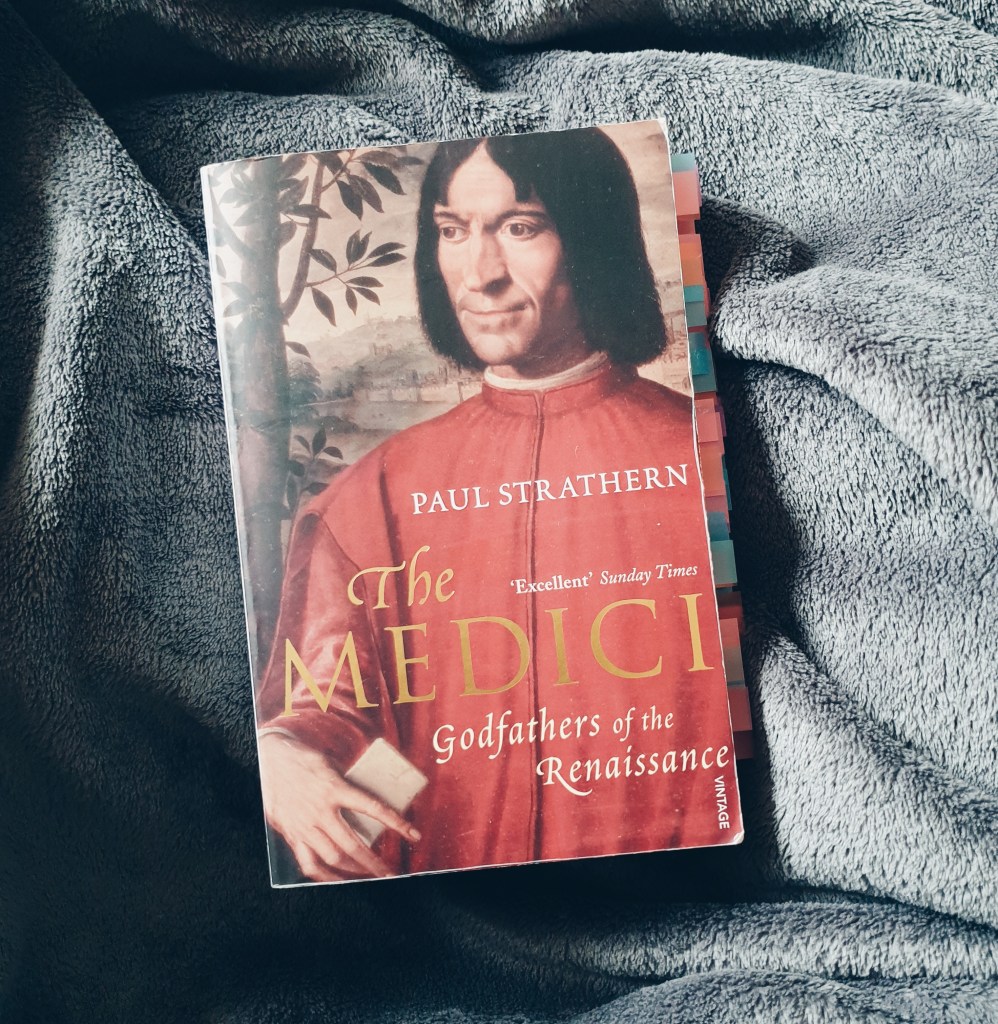
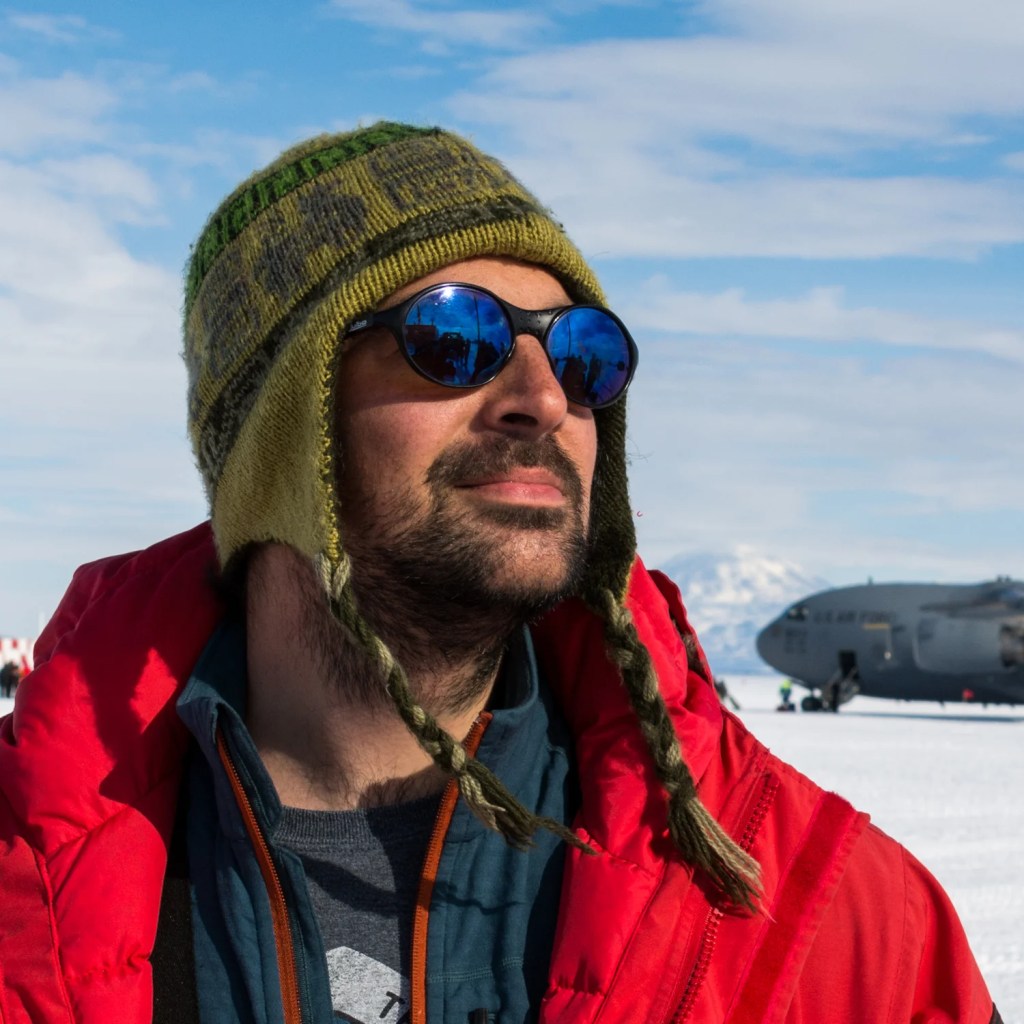

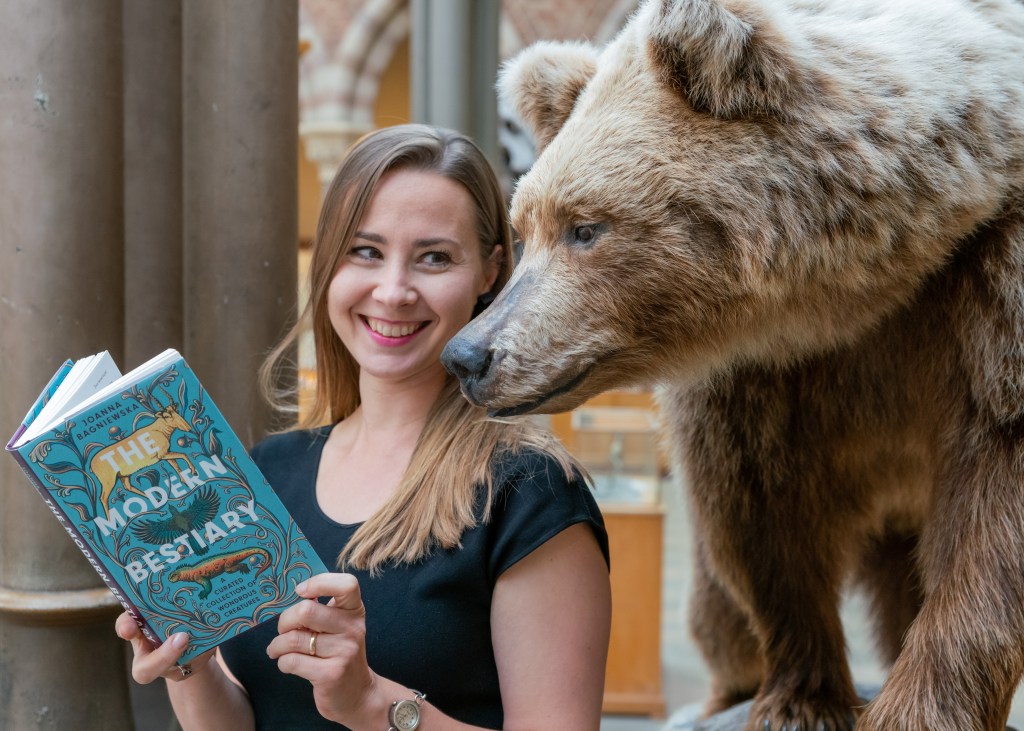
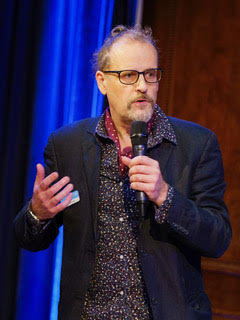
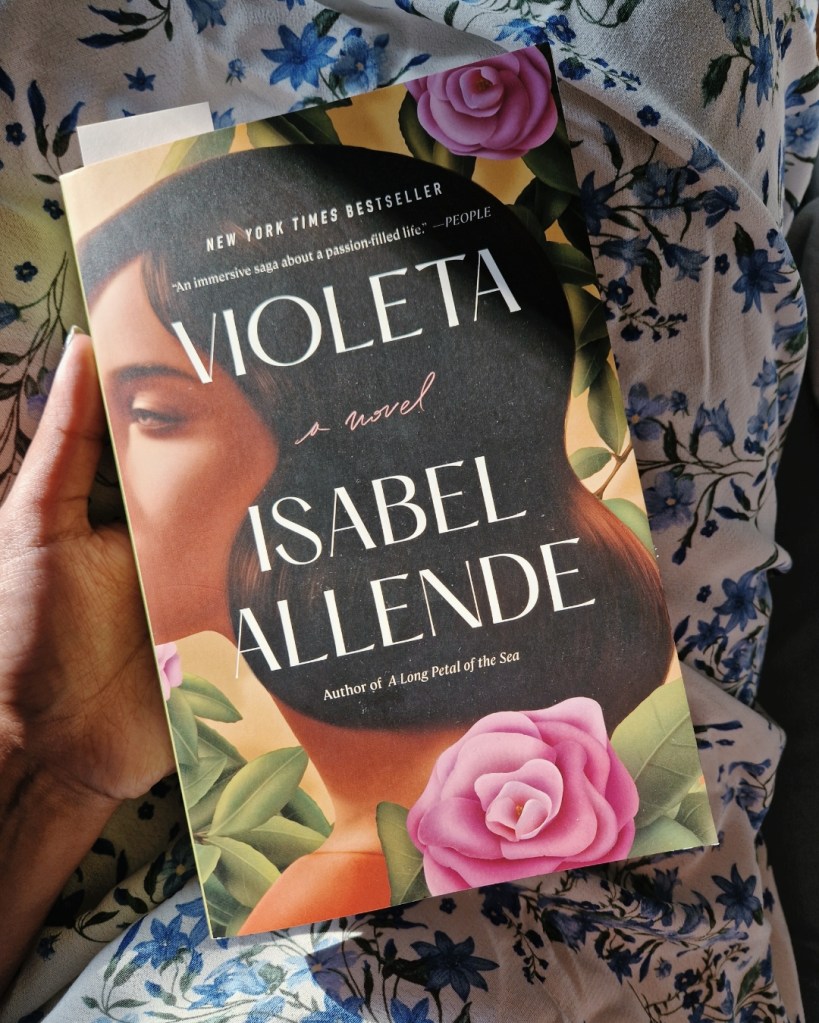

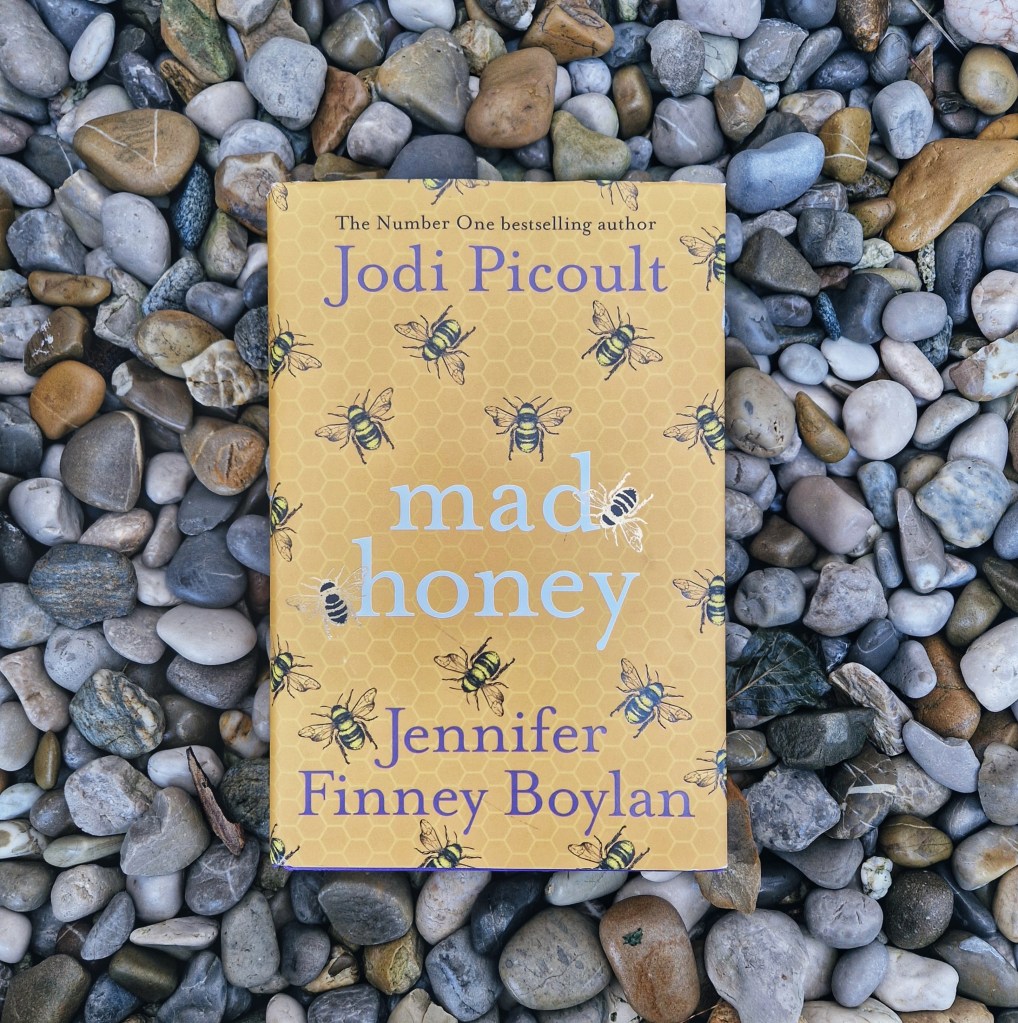
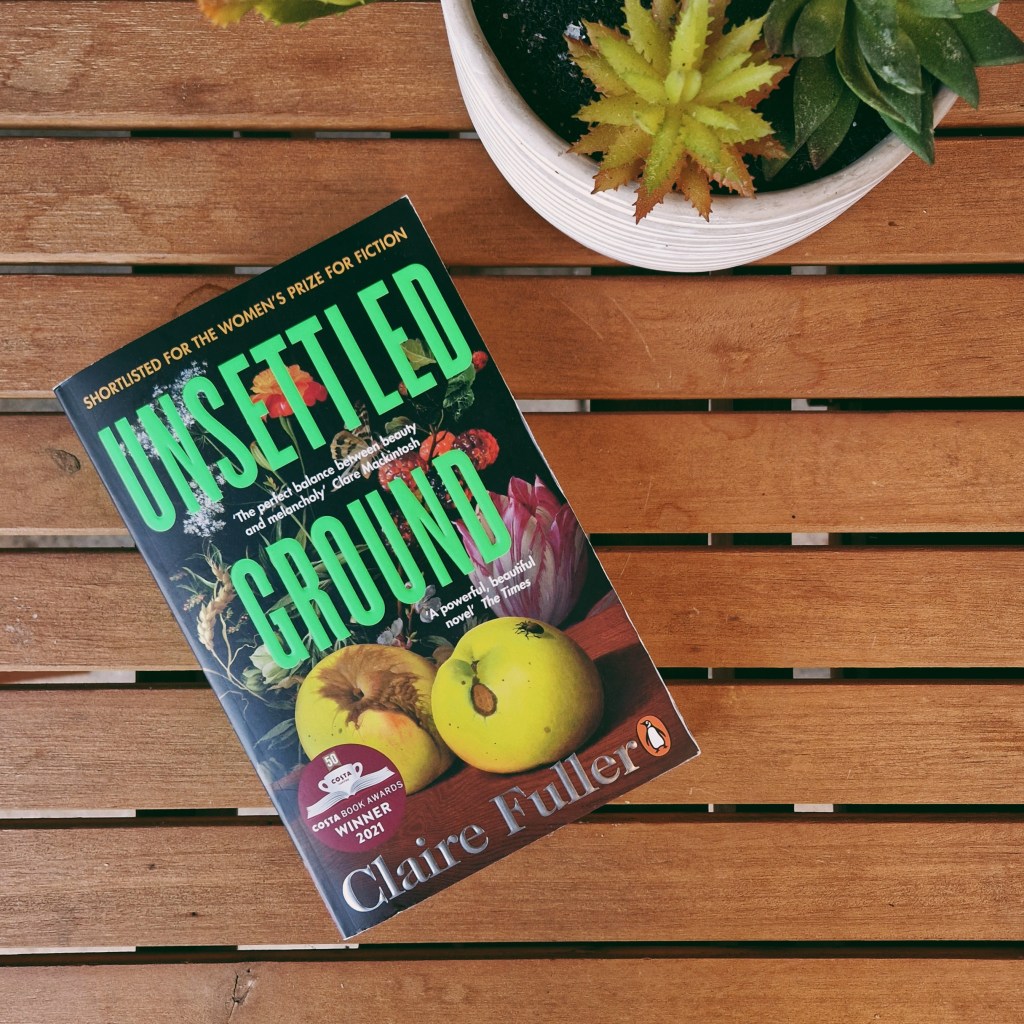
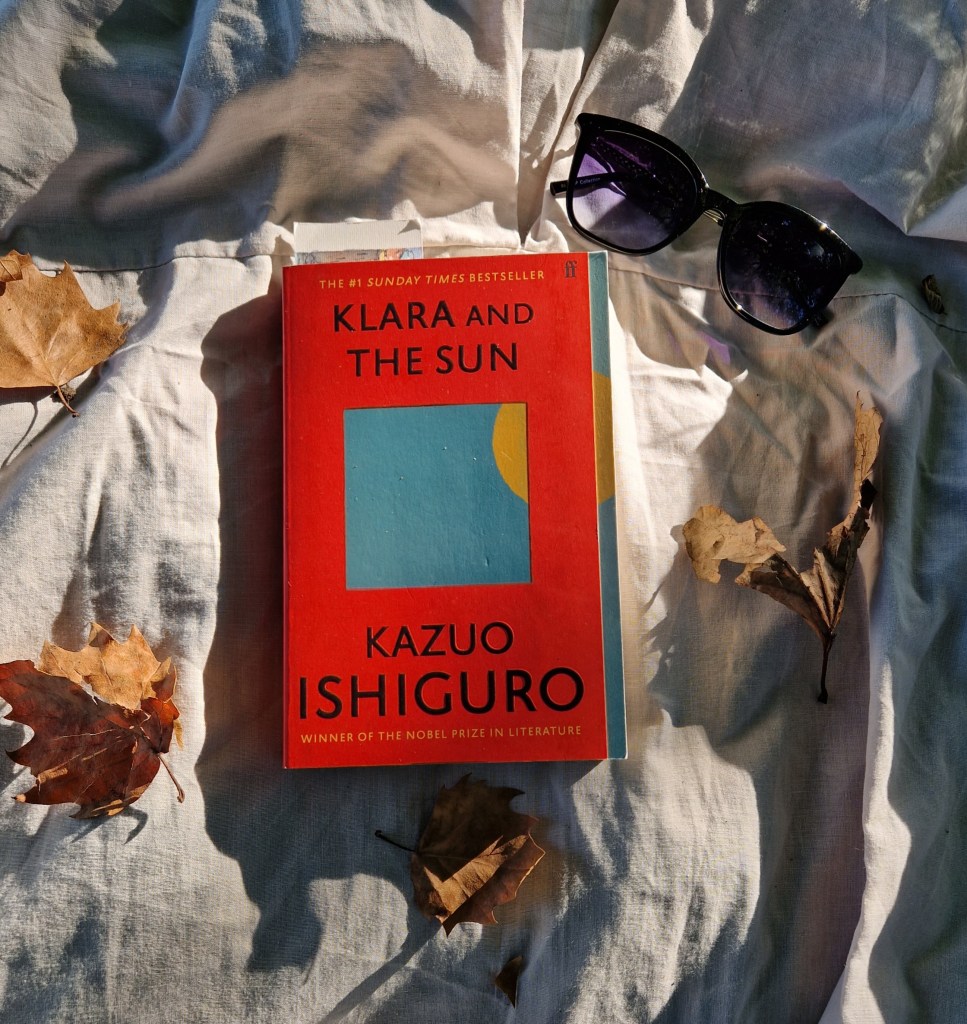
 Ushashi Basu