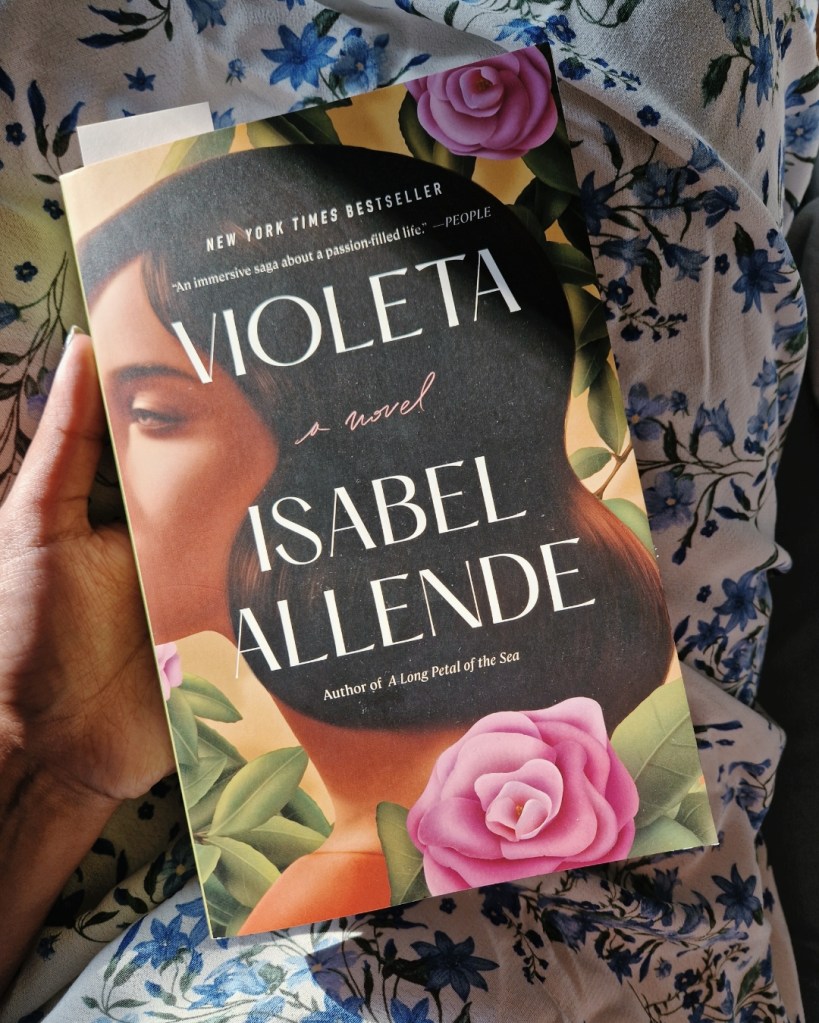
Earlier this year, I read A Long Petal of The Sea by Isabel Allende and I was convinced that it would be the best book I read this year and next year and the year after…you get it. But with Violeta, Allende has tested my choice and my taste and it is safe to say that I am stunned in every way possible by this breathtaking tale.
In this epistolary novel, Violeta recounts 100 years of her life to a man named Camilo (what his relationship is to Violeta is something I cannot give away). It is 1920, and Violeta is born in a South American country Allende has left unnamed. The world is recovering from The Great War and tackling the Spanish Flu in all its intensity. Amidst cautionary measures we are all too familiar with, Violeta begins developing into a vociferous and spoilt child, so much so that a governess from England is sent for. The Great Depression follows soon after and the devastation of this moment in world history sees Violeta’s family exiled to the far end of the continent, among vast, dry deserts and irrelevant villages.
Here Violeta is suddenly tamed and she flourishes, through many a trauma and triumph. When Violeta is in her twenties, a military coup ravages the country but she remains an apolitical observer to the destruction. A few more coups, a dictatorship, the Second World War and endless domestic turmoil, however, forces Violeta out of her oblivion. She watches loved ones come and go, and she experiences pain unknown to many of us. She enjoys passionate love – romantic and platonic. She forgives and forgets and regrets, but most importantly, she perseveres. And in the most poetic way, her life comes a full circle when, near death, she is trapped in her house because of the coronavirus and cannot truly say goodbye to the world that has been so kind yet so cruel to her.
Allende has created an iconic female protagonist through Violeta. She is fearless in her femininity, which was rare but not alien in the mid-1900s. She only moves forward, the consequences of her actions often only an afterthought. Violeta is also flawed in ways that don’t feel fictional; within her and within her aunts, companions and children, you will see women you know or have known, and evolution of womanhood through generations will feel deeply personal.
Allende’s storytelling in Violeta in this century-spanning saga will engulf you with such grandeur that it will, quite literally, alter your brain chemistry, as they say these days. There is an elegance in her prose that makes the most mundane moments of Violeta’s life seem exhilarating; the fervour with which she lives every single day of her long life, awe-inspiring.
Allende also delves into the intense political complexities prevalent in South America at the time and the lives of common people in its aftermath, and in spite of the heaviness surrounding these topics, Allende is careful not to burden you too much or take the spotlight away from Violeta’s life.
While this book is perhaps not one for those uninterested in the chronological retelling of history, if you harbour any interest in reading about a diverse, nuanced range of characters that represent human nature exceptionally well, Violeta needs to find a place on your reading list. That’s about everything I will say for now.
I systematically avoid reading self-help books, or any book that promises to dramatically change my life on the cover. This is not to say that self-help books haven’t ever worked for anyone, or that they are all entirely baseless — they’re just not for me. I struggle with the authority these books tend to establish and as I walk past the self-help section in a bookstore, I cannot help but ask, “why should I listen to you?” or “what is the truly groundbreaking advice you have to offer, that my mother hasn’t shared with me in the past 25 years?”
For many years, that is what I thought about Atomic Habits and I refused to even read its blurb, in spite of recommendations from people I trust with book recommendations. But one life-changing event and plenty of time on my hands to suddenly focus on myself, Atomic Habits landed impulsively on my nightstand. And while I determined that I had nothing to lose at the time, I find myself on this public forum today, ashamed to declare that I actually enjoyed the book.
James Clear, blogger (now author) and former baseball player, has compiled an easy-to-follow manual of how to implement new good habits into your life and maintain them to the point that they become an integral part of your very identity. He emphasises on consistency, patience and time throughout; Clear writes that consistently performing our habits and remaining patient about their outcomes has more power and impact than we give it credit for. These habits can be as miniscule as a grain of sand, and before you know it you’ll have a wonderful beach at your disposal (apologies for the cliche). That these habits are supposed to be good is a given. Clear leaves it up to you to decide what is a good habit for you and conversely, what will end up being a bad habit in your life.
Clear has laid out a very clear plan for you to develop good habits and hold yourself accountable when you catch yourself slipping. Make sure the cue for you to perform the activity is obvious and attractive, and the activity itself is easy to do. The actual habit should also be satisfying to engage in. Finally, reward yourself with something attractive after you’re done. “Easier said than done,” my brain grumbles, while also making me stick page markers to make note of the process because who knows, it might just work.
What stands out amidst all the graphs and tables and doodles though, is Clear’s humility. He doesn’t claim that his methods are foolproof and he doesn’t diminish the quality of your current life. He does not appoint himself as your life-coach either. His approach is simple – if by chance, you would like to improve a few aspects of your identity, here’s how to do it, remember to start small and not give up at the first obstacle. Based on this brief character analysis, I don’t think one would be bored and vexed out of their minds if they were to meet Clear for a cup of coffee.
However, the book does lose momentum a little more than halfway through, and in repeating himself to exhaustion by the end of the book, Clear has made sure I never pick up a self-help book after Atomic Habits. But repetition warrants routine; if you repeat a good (or bad) habit enough times, it will, undoubtedly become a natural part of your day-to-day. One could say that this narrative technique is nothing but Clear’s subtle strategy to stress on the power of repetition.
It also goes without saying that Clear fails to consider cultural and socio-economic nuances in his formula: reinventing your life by writing down your habits and scoring them based on their worth in your life — one of the methods Clear suggests — is often a distant fantasy and a privileged way of living, when you have very little choice in deciding what is good and what is bad for yourself. You are selfish. A topic to deliberate on another time.
Everything said, the converse of what I stated when started this review with is also true: who am I to challenge these so-called experts and review their hard work on my insignificant blog? I have not cracked the code to good living and I am definitely not a world class athlete. But I like this vantage point and I like the mediocrity. I think I’ll keep some of my bad habits.
So I don’t know how far I am willing to go to implement any of Clear’s methodologies in my life (I can report back in a year), or if I will remember any of this in a few months’ time. If I find myself at an impasse, my wise mother is only a phone call away and Atomic Habits will become a mere breezy summer read.
I read very few books in 2022, disappointingly, and wrote about even less. In retrospect however, I felt like I had a lot to say about some of these books and share them with whoever reads my little blog.
In a first, I’ve combined three reviews in one post, but fear not, they’re short and hopefully a fun read. Why, you ask, am I writing about books I read last year, in February of the new year? I procrastinated, that’s all.
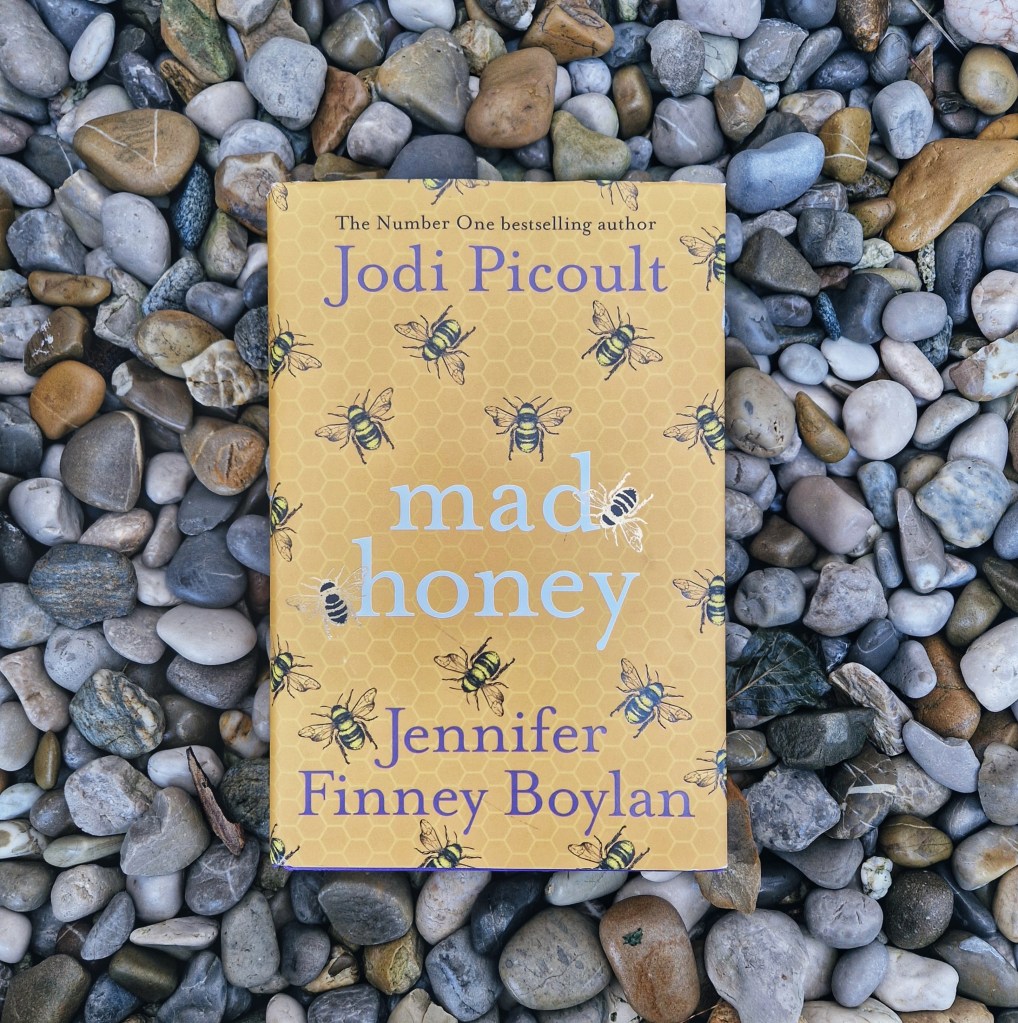
Mad Honey – Jodi Picoult and Jennifer Finney Boylan
I didn’t know what sort of reading experience I wanted out of Mad Honey. Jodi Picoult’s last two novels, Wish You Were Here and The Book of Two Ways weren’t memorable to say the least, so naturally, I was expecting nothing and everything from Mad Honey. And my, oh my, did it take my breath away.
Picoult and Jennifer Finney Boylan joined forces for Mad Honey in the most bizarre way – via their Twitter DMs – and gave new depth to what means to be a woman in the 21st Century and the distances we go and the risks we take to protect our secrets.
Lily Campanello is dead (this is not a spoiler) and her too-good-to-be-true boyfriend, Asher Fields has been arrested for her murder. Asher is also the glue that holds his mother, Olivia’s peace and sanity together, and his trial is also Olivia’s trial – and everything she’s ever held dear about her son.
Olivia, written by Picoult, narrates the story forwards, from the day Lily is found dead, through Asher’s court battle and what comes after. Lily, written by Boylan, narrates backward, from the moment she (unknowingly) looks into the eyes of her murderer, through the tender moments she shared with Asher when they first started going out and the life she had before she and her mother Ava moved to Adams, New Hampshire, in the hopes of leaving behind all their scars and brokenness in California.
Between these timelines, a lot is said and misunderstood, and unsaid and understood.
The ending is haunting; the feeling of the sudden uncertainty that upends Asher and Olivia’s life, the knowledge that a kind, effervescent and emotional soul such as Lily’s will never tread the earth again, and that Asher and Lily will never get to live out their relationship on their own terms – all of it settles into you as you turn over the final page and firmly shut the book, because that’s the only way to keep Lily alive.
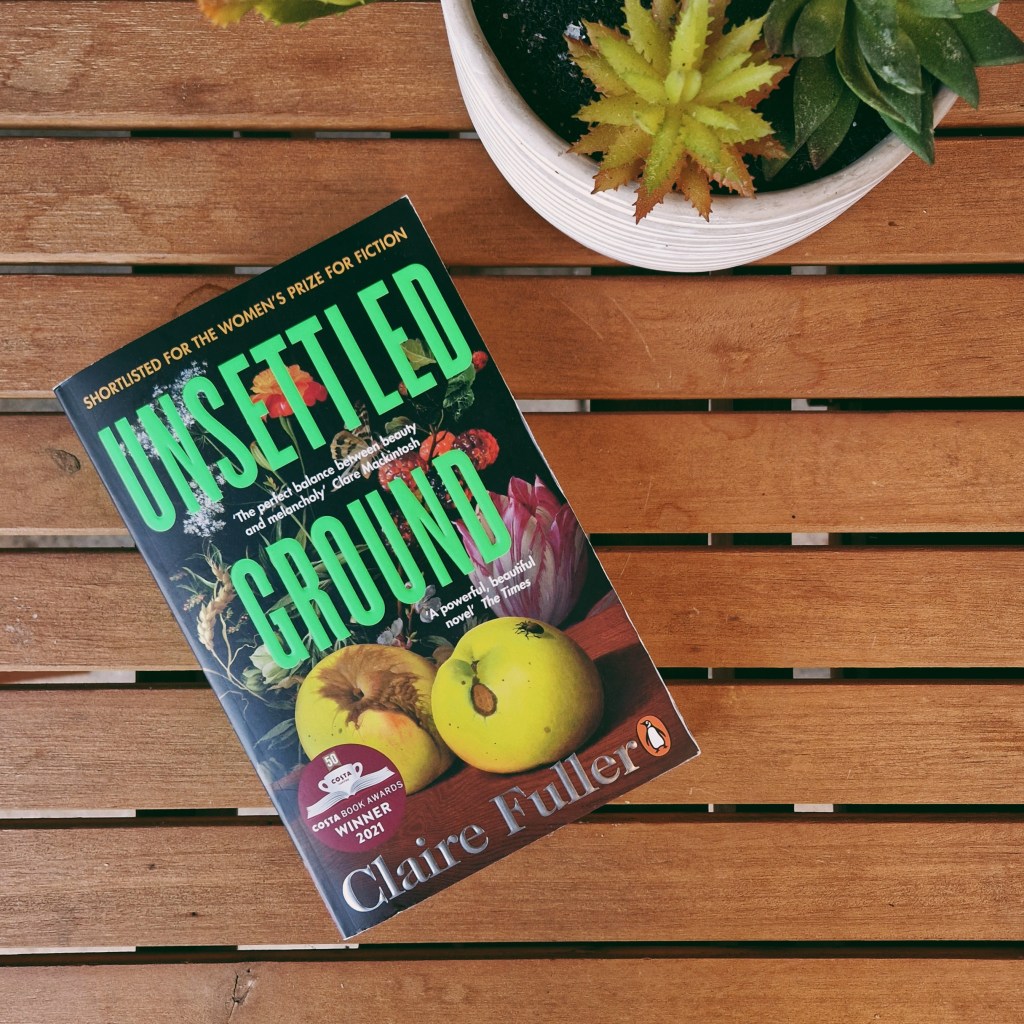
Unsettled Ground – Claire Fuller
When I bought Unsettled Ground from an extremely cosy independent bookshop in my neighbourhood, I did it because I adored its cover art. There was something eerie and inviting about the floral pattern against the black backdrop, like there was something awful scampering around beneath the flowers – and never have I ever read a book that captures its essence so accurately on the cover.
Twins Julius and Jeanie are in their mid-fifties and have never lived on their own, away from the humble cottage they were born in. Their mother, Dot, has shielded them from just about everything their entire lives, on the edge of the world where no man has ventured for a very long time. But when Dot dies without a sound one morning, Julius and Jeanie find themselves exposed to threats they never knew existed and unable to navigate the curveballs that come their way.
Unsettled Ground is a quiet novel that unravels more and more darkness as you make progress, much like the twins themselves. Literally and metaphorically, Julius and Jeanie go about their lives silently, doing what they’ve been taught to do and nothing more, except for when they sing together and momentarily set aside their suffering and shortcomings. Technology fails them, and bureaucracy makes no sense. Underneath the surface however, they harbour secrets that could destroy everything that holds them together.
Fuller writes delicately but with great impact. In the beginning, I felt infuriated at Julius and Jeanie’s incapacity to accept and adapt to the world outside their farm but with each new secret that sheds more light on why the twins were afraid of what the modern century had to offer, I sympathised with them a little more. We truly do not understand what every day would be like without the most basic appliance or the inability to communicate within seconds – and Fuller leverages this lack of understanding to display just how complicated our relationship with the natural world and our own instincts have become.
Fuller peels back the toughest layers of each character as they try to steer their way through the obstacles that litter their path, and shows that in the face of every gruesome and unfair thing that happens to us, our compassion for one another is what matters the most.
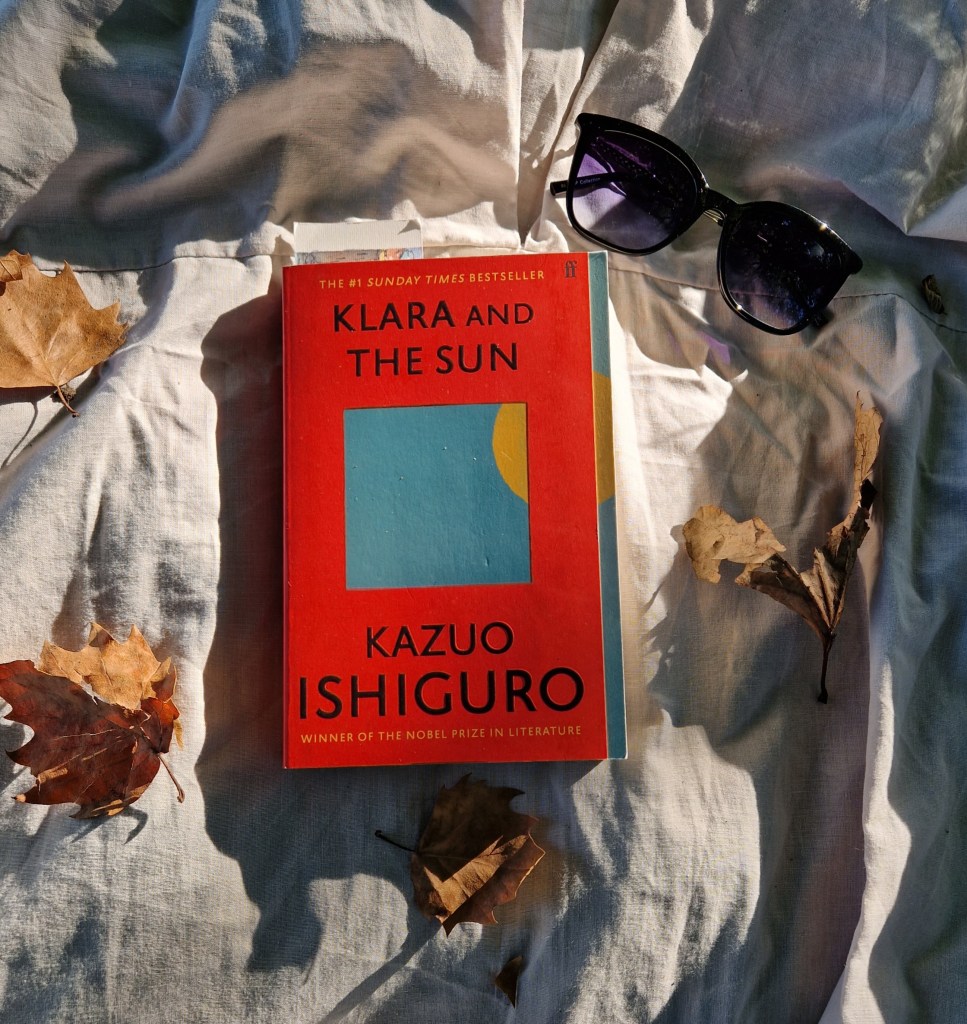
Klara and the Sun – Kazou Ishiguro
Klara and the Sun was on my to-read list for longer than I can remember, and the wait for the paperback version was long and painful (the hardcover book was too expensive, sorry!). And in all honesty, I’m not entirely sure it was worth it – controversial take, I know.
In a utopian world, Klara is an artificial friend (AF) and she’s chosen by a young girl named Josie who happens to be terminally ill and is in need of a friend-turned-carer. Klara accompanies Josie and her mother to their bungalow outside of town and prepares for a life of being everything Josie needs. Over time, Klara unearths family secrets and learns about human nature – our wasteful habits, how we make promises we don’t keep, how we often pretend to be something we’re not, and the lengths we go for those we love. Klara serves her purpose to the best of her ability, often attempting highly dangerous tasks to ensure Josie’s health and well-being. And then we move on.
Any and all questions you might have as you read Klara and the Sun, Ishiguro doesn’t answer. What does an AF look like? What illness afflicts Josie? What does it mean to be lifted? Is Josie a genetically designed child? And most importantly, how did we get here?
While the lack of context for the setting of Ishiguro’s latest novel is rather frustrating, through Klara, he has done what he does best: build a protagonist that wields great power and draws you into their world, unlike any other character.
Klara is calm, empathetic and fiercely loyal. She thinks deeply and tries to make sense of everything around her, even when it doesn’t make any sense. Her acumen as artificial intelligence doesn’t shroud her compassion or her sensibility. As she narrates the story of how she met, acquainted with and loved Josie, we see an unbiased and unique view of the world.
By the end, although I had about a thousand burning questions and was truly itching for answers (everyone will), I knew I wasn’t going to get any because that was not the point. In experiencing our broken ways of life and our fatal flaws through Klara’s cohesive and clear thoughts, Ishiguro has created a bold, intricate yet realistic map of where we’re inevitably headed.
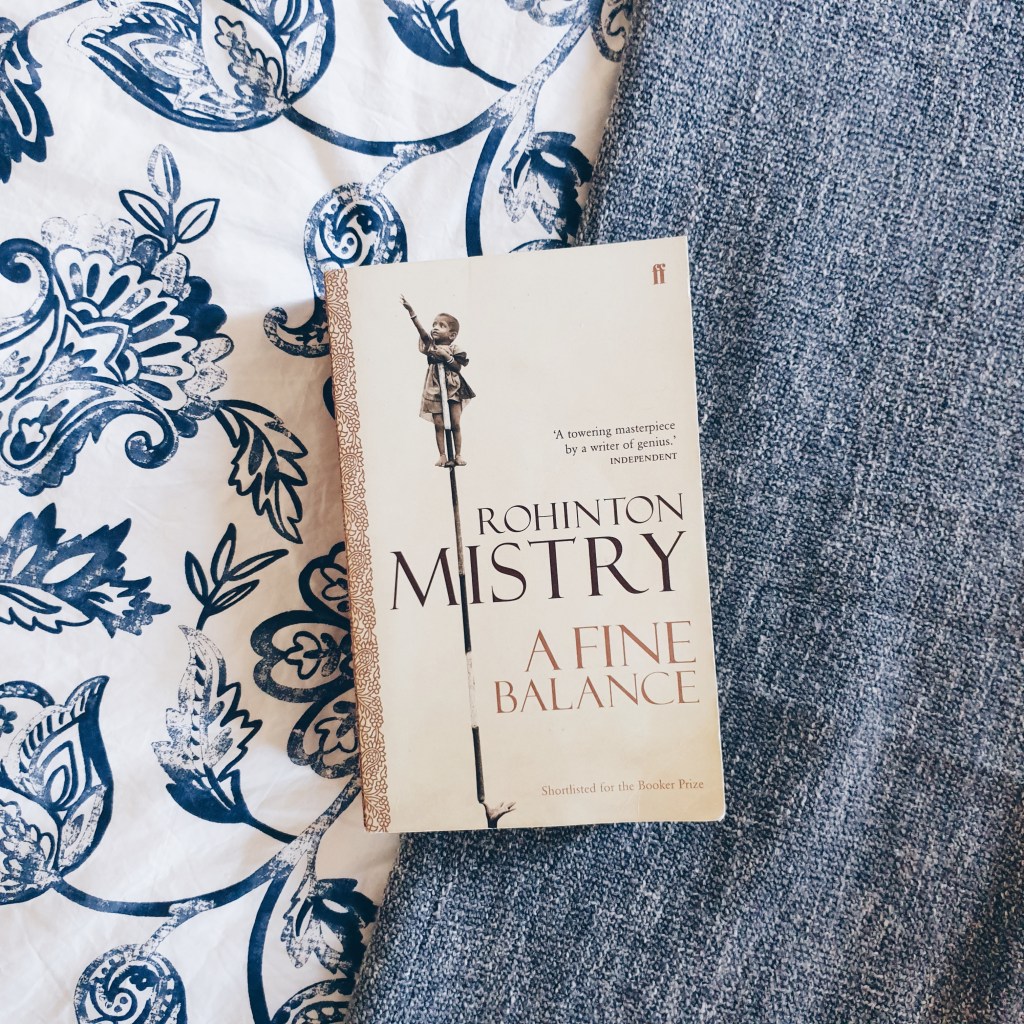
It has taken me a while to come around to writing this review. Rohinton Mistry’s A Fine Balance has left me at a complete loss of words to put my thoughts into. But it also wouldn’t be right to not say anything about this remarkable novel and its all too real portrayal of the human psyche and the ways in which it justifies its most atrocious tendencies – it is a masterpiece in every way imaginable.
A Fine Balance opens simply: uncle and nephew duo Ishvar and Omprakash Darji are headed to an unnamed but busy city for jobs; specifically, jobs from a Dina Dalal who is looking to hire skilled tailors. On the train, they meet Maneck Kohlah, who, unbeknownst to Ishvar and Om, is also on his way to Dina Dalal’s flat; his mother and Dina were old school friends and they have arranged for Maneck to rent a room in Dina’s flat so he doesn’t have to live in the rowdy student hostel. Over the course of the next year or so, the lives of these unlikely characters become inextricably and they change each other’s fate in the most gut-wrenching yet poetic way.
Set against the backdrop of the State of Emergency declared in India in 1975 under prime minister Indira Gandhi, A Fine Balance explores how the political environment of the country and the rampant violence and corruption during those 21 months affected the different socioeconomic classes of India at the time — depicted through Dina, Maneck, Ishvar and Om who come from strikingly different backgrounds and whose outlook of society varies by the injustices meted out to them. Mistry’s novel provides a very vivid glimpse of a highly controversial time in independent India’s history and as a passionate fan of historical fiction, reading this book has been as educational as it has been emotional.
A Fine Balance shines the brightest when, in describing the minutia of the lives of our four protagonists, it brings out the nuances of their characters and lays bare the methods in which humans go about strengthening their relationships with each other: with humour, food, trust and storytelling. Dina, Maneck, Ishvar and Om all have fascinatingly different stories to tell, of their past, of their trauma and of their standing in society and yet this is what brings them closer and closer together as the novel goes on. Mistry also focalises his narrative exceptionally well, outlining every character’s association with the society they inhabit and their understanding of its shortcomings with great subtlety.
Through these four characters, Mistry also explores the transience of life, gratitude for all it has to offer and regret for moments gone. The juxtaposition of their exhilaration and their despair that stems from deep-seated trauma gives further dimension to their characters, and makes their triumphs and losses feel almost personal. It is not an exaggeration when I say that the character development of this novel is one of the best I’ve come across; I know I will come back to Dina and her rag-tag gang and their unusual bond over and over again just to focus on the individual characters and their growth (or the lack of it) through 800 pages.
No amount of remembering happy days, no amount of yearning or nostalgia could change a thing about misery and suffering — love and concern and caring and sharing came to nothing, nothing.
A FINE balance, rohinton Mistry
In a A Little Life-esque fashion, Mistry doesn’t shy away from elaborating on the grotesque details of the misogyny and casteism the characters face and the consequent impact of such unfathomable cruelty on their mental wellbeing. Admittedly, I found this to be rather emotionally exhausting and it took me several months to get through the middle sections of the novel — the book spent long stretches of time gathering dust on my nightstand before I could find the courage to continue reading. Don’t let this deter you from exploring Mistry’s heartbreaking Booker Prize shortlist though; its emotional depth is what grants it masterpiece status.
While I am not a fan of Mistry’s prose — verbose and difficult to pay attention to for long periods of time — The Independent lists A Fine Balance as one of the 12 best Indian novels that everyone needs to read, calling it ‘beautifully written’. I’ll leave it to you to decide whether the way Mistry writes brings out the simplicity of his characters and the lives they lead better, or if his staccato style of writing takes impact away from the novel. In any case, Mistry has created a piece of work that will be a reflection of humans and our crooked society for many generations to come and for that he is a genius.
Life truly is a delicate balance of difficult emotions, experiences and relationships, and Mistry comes spectacularly close (and how!) to answering what it means to be human, wading through this journey, sometimes with purpose and sometimes without.
TW: This book mentions and describes abuse, depression, PTSD and suicide. Please read at your own discretion.
In 2017, a close friend coaxed me into watching an obscure period drama called Medici: Masters of Florence with her, citing its score and casting (of Richard Madden, to be precise) as reason enough. I begrudgingly agreed, purely out of my infatuation for period dramas, not knowing that it would spark an unhealthy and lengthy obsession with the Medici Family and their influence on epistemology and culture.
At the end of the final season (the last two are called Medici: The Magnificent, for those interested), I found myself seeking out books, essays, and frankly any written accounts of the Medici to fill in the gaps of information created by facts left out for the screen adaptation, because as much as I love a good dramatisation of a time long gone, I also like to bore people at parties with niche knowledge (who doesn’t?).
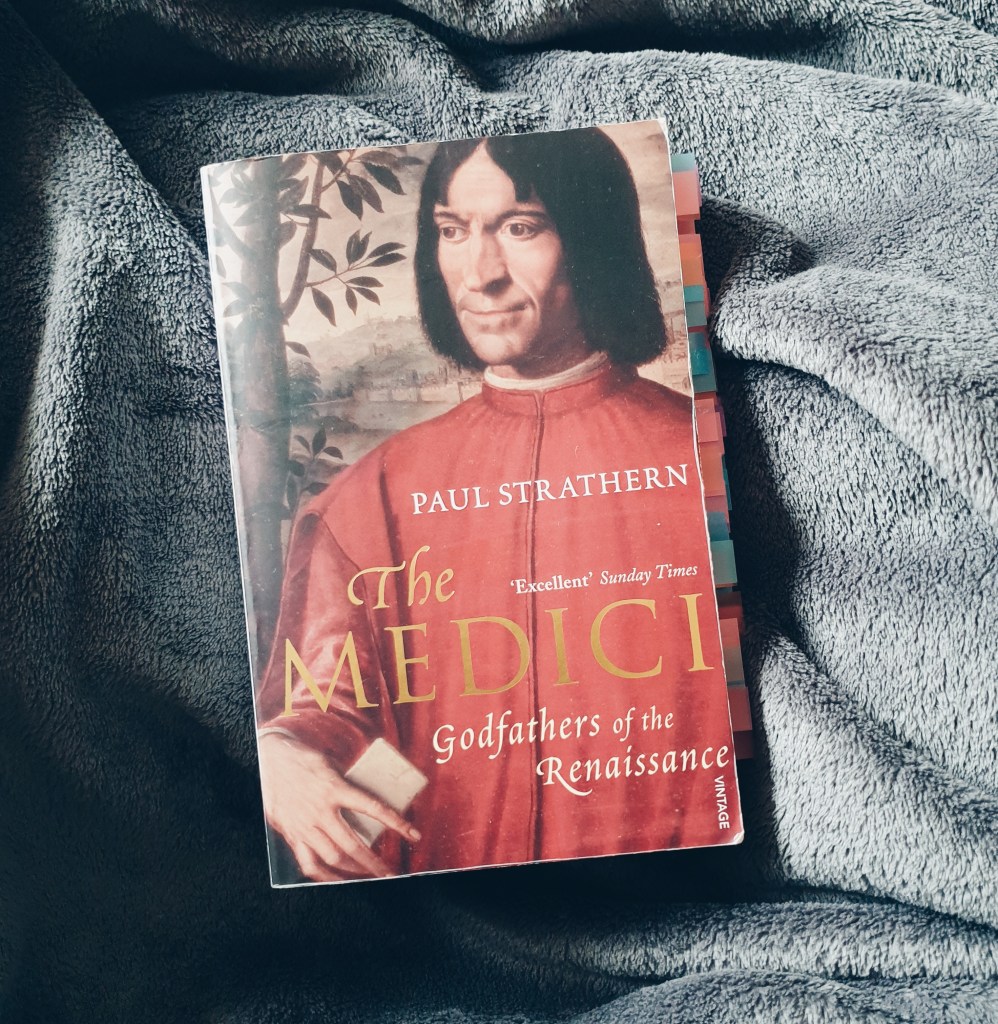
Having perused several short and poorly referenced books on the topic, I came across Paul Strathern’s The Medici: Godfathers of the Renaissance, and after an in-depth study and 50 page markers, I can finally state with confidence that I’ve found just the right book to learn about this family — the most well-rounded and detailed narration of a convoluted timeline and myriad people.
Strathern begins his chronicles of the Medici with Ardingo de’ Medici, the first in the family to become gonfaloniere (high civic magistrates of medieval Italian city-states) in 1296 and ends with Anna Maria Luisa de’ Medici, who died in 1743, taking the Medici bloodline to the grave with her. In the 500 years in between, lived some of the greatest men who towered as godfathers of all they saw and liked and left a legacy whose impact we still see today, and some horrible men who brought incredible shame and tarnish upon the same legacy.
Apart from lending money, governing the Florentine Republic, and controlling trade across Italy, nearly every Medici generation also funded and inspired various facets of the Renaissance. While at the time they were famous (or infamous, depending on your interpretation of their reign), as a political and economic dynasty, today they are most famously known for their extensive patronage of the Renaissance and commission of works that formed the backbone of the movement.
The Medici had humble beginnings — known to be God-fearing men, they were extremely cautious in their financial dealings, for usury was a sin, and the likes of Giovanni di Bicci de’ Medici insisted on keeping a low profile at all times. This caution slowly moved to the backburner, when at the height of their greatness, political agenda and a desperate need to hold power in Florence came to the forefront for Cosimo Pater Patriae and Lorenzo Il Magnifico. It was at this stage that their patronage of the arts and the sciences flourished, a way to cover up for their growing sin counter, thereby permanently linking themselves to some of the greatest artifacts of the time. By the time the great Medici reputation was run to the ground by less ambitious and honestly, horrific Medicis, usury was no longer the only sin they needed to be worried about.
Strathern peppers the long and twisted timeline with notable figures — the lives and works of artists (Brunelleschi, Donatello, Michelangelo), scientists (Da Vinci, Copernicus and Galileo), politicians (Machiavelli) and religious figures (Martin Luther), described in direct relation to the Medici speaks heavily to the longevity of Medici power and its far-reaching influence. This narrative strategy serves as a helpful point of orientation for those newly learning about the Medici.
A little-known fact that Strathern highlights in this sub-plot is the role the Medici played in shaping both Italian as well as French cuisine that we all enjoy; that their understanding of culinary theory — to bring out native flavours of meat and fish, instead of concealing them — changed what was initially a rather rudimentary of cooking and eating.
Strathern’s research for this book and the level of detail he chooses to indulge in ties the messy history together remarkably well; he focuses on the minutia of the lives of the Medici as well as those inextricably bound to the Medici family, bringing out in explicit detail, what it truly meant to be a Medici and also, to be inspired, encouraged and supported by such a family. His prose is simple but strong, which is what makes the difference between Medicis such as Cosimo Pater Patriae & Lorenzo Il Magnifico and Cosimo III & Gian Gastone all the more stark and revolting.
The aspect of the book that I am not a fan of is the lack of in-text citations and references; Strathern’s research is well-done but not evident. He explains in his author’s note in the end that he meant his book to be a popular one and not laden with heavy referencing, but I believe it would have served the book well to provide references. He does provide an extensive reading list in the end, however, and I for one, am quite excited to go through the list.
My brain does not naturally retain too many dates or too many events in chronological order but Strathern makes it easy to remember the overarching themes and then orient dates and times to those themes. The never-ending dates and wars don’t feel overwhelming at all — perhaps the biggest reason why I will recommend this book to those even remotely interested in the history of the Medici and the Renaissance.
Pair this book with Paulo Buonvino’s impeccably composed soundtrack for the Medici Netflix series and you’ll find yourself reveling in the highs and the lows, the grandeur and the austerity of life in Florence in the 15th century, alongside the Masters of the Renaissance. Meanwhile, my next Medici read will be The Bookseller of Florence by Ross King.
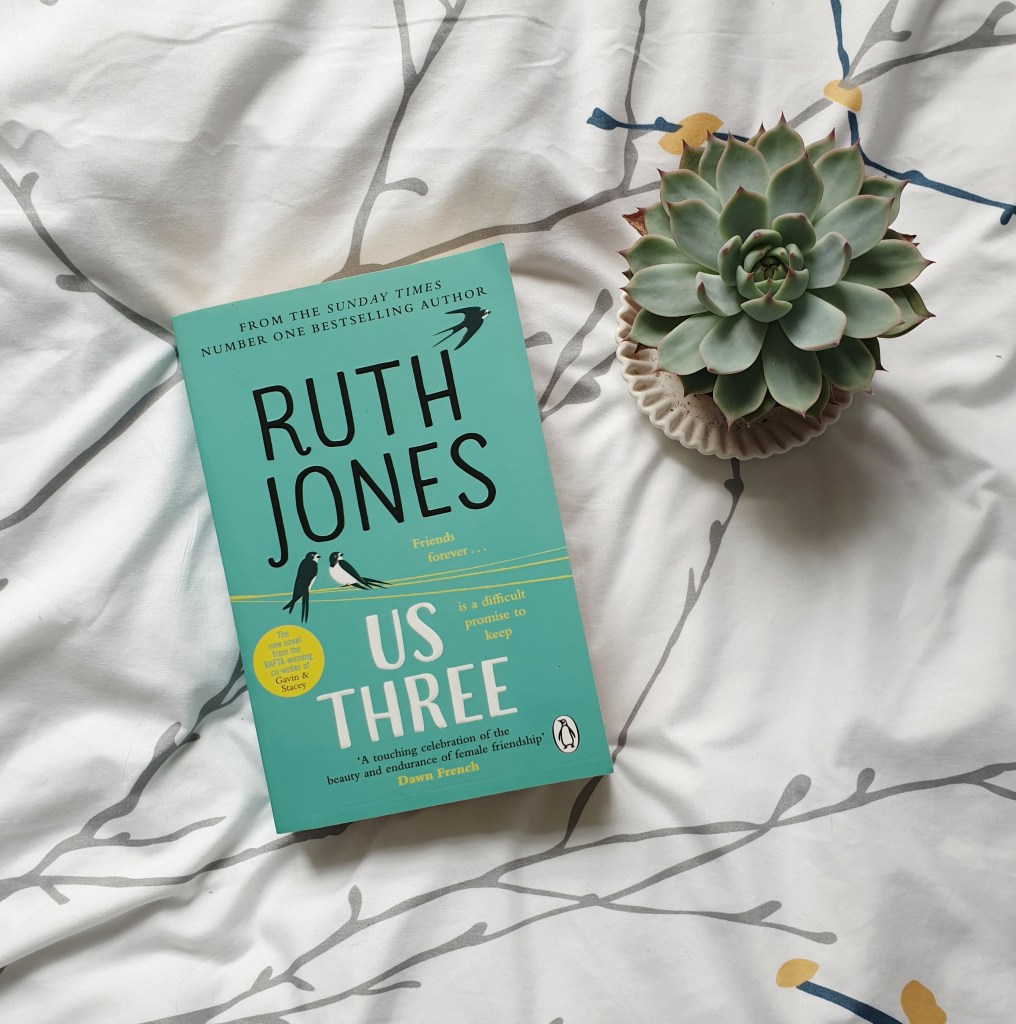
Us three forever…come what may. A naive promise of lifelong friendship made at the tender age of 8. To actually hold on to a promise made in the frenzy of a playground during lunch break, however, is an achievement for the books and Ruth Jones has chronicled its journey over four decades for all the right reasons.
Welsh girls Lana Lloyd, Judith Harris and Catrin Kelly don’t remember a time they weren’t best friends. They’ve spent every waking moment together, and they’ve faced the trials and tribulations of school and teenage together. They’ve shared clothes and books and homes. They’ve relied on each other like they were life jackets.
Until they travel to Greece in the summer before departing to college. Life changing revelations, drunken mistakes, and a web of lies replace their childhood oath of unconditional love, forgiveness, and honesty. And when they are forced to choose between each other and beautiful boys, the bond between them begins to fray. The girls find themselves on the precipice of difficult choices over and over again, and they begin to question if their friendship will stand the test of time and adulthood. Keeping a promise like that can be demanding, especially when life has very different plans for all of you.
For all the drama that unfolds over a span of 40 years, Us Three is an easy read, to the point that it feels like it was written for the sole purpose of vacation reading. Although it begins Wattpad fanfiction-esque style (i.e., along the lines of he had burnt hazel hair and green orbs that caught me off guard every time he peered into my soul) that sounds all too overused, it’s the string of adjectives and lightheartedness that you yearn for towards the end, when the girls’ lives become impossible to disentangle.
What’s most remarkable though, is that the overarching sadness of the second half of the book stems not from the twisted situations our protagonists find themselves in, but their day-to-day lives, which have become entrenched in deception and pain. There is a certain nostalgia that seeps through the pages: all you want is for the girls to find the happiness that once came naturally to them.
Every character has a unique voice, and because Jones gives them all an immaculate story arc, the sense of ending that begins to creep into the final pages feels complete.
Unfortunately for this otherwise incredible book, Us Three falls short on emotional power. It is rife with cliches and repetitive sequences; once you discover the pattern, there is nothing left for you to be surprised by. Even in its darkest moments, I found myself incapable of producing a visceral reaction. It’s the roller coaster analogy: this book climbs all the way up, but then rolls back down, robbing you of the adrenaline you’ve been so excitedly waiting for.
Perhaps it is this absence of a compelling and impactful narrative that makes Us Three easy to breeze through. Dramatic enough to keep you invested, but not so much that you are a sobbing mess by the beach. If maybe, the book were converted into a script for an online drama series, this endearing yet heart-wrenching tale would fare better.
Julian Barnes’ latest novel (2018) is every bit a love story, but in more ways than one, not. In this very long story that spans decades, there is love lost and love gained, love given and love taken. There is filial love, romantic love, unrequited love and pure lust. And our narrator, Paul, reflects on all these kinds of love; all the myriad kinds of love he has experienced in his lifetime.
But as we fail to recognise initially, The Only Story is also about anger and about trauma, about anger as a result of trauma and trauma as a result of anger. It is about the various pitfalls of adulthood and the naivete of adolescence, and it is about loss, tangible and intangible. All of it, borne and witnessed by someone madly, deeply and irrevocably in love.
The Only Story opens with university first year Paul (19), visiting his family in suburban London over summer. His mother has signed him up for the local tennis clubs, in the hopes that her son might meet some beautiful ladies. Paul heads there reluctantly, and meet some ladies he does. Only it’s a lady, Susan (48), who is married with two adult offspring. At this point, the novel is all too predictable: Susan’s marriage is in shambles; Mr. Elephant Pants — as her husband is lovingly called – is a morbidly obese alcoholic and a fantastic villain. Paul is young and rebellious, and he is reveling in masculinity. Paul believes that beautiful Susan (who is also wise and nothing like the rest of her ‘played out generation’) needs to be rescued.
And so follows a relationship that is for the tabloids and village gossip. While Susan is never too vocal about the relationship, Paul is far from ashamed. In fact, he wishes his relationship was even more scandalous. Little does Paul know that he would be in it for a lifetime, and that the consequences of his first and only love are beyond his comprehension.
It doesn’t take a lot of intellect to realise Paul and Susan’s relationship will go downhill and eventually end. The real mystery lies in the when and the why. Why did Paul believe Susan needed rescuing? What happened when they ran away to London? When did Susan first resort to the whiskey? The answers are hard to find: Paul is somewhat of an open book and Susan remains an enigma throughout their tale. No one, friend or for, ever knew Susan. Consequently, there are either vague answers given by a man in love, or no answers at all. Paul frantically searches for explanations and answers as well, but time is precious when you are watching a loved one succumb to alcoholism and you are helpless.
As put by The Globe and Mail, the characters in the book end up nowhere (unless they die). But Barnes’ writes exceptionally, knitting an elaborate tale out of a relationship that doesn’t have a lot of substance to it. Paul, now half a decade later, draws endless conclusions about love and its exploits, which when listed out, seem overly pretentious. More often than not, I found myself saying, “No one asked for your two cents.”
However, amidst pages of long due realisations, there are two worth thinking about: first, “most love, even the most ardent and the most sincere, can, given the correct assault, curdle into a mixture of pity and anger”, and second, the lifelong power of prehistory on our relationships.
In the end, Barnes’ magnificent narration is what keeps the novel engaging, in spite of the lack of a significant plot twist or a dramatic cliffhanger. Perhaps, the cleverest device he uses is the shift of pronouns: Paul goes from “I” to “you” to “he” the farther he drifts from his relationship and the more estranged he gets from Susan. The anachronistic structure of the book, without emphasis on any specific event, is also intelligent, as it focuses on painting a larger picture of society and its perceptions of love.
I’d ask prospective readers to choose this book at their own risk: read it only if you are interested in the musings of a fifty something man as he looks back on his love story, his only story.
Salvage The Bones is a visceral, true to reality novel of a poor family of six in the eye of the storm – Hurricane Katrina.
Hurricane Katrina made landfall in the United States of America in August 2005. The costliest tropical cyclone on record, the aftermath of the storm was nothing short of catastrophic. After having taking nearly 2000 lives and causing hundreds of billions of dollars in material damage, Katrina displaced almost one million people in the gulf coast region [1].
Salvage The Bones is also a story of love in the ugliest of places, filial affection amidst gut-wrenching poverty and strength where there is no strength to find.
Esch is 15. Esch and her brother, Randall are default parents to their youngest brother Junior, who doesn’t know what it’s like to have a mother. Esch adores her brother Skeetah, who in turn, only has eyes for his prized pit bull, China — so much so that he often sleeps in the dog shed. Esch is also pregnant and the father of the child won’t look Esch in the eye, won’t acknowledge Esch.
As the motherless family that lives among abandoned cars and chickens prepares for the disaster that’s about to hit them, there are other matters at hand that need to be dealt with first: an alcoholic father, a basketball match that could give Randall a much longed for scholarship, illegal pit bull matches, and a not so secret teenage pregnancy. But for the Baptiste children, it’s all going to be okay, because all that matters in the end is their unbreakable relationship with each other.
Jesmyn Ward writes like she’s not afraid, like she wants to rip open wounds. She uses extremely powerful prose and sets graphic scenes; so graphic that you will shudder in disgust and get carried away in the deluge of it. But this graphic setting is important, because it forms the backbone of Esch’s world. In Esch’s world, there’s parallels with China, because China is a mother and a fighter and that’s what Esch wants to be.
“She is her mother’s daughter. She is a fighter. She breathes.”
– Salvage the bones
Esch is an unlikely heroine, unlike the teenage girl stereotypes we are faced with. She’s the kind of heroine that strikes a chord in you, one that you’re going to root for even when the book is over, one that the world needs right about now.
From forceful depictions of reality, Ward dives into poetic metaphor, describing everything, from Oak trees and magnolias and the wood, to Esch’s undying love for the father of her child, Manny. “Seeing him broke the cocoon of my rib cage, and my heart unfurled to fly.”
But this book’s most striking feature is not Esch’s confusing yet love-filled world, but Skeetah’s undying passion for his beloved dog, China, feelings that are mutual. Here, the story is about the unconditional bond forged between a man and his dog. Ward is a magician in describing the relationship that Skeetah and China have.
Ward’s expression is so vivid and raw that you will feel the sultry heat of the fictional Mississippi town of Bois Sauvage stick to your skin and you will feel the ache of unrequited love in your heart. When the storm finally arrives, what Esch calls home — The Pit — is home no more, but war zone. Ward, who lived through Katrina herself, describes the storm with never seen before intensity; an intensity that almost hurts. When the sky is finally clear and the residents step out of the debris, you cannot help but imagine yourself standing in the rubble. And from Katrina too, Esch draws inspiration, for she is a female with unprecedented strength.
“Katrina is the mother we will remember until the next mother with large merciless hands, committed to blood, comes.”
– Salvage the bones
Salvage The Bones is an urgent book, a book that, above everything, unties the box known as privilege. In times like these, Ward’s narrative stands out because she has a story to tell, and she wants the monstrosity to show. She demands strong emotions from the reader. Ward does not shy away from having an uncomfortable conversation whilst also drowning you in poetry, and in the process, she creates a masterpiece.
Each time Dan Brown writes a new book, he speaks in detail of a new socio-religious conundrum or an unanswered question at the cusp of Science and Religion: the usual these things that make his books worth waiting for. What’s the question going to be? But then you hear “Robert Langdon” and your expectations lower a little bit.
It’s always exciting to learn what new race-against-time our favourite professor of ‘symbology’ is going to be involved in this time around, but the entire premise is a bit redundant – an overbearing amount of information on religious symbols, a guided tour of a historically relevant city and a gorgeous independent-not so-independent woman cast opposite Langdon (or Tom Hanks, as you like it). Origin, Brown’s latest addition to “The Adventurous adventures of Robert Langdon” is no different.
Origin, 2017
Langdon and his lady (here, Ambra Vidal, the director of the Guggenheim Museum in Bilbao and engaged to the fictional Prince of Spain) aside, Origin’s co-protagonist is Edmond Kirsch, a futurist and an all-knowing master of technology. His predictions of the future have always been accurate and he has created technology beyond a 2017-human being’s perception or imagination. Kirsch is also a devout atheist and doesn’t shy away from publicly deriding and denouncing religion; he ardently believes that one day, the religion of science will dawn upon us. So, when he tells the leaders of the world’s religions that he has discovered something that will shatter the foundations of their faith and shake humanity to the core, you’re on the edge. Edmond’s dramatic narration in the first half builds up nearly all the adrenaline in your body.
But between Edmond’s introduction in the prologue and his much anticipated announcement, there’s almost a 100 pages of a very detailed and meticulous tour through the Guggenheim Museum. For those entirely uninterested in modern and abstract art, I suggest you skip.
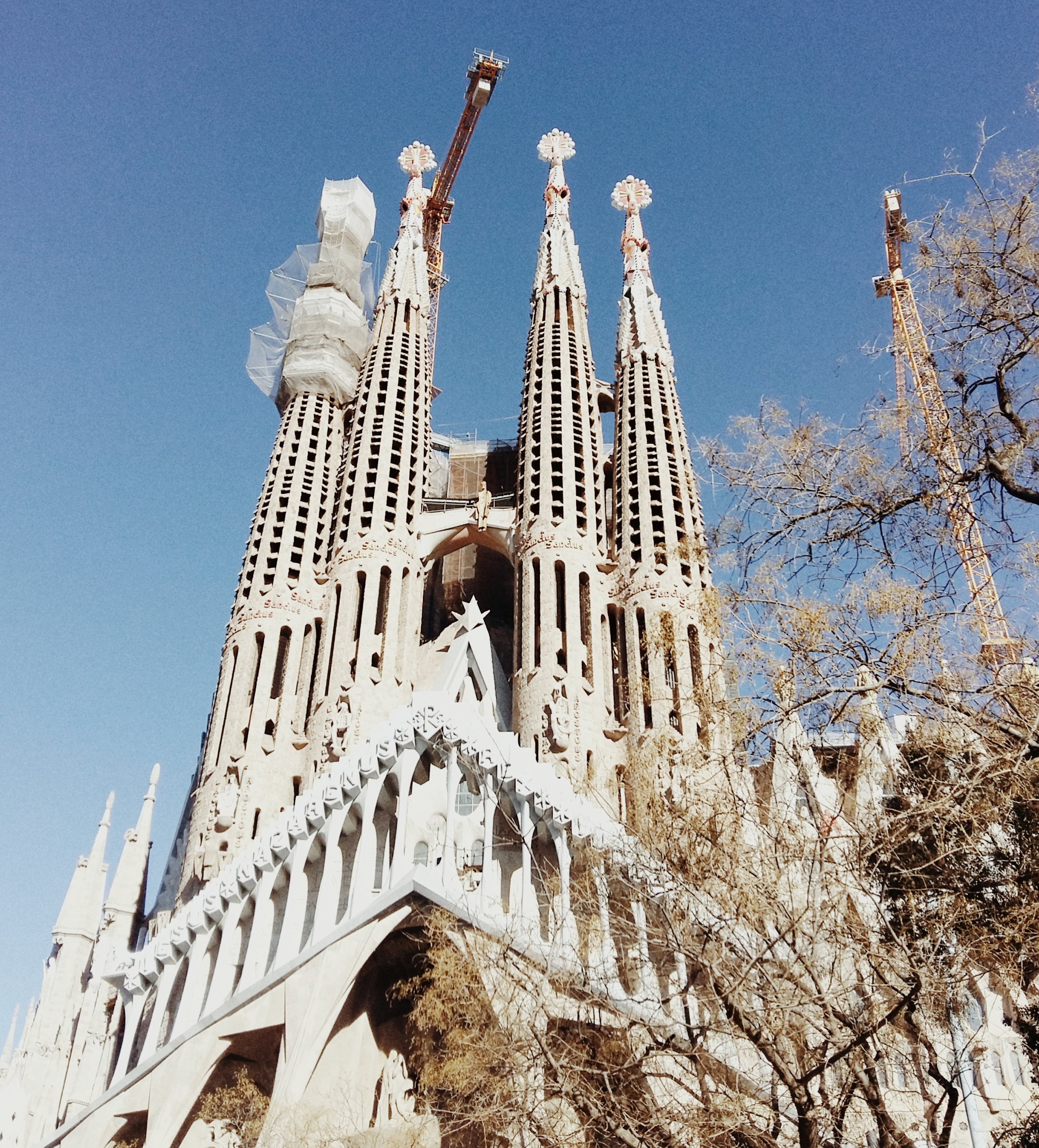
Basilica de La Sagrada Familia, 2017. Photo By: Ushashi Basu
So let’s say you’ve finally arrived at the point where Kirsch appears out of smoke and is literally *this* close to his “stunning” reveal. Enter religious zealot hired by a shady, anonymous organisation who shoots Kirsch in the head and runs. What follows is the most intriguing yet boring plot ever: a high-stakes chase through Spain’s coveted tourist spots, explained like you were on a Wikipedia page.
For nearly 7 pages in the middle of a hunt, Brown describes Basilica de La Sagrada Familia, its architecture, its history, its social influence, its contribution to…you get the point. And Sagrada Familia isn’t the only one victim to Brown’s exposition – there’s the Casa Mila in Barcelona, the Royal Palace in Madrid, bridges in Budapest, Winston Churchill, Antoni Gaudi and so on. Every time there’s something like that, you hit a lull in your reading momentum.
You get there though, to Kirsch’s discovery. And by the time you get there, there’s also almost 200 million people tuning into the revelation, thanks to Edmond’s posthumous fame and Ambra, the future queen of Spain.
The discovery is beautifully penned and unquestionably explained. Brown has done more than enough research and it’s visible. Here, there are no loopholes and all the pieces of the puzzle fit. The questions Brown addresses are questions we’ve all asked at some point: Where do we come from? Where are we going?
Edmond Kirsch, however, makes it sound like this is something entirely unprecedented and that our fundamentals as human beings will be doubted. After nearly 400 pages of stalling, exploring and feeling foolish every time Kirsch’s research was mentioned, you hear what Kirsch had to say, albeit through a pre-recorded presentation. But it isn’t as crazy as it’s made out to be. Anyone with the knowledge and memory of high-school biology and any technological skill whatsoever would’ve been able to tell. Once you sort of crack one code, it all seems rather obvious (this includes the identity of the anonymous caller). It is commendable though: Brown keeps you guessing even though you knew the answer all along.
In retrospect, if Brown had really written a discovery that would’ve shaken us, he’d have received much more media attention than he is used to.
Dan Brown exaggerates and uses hyperbole all too much. He pulls a lot of things out of proportion and gives us part-novel, part fact-sheets. Instead of using character development, he uses 2-pages of modifiers to establish his characters. But he also brings to light questions that are central to human existence and our civilisations and writes a book that’s well paced and factually accurate. And through the good and the bad and the predictability, Brown’s books are as entertaining as ever.
In 6th grade, my friend told me that “cute” wasn’t really an adjective, that anything could be cute without any meaning. But if someone asked me to describe A Man Called Ove in one word, I would, without question choose “cute”. It is nothing but heart-achingly cute.
Frederick Backman’s 2014 debutante was not an instant hit: nobody really wanted to read the story of a Swedish curmudgeon waiting on his death. The book only became popular by word-of-mouth; someone must have read it and told all his acquaintances, “You have to read this book! Ove is horrible but you’ll love him!”
A Man Called Ove, 2014
Ove (pronounced “Oove-eh”) is a despicable man doing despicable things in his neighbourhood — kicking cats, calling people names, barking orders and thinking everyone is complete idiot. Simply put, he hates everyone and everything. He’s never known anything beyond his principles and his routine. All of this grumpy and inflexible behaviour changes however, when a noisy family of four moves in next to him, and knocks on Ove’s door at every step of the way. Suddenly, Ove’s quiet
life turned upside down and he is doing things he’d always grumbled about. The matriarch-like figure in the house next door, Parvaneh, makes it her responsibility to thaw Ove’s heart the minute she meets him and the relationship that evolves is incredibly heartwarming.
Over 340 pages, Ove’s story beautifully unfolds, going back to a time when his life wasn’t as black and white as you’d initially make it out to be. There is longstanding sadness and frustration within him and beneath the many layers of anger, there is softness, warmth and a soft spoken man who was once in deep,deep love. How he got to his present state is a detail I will not indulge in. I must mention Ove’s relationship with his wife, because it will, undoubtedly restore your faith in the immense amount of love we’re all capable of, loyalty and strength, especially in times of adversity.
“Love is a strange thing. It takes you by surprise.”
A MAN called Ove
Backman writes with a tone of softness that is contagious. There is simplicity in his prose, making the book an emotional yet light read. He knows just when and how to pull at your heart strings and when you make you laugh. The balance between sadness and happiness in the book is almost perfect.
Although the book doesn’t take the reader through much of a journey, the journey here is Ove’s; it is his coming-of-age story, albeit at 59. All sorts of endearing, A Man Called Ove creates a soft spot in your heart and a filial bond with Ove. It’s one of those books you cannot predict anything about after having read only a few pages but it is also those books you cannot give up on. Once you get a glimpse into the gears inside Ove’s mind, you’ll want to see the book to the end.
A Man Called Ove is a book about love and loss, frustration and triumph, confusion and clarity and breaking and fixing — all of which leaves you a bit fuzzy and sad on the inside. Pick this book up if you want to fly and cry through unconventional and conventional love in the most unlikely of people and places.





 Ushashi Basu