About science, storytelling, and uniting the world: In Conversation with Mike Lucibella

I met Mike when I first started attending PubSci โ€“ an enthusiastic, welcoming persona waiting by the entrance, ready to greet you, cross your name off a list, and direct you to the best seat in the house. What I didnโ€™t know at the time was that Mike was a proficient science communicator himself, with extensive experience using various media to bring science to the public, particularly through science photography. After a deep dive into Mikeโ€™s work, I decided that I just had to interview him, even if for just one reason: heโ€™s insanely cool. And that heโ€™s a science communicator.

Currently Media Relations Officer at University College London, Mike has had every science communication experience possible โ€“ from writing newsletters for the American Physical Society to reporting science directly from the US Antarctic Program to hosting Resonance FMโ€™s new radio show, The Science Show, with none other than Richard Marshall.

For this interview, I sat down with Mike to learn more about his wide-ranging experiences communicating science and to hear his one piece of advice for anyone hoping to share science with others.


Tell me a little bit about yourself and how you became a science communicator. Was it something that you have always carved out for yourself, or did it just happen over the course of your career?

I got there through a little bit of a circuitous path. I have always liked science, but when I went to university, I studied journalism, and it wasnโ€™t really focused on science or science communication at the time. I was also able to enrol in an applied physics minor, and that appealed to me a great deal. After I graduated, I got an internship at a physics organisation that needed someone to do outreach and communications and that eventually turned into a job.

Thatโ€™s how I got started. Science communication wasnโ€™t something I set out to do, but once I found my way into it, I enjoyed it immensely, and I have stuck with it.

You were a part of the US Antarctic Program as a staff journalist, photographer, and podcast producer. What was that experience like?

The experience itself was huge because itโ€™s a big, dynamic programme. One of the things that really appealed to me was that there was a wide range of scientific research happening, and I had the opportunity to ask the researchers the right kind of questions to understand their work and then write about it.

The other thing was that when youโ€™re working in a research station like that, there are very limited resources. So, you have to be very resourceful about a lot of different things and build a lot of flexibility into plans. For example, the weather out there is very unforgiving, and you need to have a plan B, which also might not work and you keep going down that line for a bit.

At the same time, youโ€™re living in dorms and eating in cafeterias together. The whole experience was a little bit like a national laboratory meets a mining town meets a college.

Do you have a particular highlight from your time there?

One of my favourite moments or trips was out to a place called Shackleton Glacier, where a field camp was set up for a couple of seasons for some palaeontology research and I was able to go out there with the team to take photographs and shoot some video. And we were the only human beings for nearly 200 miles. So, it was a very remote area. It was wild to think how few people had been to this spot and just how empty the vast landscape was. And amidst that, there was this research effort that was able to do what it needed to, pack up and go home.
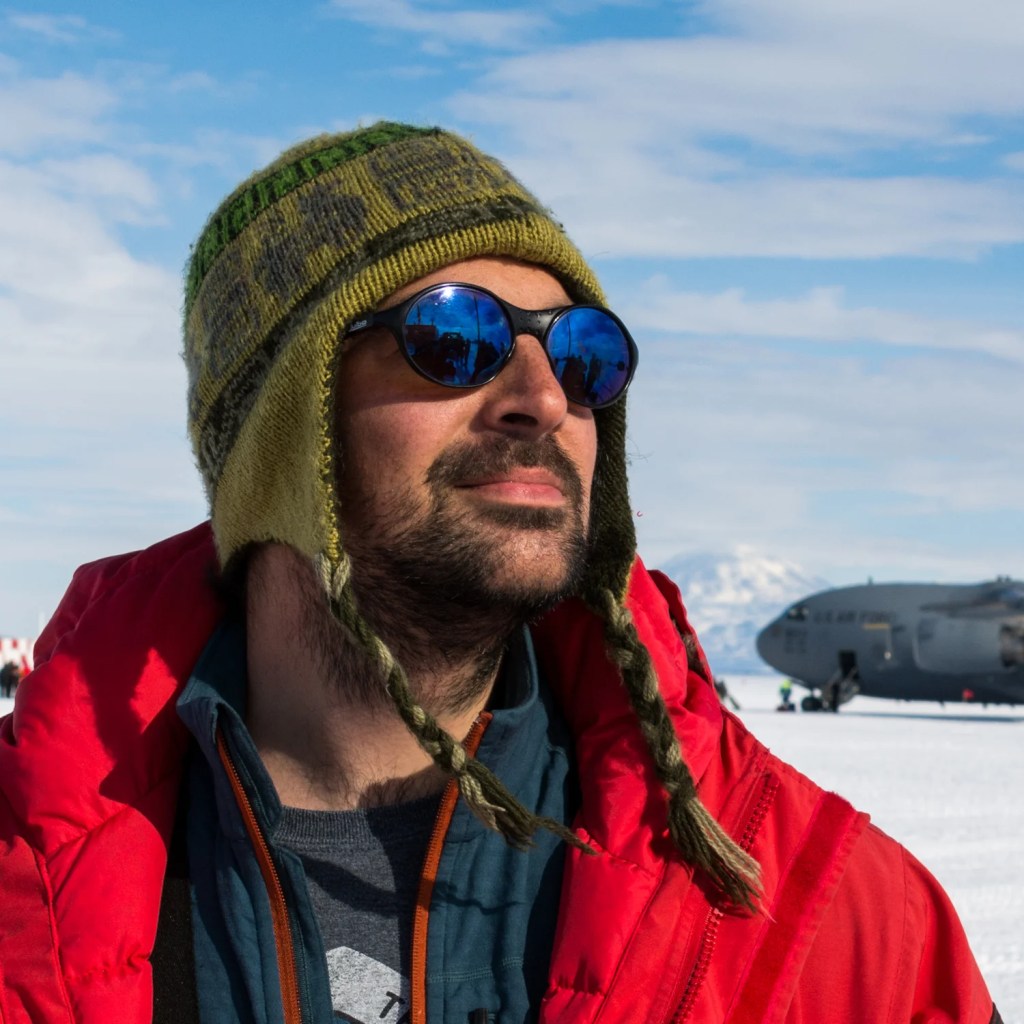
Photo credit: Mike Lucibella

Is it something you would do again โ€“ perhaps in a different locale?

There are two aspects to that.

I’d love to go to because I love to travel, so I would love to go see deserts, mountains, rainforests. I also like going there and being with researchers because it’s very meaningful to be able to kind of go and see this kind of thing.

What was difficult about the Antarctic deployments was that they’re very long. I would be deployed for about four months at a time and that’s very difficult personally.  Youโ€™re away from your family and the Antarctic summers are over the Christmas period, so I missed a bunch of Christmases and things like that at home. And it’s very difficult on family and friend relationships to be gone for so long, especially in such a remote place with limited communication.

You have shared the photos from your US Antarctic Program work extensively on your website, along with other photography. I wanted to ask, do you think photography is an effective medium of science communication?

I donโ€™t say this to be a generalist, but what I like to do is not just focus on photography, or writing, or podcasts โ€“ instead, I like to tie them together. I think thatโ€™s really important for storytelling. Theyโ€™re each different tools for different aspects of scientific storytelling.

Photography in the Antarctic tells you a good story of people working in dramatic landscapes in a harsh environment to do science. At the same time, itโ€™s also very humanising. The people doing the research are like many of us, and a diverse group as well. Itโ€™s good to be able to show that anybody can do science. Science is something that can happen to anybody. Science photography is a good way to do that.

Writing is just as important to show what research is happening, what research tax dollars are being spent on. Podcasts and radio shows are good for telling a story and further humanising things, where you can delve a little bit deeper into what researchers do and what their experiences are like. Someone once half-jokingly said that radio is a visual medium, but itโ€™s true; when you hear a podcast or a radio program, you can create images in your mind that can make something seem so much more real.

Speaking of varied media, you have noted that you are always looking for different ways to bring the excitement of science and research to diverse audiences. What does diverse mean in this context?

There is a very traditional view of science as being done by old white men. In my experience, working with scientists is anything but that. Some of the best research in the world is being done by women, non-binary individuals, people of all ethnicities and backgrounds. And that is very important to show and communicate. Science is a very diverse field, with people from so many different parts of the world contributing something.

Thatโ€™s the remarkable thing, too, if you kind of step back and look at it, science is this field where more so than almost anything else, different people from around the world can put differences aside and work together on projects and that kind of thing in a lot of ways.

That’s something you see a lot of in the Antarctic programs, where there are national stations, but thereโ€™s a lot of collaboration happening. And then if there’s an emergency, any pretence of differences in national politics is dropped and people just run to help people when they need it.

“Science is this field where more so than almost anything else, different people from around the world can put differences aside and work together on projects.”

MIke lucibella

You also media train scientists and researchers โ€“ why do you think it’s important for them to speak to the media? And when you are standing in a room full of scientists, what is one thing you always tell them?

Itโ€™s imperative for scientists to talk to the media because there’s an inherent kind of credibility that a researcher is given. These are people who are experts in their subject, people who have devoted their lives to understanding the ins and outs of a very particular topic. And there is a level of credibility that’s afforded to them. That level of credibility can make a big difference in policy spheres and understanding of the world.

They also have to be able to speak to the media well. Itโ€™s important for researchers to communicate the significance of what theyโ€™re doing and why theyโ€™re doing it, for a range of reasons. Itโ€™s to inspire people to do more science, to understand the world around them, and also to effect change.

Thereโ€™s a lot of research being done to make the world a better place. And this needs to be broadcast. So, helping scientists broadcast their messages and their findings is necessary to effect that change.

To the second part of your question: I think at the core, the number one thing is to think about and empathise with the audience, and try to put oneself in the place of the audience. Presume that you are speaking to intelligent people, but they may not have spent as much time as you studying that particular subject. Your audience wants to know, wants to understand โ€“ but you have to help them get there. So, take a step back from what you know and your background in the subject, and instead go to what is an easy entry point to the topic and how you can describe your findings.

Going back to the topic of science communication, you have worked in science stand-up comedy, podcast, radio, photography and writing. Is there a medium you havenโ€™t worked with yet that you would like to? 

I mean, I would love to be a movie star!

I have done a little bit with filming and video, but not a whole lot. It is a very powerful medium, but it’s one that takes a lot of resources to do. I would love to be able to be part of a big team working on a science TV show or documentary and helping to shape it and tell a story that way. That seems like something that would be a lot of fun.

There is other stuff out there that I haven’t really considered, so I’m always keeping an eye out for future opportunities as they show up.

And your favourite medium so far has been?

I really enjoy photography on a level that’s different than most of the other kinds of stuff. Photography is a lot of fun because itโ€™s very versatile. You can do anything from taking vast landscape images to tiny images of an insect or a spider. And I really appreciate that. Itโ€™s also a very good excuse to go out and find something interesting to take a picture of. That’s always something that I’ve enjoyed, the combination โ€“ being able to put the exploration side of science with the communication side of photography together.


For more about Mike and his work in photography and science communication, visit https://www.mikelucibella.com/.

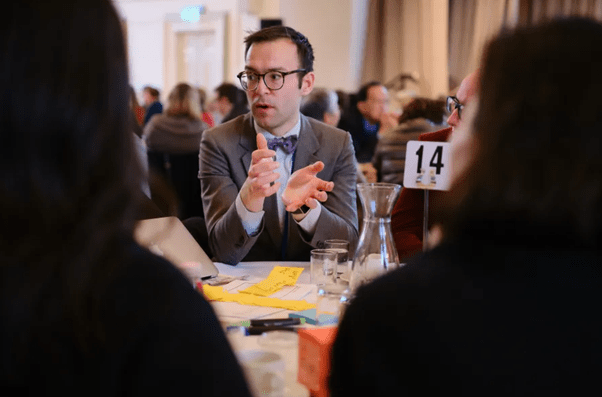
A journey into the multiverse of science communication: In conversation with Sam Illingworth

At the start of my science communication career, the very first thing I published was a short reflection on the similarities between science and poetry, and how we can use the latter to communicate science. It was also the first piece of work I created under the mentorship of Olle Bergman. During this time, he told me about Sam Illingworth โ€“ a professor, science communicator, and believer in using poetry to disseminate scientific ideas โ€“ and I knew I had to someday complete the circle by interviewing Sam for my blog. I finally made it happen, and I am proud to share this insightful conversation with Sam with all of you.

Sam is a professor of creative pedagogies at Edinburgh Napier University, and currently, his research involves using poetry and games to create dialogue between audiences. Sam is also the founder of Consilience, a first-of-its-kind, peer-reviewed science and poetry journal.

In this interview, Sam tells me about his journey into science communication, how he engages different media to invite interactions with science, and the importance of tailoring messages to connect to different audiences.


Tell me a little bit about yourself and how science communication became a career choice for you.

Sam Illingworth

I started out as an atmospheric physicist, measuring greenhouse gases using satellites and aircraft. But during my PhD, I realised I was more interested in how science connects with people than in the data itself. I became fascinated by the gaps between scientists and wider society and wanted to find ways to bridge them.

That curiosity led me to Japan, where
I studied the relationship between science and theatre, and then to a lectureship in science communication. Since then, I have used poetry, games, and other creative tools to help make science more accessible and more open to dialogue. Science communication was never a career I set out to do, but it became the only one that made sense.

You founded the Consilience journal, the worldโ€™s first peer-reviewed science & poetry journal. What inspired you to create it, and what do you want people to take away from it?

Consilience came from a desire to create a space where poetry and science could meet on equal footing. Too often, they are treated as separate worlds, but to me, they are just different ways of asking questions about how we live and what matters.

I wanted to build something that not only published science poetry but also treated it with the same care and respect we give to scientific research. That is why we use peer review, not to gatekeep but to support and improve. The goal is to help people feel part of a community where feedback is generous and learning is collective.

What I hope people take away from Consilience is that science and poetry are not opposites. They are complementary tools for making sense of the world. And that everyone, regardless of background or training, has something valuable to contribute.

Your current research involves using poetry and games to create meaningful dialogue between different audiences. What does meaningful dialogue look like, and what does it entail?

Meaningful dialogue is less about agreement and more about recognition. It is about listening to understand, not just to reply. When I talk about dialogue in science communication, I mean creating spaces where people feel heard, respected, and able to shape the conversation.

In practice, that often means moving away from traditional top-down models. Instead of scientists delivering information, we work with communities to co-create something together, like a poem or a game. These creative tools help flatten hierarchies. A poem written together invites shared vulnerability. A game opens up space for negotiation, for choice, for play.

Meaningful dialogue is also about letting go of the need to have all the answers. It is about making room for uncertainty, for emotion, and for different ways of knowing. When that happens, science becomes less about telling and more about asking. And that changes everything.

Books, podcasts, and games are all media you have used in your work and research in science communication. How do you tailor your messaging to each of these audiences and their needs?

Each medium offers a different kind of conversation. With books, I have the space to go deep, to build an argument slowly, and to invite the reader into a more reflective space. A book allows me to bring together research, personal stories, and practical advice in a way that feels grounded.

The podcast is more immediate. It is about tone, rhythm, and intimacy. When I read a science poem aloud, I want the listener to feel something before they even think about it. It is about drawing people in through sound, then giving them space to reflect on the science behind the words.

Games are different again. They are not about delivering a message but about letting people explore systems, make decisions and experience consequences. The message is not what I say, it is what players discover through play. So, when I make a game, I try to create a space where people can bring their own questions and values into the experience.

In all cases, it is about respect. Respect for the audienceโ€™s time, intelligence and lived experience. I do not assume what they need. I try to listen, adapt and build something that invites curiosity rather than insists on a conclusion.

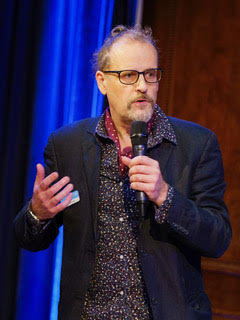
Sam, in action

Why do you think tailoring the message to fit each audience is important in science communication?

If you are not speaking in a way your audience can connect with, then the message does not land, no matter how accurate or well-intentioned it might be.

Different audiences bring different experiences, expectations and needs. Tailoring the message means meeting people where they are, not where you think they should be. It also means respecting their knowledge and avoiding assumptions. You cannot use the same language for a policymaker, a school pupil and a community group and expect it to resonate equally.

Tailoring is not about simplifying or dumbing down. It is about relevance, empathy and clarity. It is about building a bridge that people want to walk across, rather than one that just shows off the architectโ€™s skills.

Tailoring [your message] is not about simplifying or dumbing down…it is about building a bridge that people want to walk across, rather than one that just shows off the
architect’s skills.

Sam Illingworth

What role do you see your work across all these media/platforms play in (the greater) public engagement with science?

I see my work as helping to open up different entry points into science. Not everyone wants to read a journal article, and not everyone feels comfortable asking a question at a public lecture. But a poem, a game, a blog post, a podcast are all media that can offer gentler invitations.

The aim is not to replace traditional science communication but to extend it. To show that science can be emotional, playful, messy and human. It is not only about answers, but about questions worth sitting with.

Across all these platforms, I try to create space for dialogue, for curiosity, and for other voices to come in. If my work helps someone feel that science is something they can connect with on their own terms, then it is doing its job. Public engagement is not about broadcasting; it is about building relationships.

You have also worked in the education space with students, to communicate science and to understand their attitudes towards science. Over time, have you noticed a change in childrenโ€™s/studentsโ€™ interest in science? What about their parents?

I have worked with a range of age groups, from primary school children through to university students and adult learners. That said, most of my work with younger audiences was earlier in my science communication career. These days, my focus is more on higher education, particularly on how students engage with science and creativity within academic settings.

Because I no longer work closely with school groups, I would not feel confident making broad claims about shifts in childrenโ€™s or parentsโ€™ attitudes to science over time. What I can say is that when I did work in schools, curiosity was never lacking. The challenge was often about confidence, i.e., helping students feel like science was something they could ask questions about without needing to get everything right.

With parents, I have had less direct interaction, but I imagine similar dynamics apply. People engage most when they feel invited in rather than judged from a distance. Whether it is students or parents, I think the more we focus on listening and co-creating, the more meaningful that engagement becomes.


Learn more about Sam and his science communication work here, and read the latest edition of the Consilience Journal here.

The Venn Diagram of Mental Health

The symptoms of mental health conditions are often inter-sectional, and overlapping. They are rather general, and often not characteristic of the root cause of the condition. Therefore, it is essential to recognise specific marker symptoms so that correct help can sought early. Guest writer Scarlett Parr-Reid and I discuss these symptoms and our personal experiences of them in this blog post.

Trigger Warning: Some experiences mentioned in this post may be disturbing for certain readers. Please discontinue reading if you find yourself in such a position. Online resources for help and advice are linked at the end of this post.


Ushashi: Lately, Iโ€™ve realised how interconnected mental health issues are, especially when it comes to early symptoms. Just like a high fever is one of the earliest symptoms of the onset of any disease and doesnโ€™t really tell you anything about the nature of the disease, some of the initial reactions of the body to anxiety, obsessive-compulsive disorder and panic attacks are also incredibly similar. 

Scarlett: I understand youโ€™ve personally experienced panic disorder and I am wondering what your experience of it has been like. Have you found ways to manage it?

Ushashi: I have been suffering from panic disorder for a while now, and it comes and goes. There have been long periods of time where I was feeling completely fine, but there also have been periods when it got rather awful. Iโ€™ve tried several things to address the issue, and as much as there are moments where theyโ€™ve worked wonders, sometimes theyโ€™re not as useful as I want them to be.ย 
And to this day, it is a mystery to me, how and why it all began. Iโ€™m generally happy with where I am in my life right now, in both professional as well as personal spheres. I have incredibly loving friends and family who are perpetually there for me and vice versa. I am also very meticulous about planning and organising; I have everything under control and duly scheduled almost all of the time. There is no reason for me to panic about anything. But the mind works in funny ways!


The first time I suffered one was in February this year, when someone I was very close to hadnโ€™t replied to me all day! Not a single word, the whole day! So later in the evening, I started to get worried, and I had a panic attack, and since it was my first time, I was mortified and confused and absolutely helpless. It seems silly now, but itโ€™s really the most random things that trigger a panic attack. Turns out he was sleeping the whole day.ย 

What about you? What has your journey been like? 

Scarlett: I was diagnosed with Generalised Anxiety Disorder (GAD) three years ago. I had been feeling anxious for a while, but it had gradually worsened. I was recommended to take Sertraline, a type of drug called a Selective Serotonin Reuptake Inhibitor (SSRI), an antidepressant that boosts levels of the feel-good chemical serotonin in the brain. What I experienced was this wave of fatigue, like I was carrying this weight on my body making. It really helped to stabilise my mood, which had previously been very erratic, swinging from highs to lows. However, as I was taking it at university, it became clear that it was a hindrance to my academic performance, as I started to lose my concentration. It was like all this extra serotonin had hazed over my brain and thinking was scattered and directionless. This meant doing work was really tough, because I had to try doubly as hard to think straight. I couldn’t tell whether I was just some strange anomalous case study or whether the sertraline was actually causing more problems that it was helping. 
I waited it out for a few more months with no real changes in the fatigue. I started to wonder whether it was worth the side-effects.

Part of my experience of GAD was social anxiety. At best I can describe it as feeling like I was an alien in a room full of humans. They were all getting on and talking merrily and having a fun time. Meanwhile I was wondering if my clothes looked a mess, if I should make more eye contact and if I was saying things that sounded stupid. 

Ushashi: I see so much of my experience in yours, in spite of having been diagnosed with something completely different. That haze, that fatigue you talk about; all too familiar. Iโ€™ve also found myself exhibiting obsessive-compulsive behaviours; one example would be constantly locking and unlocking my door. Itโ€™s so strange.
Social anxiety is also something I have experienced. Itโ€™s this irrational fear of being caught red handed having a panic attack; I donโ€™t want them to see me while Iโ€™m vulnerable and confused. And obviously, itโ€™s a really common feeling and everyone suffering from a mental health issue struggles with social anxiety to a certain degree. And itโ€™s the same social anxiety that prevents people from seeking help. So social anxiety is a starting point in the diagnosis, but itโ€™s hardly definitive.ย 

“At best I can describe it as feeling like I was an alien in a room full of humans.”

Scarlett, on her social anxiety

Scarlett: It sounds like social anxiety is a rather non-specific symptom of many conditions. Perhaps we would be better off looking for markers that really differentiate conditions from each other. Often the differences might be really subtle. 

Ushashi: Itโ€™s important to address the subtle differences in the symptoms, and even more important for people to actually know about these differences, and to believe someone when they talk about their symptoms. For instance, one of the prominent symptoms of a panic attack is the tightening of the chest, and this eerie feeling of death. Your body grows cold, top to bottom, and as the temperature drops, you feel like youโ€™re dying. But when you describe it to someone, it all sounds very animated, because how does one know what dying feels like? And the worst part is that your thoughts and symptoms during a panic attack are in this cyclic relationship, where the more you think about how youโ€™re feeling like youโ€™re dying, the more panicky you get. And the more panicky you get, the colder you start feeling. Itโ€™s really hard to put a stop to those thoughts and take a deep breath and actively try to calm down. 

What I would also like to remind people is that the very early symptoms of COVID-19 and Panic attacks are surprisingly similar, and it is very easy to tumble down that rabbit hole. You canโ€™t breathe, your chest is tightening, you canโ€™t smell anything, and you think โ€œDo I have COVID? Should I call someone?โ€, and then you panic about your health, but youโ€™re actually having a panic attack about something else, but you canโ€™t help it. And 2020 hasnโ€™t been easy, so your panic attacks are justified. It takes so much time to recover from that. 

Ushashi: How do you think we can increase awareness of these symptoms? 

Scarlett: I think Improving education on โ€˜mental health first aidโ€™ will help to increase awareness. Unfortunately, there is very little mental health in the medical curriculum. The more we know about the crossover between mental health conditions and the possible side-effects of medications, the better the decisions we make about our own well-being. For example, we can weigh up whether it is worth taking Sertraline and possibly experiencing fatigue and lack of concentration or trying another treatment. Early intervention is key to better long-term outcomes, which means knowing the markers of mental health conditions. 

For anxiety, the marker symptoms to look out for are a difficulty concentrating and a tendency to catastrophise which gradually mount over time. Whereas panic is a sudden and intense wave that tightens your chest, leaving you feeling like you are going to die. What weโ€™ve seen is that anxiety can lead to panic and panic can lead to anxiety. They are not mutually exclusive. And OCD involves unwanted thoughts and compulsions leading to repetitive behaviours. Itโ€™s not simply a need for control, but a sense that there is safety in order. 

Ushashi: Youโ€™re quite vocal about mental health, its symptoms and how to ask for help. In all these years, what have you learnt about it?

Scarlett: What I’ve learnt from all this: mental health is a very fragile thing. And the work doesn’t just stop after a course of CBT. Mental health conditions are also very much intertwined. One can feed into another and one can also trigger another. Dealing with them begins with ruthless honesty and disciplined effort which has to happen every single day, not just when you have flare-ups. I remind myself of the Japanese word Kintsugi. Resilience. Cracks filled in with beautiful gold. This is what I try to embody when I approach my mental health. Whilst our mental health happens to us, it is not us. We are not defined by it. 

Ushashi: Yes, I agree. And help is everywhere, really. It’s only a matter of seeking for it. The earlier we recognise these symptoms, the easier it becomes to address them.


Scarlett Parr-Reid has a BSc in Medical Sciences from the University of Exeter and is currently an MSc Science Communication student at Imperial College London. She is passionate about the interrelationship of medical science and mental health. She has been volunteering with the Motor Neurone Disease Association for three years. For more from Scarlett, visit her website or her LinkedIn profile.


We understand that it is often difficult to talk about these things with people we might know, or for the fear of being judged. We have compiled these online resources for anyone to check out, should they in any way resonate with our conversation. Of course, nothing is better than professional help, and we highly recommend reaching out to someone if you experience any of the above mentioned symptoms.

Online Resources:

Silvercloud: an platform with evidence-based programmes and resources on mental health, including journaling for your wellbeing. https://www.silvercloudhealth.com/useraccessui

Mind Charity: a mental health charity providing support, information and resources on a range of mental health conditions, including helplines and self-care tips. https://www.mind.org.uk/information-support/types-of-mental-health-problems/

Nightline Association: an anonymous listening service run by students for students every night from 8pm-8am during term time. This includes phone lines, web chats, Skype and emailing.  https://www.nightline.ac.uk/

Psych2Go: a YouTube channel specialising in mental health and psychology. There are great videos on mental health signs and symptoms. https://www.youtube.com/c/Psych2go/videos

Headspace: a guided meditation platform, especially useful for those with panic disorder. They have meditations available for all kinds of situations, such as for when one is feeling overwhelmed, or if one is burnt out. There is also music to calm down to. You can also get it for free with a Spotify premium account. https://www.headspace.com/

In Conversation: Olle Bergman

For the final installment of In Conversation, I sat down with science communicator and my long-time mentor Olle Bergman โ€“ Swedish freelance writer and communication trainer. I met Olle at a TEDx conference in early 2018 and after a brief conversation about blogging and communicating science for the public, he took me under his wing, inviting me to join the team around Crastina โ€“ a networking platform for science people interested in communication. 

Olle is one of the most enlightening people Iโ€™ve known, literally and figuratively. Every time you have a call with Olle, it unintentionally spirals into a meandering conversation and you come out of it having learnt something new about human psychology, communication or Swedish culture. The world, as Olle sees it, is very colourful and as I searched for one last person to feature in this series, I thought, โ€œwhy not someone as friendly and reflecting as Olle?โ€.

In this interview, we chatted about how Olle became the science communicator he is today, how he tries to never be boring, his upcoming book projects (very exciting!), and almost everything in between. Fun Fact: while we were on this call, Olle was taking a long walk in the forest areas surrounding his small town in Sweden, and occasionally, greeting anyone he crossed paths with.

How did you become the science communicator that you are today? How were you inspired to inspire others to get their ideas across? 

This question takes us back to the 80s, when I was a young boy studying science in high school. Both my parents were doctors. It was obvious to me that science was cool and interesting and useful and important, and it was also obvious to me to go down this path. However, I also became increasingly interested in literature, and I found my teacher, Helmer Lรฅng, very inspiring. He was strikingly committed to his subject, and he made the entire class see the beauty and greatness of literature. That was when I first started writing and I began with poetry. In retrospect, this early writing was very immature. But that changed after my military service โ€“ I truly grew wiser during that one year of conscription. Isnโ€™t it interesting how your personality settles down when youโ€™re in your mid-twenties? 

Anyway, I was this young man who loved writing and who loved science and I decided that I wanted to be a bridge builder. On one hand, I thought about studying medicine, but on the other hand I wanted to be someone who explained the sciences so I chose to study chemistry at the Faculty of Engineering, Lund University. I felt (and still feel) like chemistry lay perfectly in between biology and physics. 

After I graduated, I was drafted into a lab โ€“ itโ€™s a whole other story we would need to frame โ€“ but I spent three years as a research assistant and even became a Ph.D. student. And thatโ€™s when I burnt out. So, instead of doing communications after my Ph.D., I took a shortcut to a communication career. My first position was as an assistant medical editor at the Swedish National Encyclopaedia and I havenโ€™t looked back since. I eventually joined a medicine tech company โ€“ first as an international education coordinator and later as a tech and PR writer at corporate communications.  

The only formal communication training I have had was an evening course in journalism at Lund University โ€“ otherwise, itโ€™s always been a learn-as-you-go thing. 

Youโ€™ve mentioned [on your website] that one of the universal principles to use to make communication more effective is to “never be boring!”. How do you make sure youโ€™re never boring or what youโ€™re teaching is never boring?

In all my years as a chemist, as a writer and a communicator, I have noticed that there is a lack of a good definition of what the word โ€œinterestingโ€ actually means. It often ends up in a circular definition! But what actually makes people turn their attention to something? Well, if there is no connection to their prior knowledge, the stuff you present will never hook them. This means that you too must have knowledge of something before you can muster any interest in it.

I have a technique that can probably be described like this: when I approach something, I look for similarities with other things. Can I compare it to something that people already know? It is important to develop analogies and metaphors. The use of metaphors goes far beyond culture โ€“ I believe this is how the brain works: we all see the world in patterns, we look for one thing in other things. It can also be very effective to demonstrate a contrast between the high and the low.

I also think to be interesting you have to have courage, you know? If you are too afraid of taking risks, no one will remember you. Itโ€™s like Monte Carlo โ€“ higher risks, higher gain. You can use stand-up comedy as an example โ€“ the higher risks you take while making jokes, the bigger the success if you succeed, but also the higher the fall if you fail. But you need that courage โ€“ you have to want to take the risks. 

As a writer, a scientist and a science communicator, do you believe that your work lies where science and art meet? What is your experience working at the cusp of art and science? 

I will illustrate my answer with an example. In a workshop I was conducting a few weeks ago, there were twelve chemistry Ph.D. students and some of them were working with nano-structures. One of them was studying something called a โ€œtactoidโ€. And the most incredible thing was that she realised how catchy the concept of โ€œtactoidโ€ sounds, and that there definitely is something artistic about the cool images her research produces. It is really nice to see a generation that doesnโ€™t set up boundaries between science and art โ€“ they already know the two fields are inseparable!

Science and art on their own are always limited, but when we combine them, we have a more powerful framework of understanding the world around us โ€“ and then we are finally getting somewhere!  With a scientific approach to art and vice versa, we can reach new territories. There is a lot to explore, to understand, to feel and to work with: this represents my thoughts about the power of connecting science and art. 

Youโ€™ve been writing a book! What is it about? 

Actually, I have three book projects going on at the moment โ€“ one communication handbook, one popular history book about The Frontier culture in USA during the 19th century, and finally the one I think you are referring to: a poetry book called Pectoris or the infinite sadness of the alienated engineer. It started writing itself in the 90โ€™s while I was working in an industrial setting โ€ฆ my first sketches in Swedish are made sometime around then. It is almost a 30 year book project! 

Do you have a publishing date for it? 

I donโ€™t know yet, to be honest. I am very happy that the manuscript exists, but I am in no hurry to finish the book project. I could put it into the hands of a publishing company, but I think I prefer to publish it myself. DIY publishing is very easy these days, it gives you better control and you can keep more of the earnings (if there are any!). 

In the process of writing this book, how has your artistic perception collided with your scientific expertise?

A med tech company is where science is being applied for the good of mankind. I had a practical help from my scientific knowledge. I wanted to write about my old company but move it away from nephrology and renal care. I wanted to be more natural about it, so, I shifted to a more poetic outlook; I tried to not directly refer to the scientific things such as a dialysis machine and blood, but only give shards of information. 

You specialise in โ€œmedical, technical and scientific writing aimed at a popular audienceโ€. What, in your opinion and experience, is the most important thing to remember when writing about science for the public?

My first recommendation would be to learn the craft [of writing] and not cheat; you need to be a good craftsman to make a difference! Make sure to connect to the reader and that what youโ€™re writing is relevant to the reader at all. Of course, you should use stylistic writing tools, but you should never overuse them. Never let fancy writing come between yourself and what you want to say. A lot of the time, plain English and will be more than enough. Finally, at the end of the writing process, you should read the text and think about its relevance in 10 yearsโ€™ time. Will it age with dignity, or have you jumped the bandwagon, using themes, angles and expressions which are trendy at the moment?

What would your words of advice to an aspiring science communicator be? 

Make sure you understand what you are writing about and that your personal understanding of the subject is complete. If your explanations are vague or poorly structured, you probably need to study your subject in more detail. 

I also have a special technique: I make sure my interviews are more like conversations than interrogations. First of all, this will help the interviewee loosening up and making them forget that they are in an interview. Secondly, an interesting, two-way conversation where you add your own reflections and analyses will inspire them to be more creative. You, Ushashi, should never be afraid to do that!

Finally, Olle about himself:

I guess I am a person who plays many roles: I am the father of five, a small-business man, a non-fiction and fiction author, a regular sportsperson et cetera. I am very proud of my familyโ€™s lifestyle, which is small town life rather than urban life. My wife Lotten (who is also a writer) and I made the best decision 20 years ago when we settled in Eskilstuna. In a small town, you are not distracted by a lot of things going on around you. This makes it possible to direct your attention to those things you want to engage with and that has played a very significant role in my life. 

I have a lot of energy all the time; my brain is buzzing with ideas every second of the day, and when the batteries are low, I become an introvert. I always want something interesting to direct my attention at; this pushes me to constantly try new things or to learn more about things I already know. I think to have a healthy aging process, I must keep learning. I love reading; I try to read at least one book a week and keep the genre as eclectic as possible. I also enjoy music in every possible form โ€“ learning, playing, and listening.

For more on Olle, visit his website, or his science communication platform, Crastina.

In Conversation: Divya Anantharaman

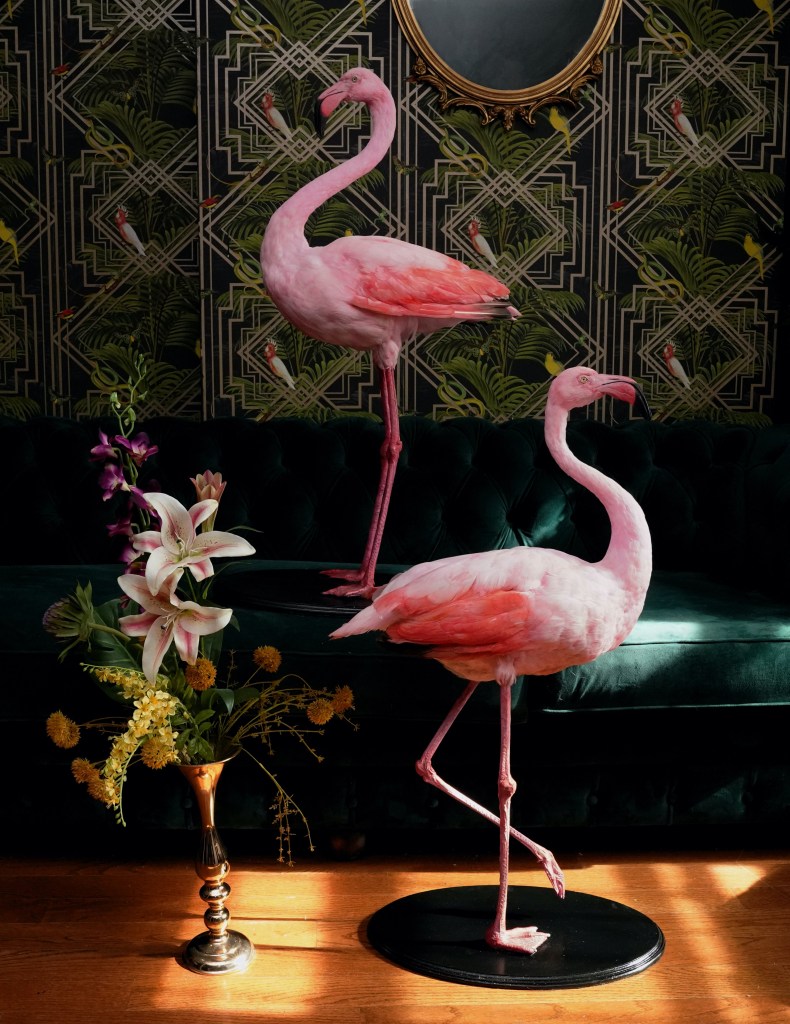
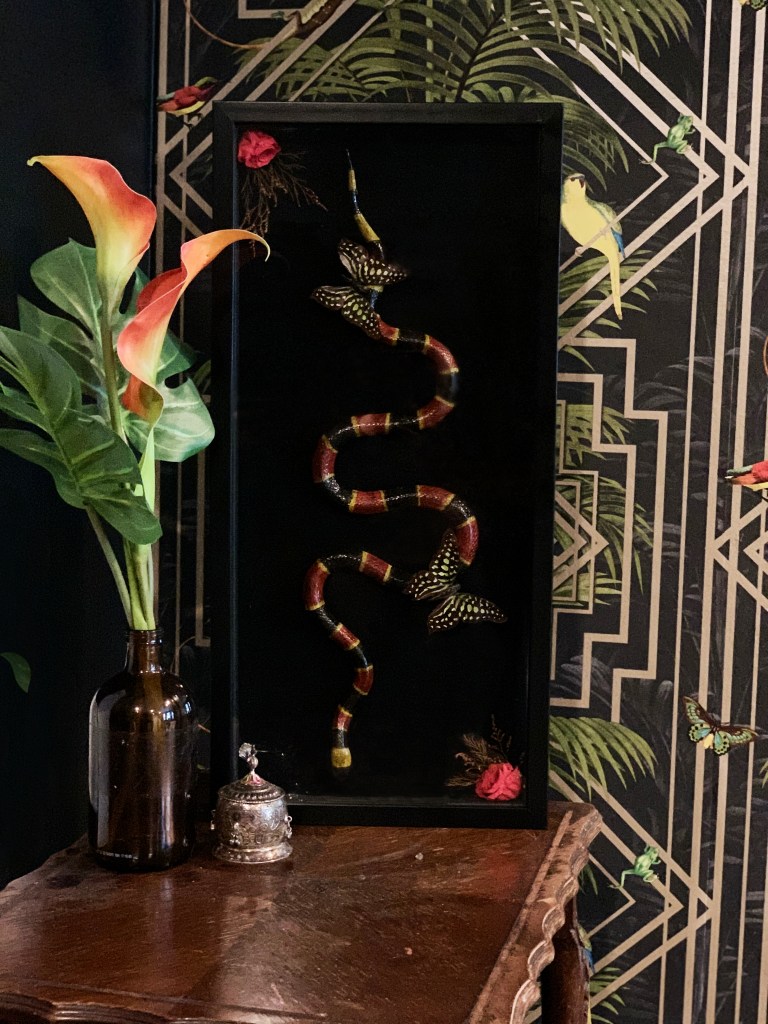
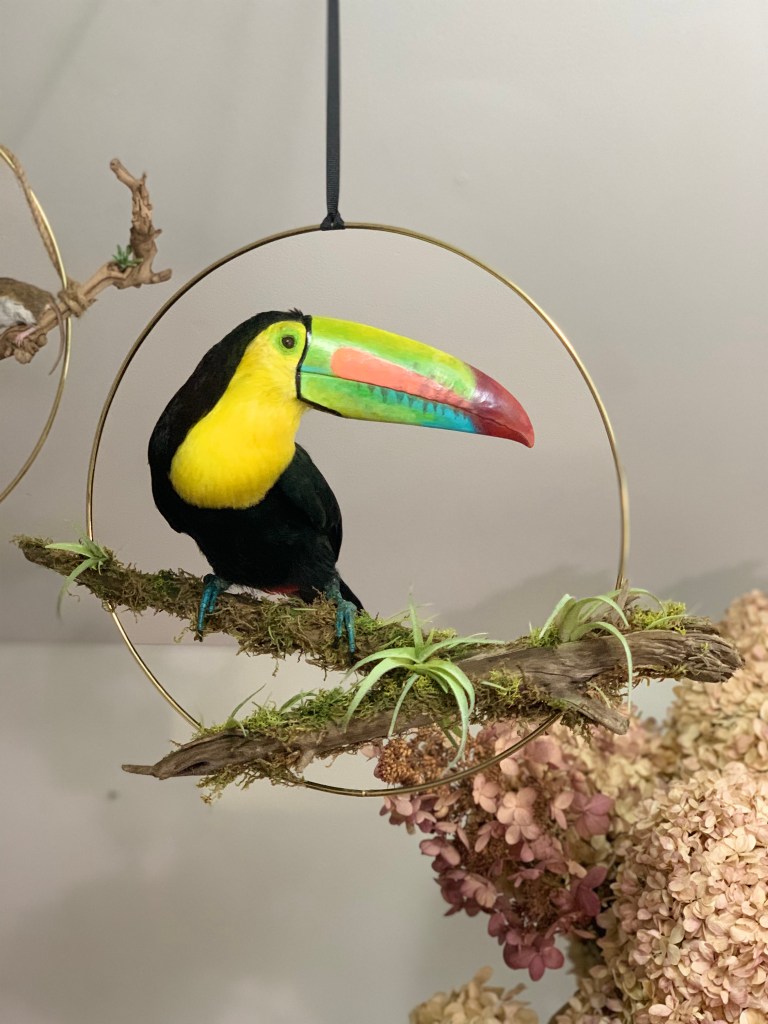
For the fourth and penultimate installation of this series, I had the incredible honour of speaking to Divya Anantharaman, an award winning, premier taxidermist based in New York City and her specialties include birds, small mammals and anatomic anomalies. Having studied sculpture and fashion design in college, her passion for natural history drew her towards taxidermy. When she is not working, Divya likes cooking, reading, bird watching, and collecting vintage fashion. She also enjoys drag and burlesque.

In this interview, she tells me about her inspiration(s), everything about the beauty of taxidermy and how science and art are two sides of the same coin.


How and when were you inspired to learn about and practice taxidermy?

The moment it dawned on me that I wanted to be a taxidermist was probably one of my first visits to the natural history museum. I was so fascinated by the beauty of animals, and the ability to get up close to them.

Divya Anantharaman, NYC’s premier taxidermist

I grew up and a city and didn’t have access to travel the world and see these majestic creatures in their natural habitat, but as soon as I walked through those museum doors, seeing the artfully preserved animals changed my life and made me passionate about conservation. I wanted to make that magic available to everyone! I only learned taxidermy later in life, first by collecting books and watching videos online and practicing on legally salvaged roadkill or donated specimens, then by going to taxidermy shows and competitions once I gained more confidence. I switched careers fully about 5-6 years ago.

On your website, it says you left the corporate fashion industry to pursue your love of natural history. What is it about natural history that fascinates you so much?

Natural history reminds me of my place in the world. Iโ€™m reminded daily that all the life forms that inhabit this planet are part of something far greater than an individual. As much as I love and enjoy fashion, much of the industry is about ones self, image, and ego-nature reminds me that all those things are temporary, and gives me far greater perspective on what is important in life, and the legacy I’d like to leave behind.

“…all the life forms that inhabit this planet are part of something far greater than an individual.”

Divya anantharaman

What is the most fulfilling aspect of your work? What would the most difficult part be?

The most fulfilling aspect of my work is being able to connect people and animals, to inspire them to play a role in conservation.

The most difficult part of my work aside from constantly learning and perfecting anatomy and technique, would be finding ways to innovate and diversify this field.

How does art and science combine in taxidermy? How does this amalgamation increase dialogue between science and art?

In many ways! Practically, a successful work of taxidermy needs to be based in accurate scientific understanding of the animal (anatomy, habitat, etc) and executed with proficient artistic technique (sculpting, painting, etc). Science and art have a relationship beyond the practical-they ground each other and give each other imagination, unlocking new potential in each other. There is a wonderful harmony when the hand of the artist delivers a scientific message. Art appeals to our emotions and instincts in a way that science alone cannot.

What scientific principle would you say is central to the art of taxidermy?

There are a few! Most important would be anatomy, understanding not just what and animal looks like, but why. And learning the nuances  of a specific creature that vary with age, sex, habitat, and other conditions. Also important would be chemistry when it comes to the tanning and preservation of hides, and stability or painting and sculpting materials.

What is your favourite animal to taxidermy, and why?

Birds! There is such a fascinating array of diversity in birds, and their ubiquity. Their ability to fly inspires awe from a tangible perspective as and evolutionary wonder, and from a more abstract perspective in that they carry rich symbolism, lore, even carrying our hopes and dreams.

Do you think Science and Art are two sides of the same coin? If yes, how so? And if not, why?

Yes! I do believe art and science are 2 sides of the same coin. They are both ways of observing and making sense of the world, many times with similar motivations. The difference I see most is the presence of the preparators hand-where science strives to be objective, art fully celebrates being subjective.  The unique hand of the person behind the artwork gives it a sense of emotion and imagination, which can reach people in a way that acknowledges their humanity. I am so excited by the unexplored potential of combining art and science! 

For more on Divya, visit her website or check her work out on Instagram!

In Conversation: Anusha Banerjee

Anusha Banerjee is an aspiring geologist and a budding digital artist from Kolkata, India. She obtained her bachelor’s degree in Geology from Calcutta University and then a master’s degree in Applied Geology from Presidency University, Kolkata. The “art-science-ness” of geology continually intrigues Anusha and in the future, she wants to be able to reach out to anyone interested in art and/or science, and make geology a tad bit more accessible. Anusha also loves to play the ukulele and the keyboard and sing, read random stories from history, browse r/etymology on Reddit, or explore her hometown, Kolkata.

In the third installment of the In Conversation series, Anusha and I talk about her love of geology and e(art)h science and the very prominent artistic element of the science of rocks.

When and how were you inspired to study geology? Could you elaborate on your experience studying geology?

This one is an interesting story. As a child, I loved the arts and sciences equally. In school, we were made to believe that they are both vastly different and can never become one. But over time, I began to find that they converged very often, and sometimes very evidently- like the colourful salts in chemistry lab, and fractals in mathematics. Back then, I was very interested in astrophysics and astronomy, and its least to mention that the images of space are enough to make anyone gasp in awe. So, I thought โ€œGreat! I am going to study astronomy.โ€ At such a time, I began to realise that Iโ€™m going to have to dedicate a lot of time and energy to math, which sounded very intimidating to me. I started having second thoughts about the subject. One of my seniors from school told me about geology. Even though I had heard of the subject before, I didnโ€™t know much about it. But, I was intrigued!

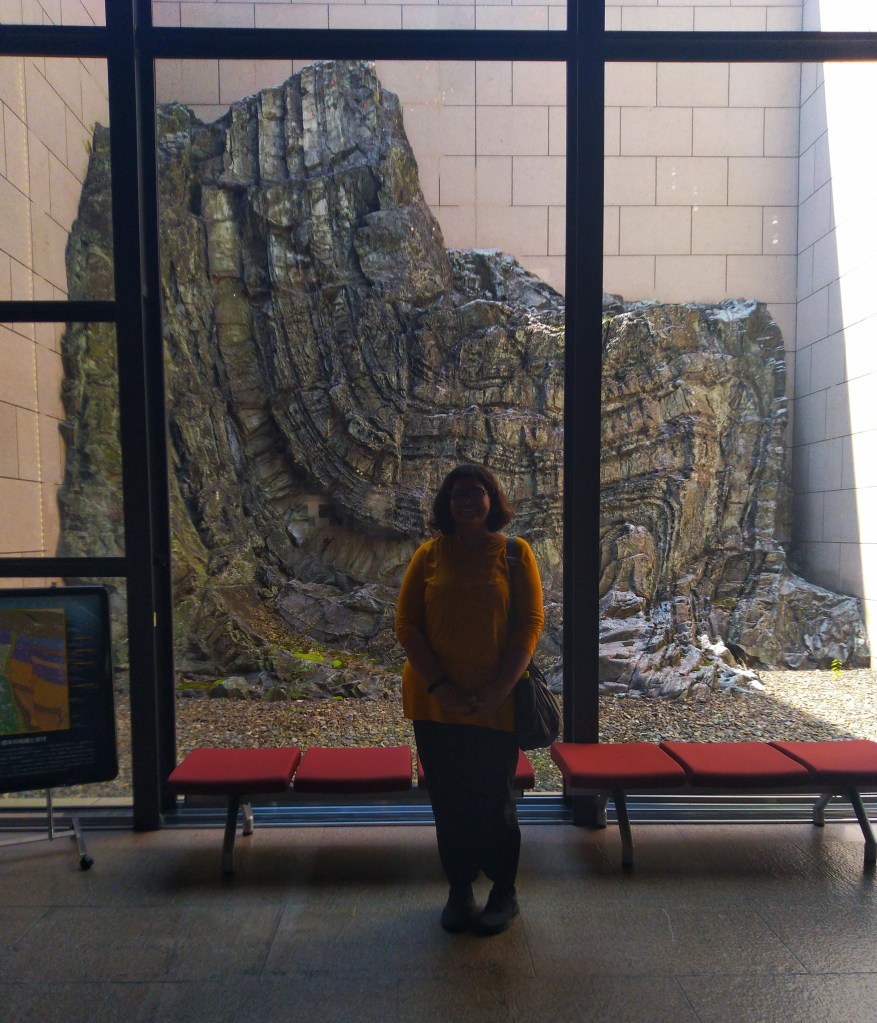
Anusha, in front of the replica of the Jurrasic fold, Geological Museum, Tsukuba, Japan.

It was fascinating- like being a forensic scientist of the Earth. The final blow came when I saw pictures of thin sections of rocks. To think that rocks could look likeโ€ฆthat just did it for me. Then onward, it was just one beautiful journey.

What is your fondest memory of your time as a geology student?

Thereโ€™s too many to start with, honestly. A lot of small moments make up my favourite memories as a geology student. The first time I held a real fossil in my hands (it was an ammonite), the first time I used a rock hammer to obtain a rock sample, the first time my classmates and I made a structural map of an area. Most of my fond memories go back to the field trips of five years, and practical classes- I canโ€™t mention one by not mentioning the other. So Iโ€™d like to share a different, yet fond memory. This is from August 2019, when we were in Tokyo, Japan for the 23rd India-Japan Student Conference (IJSC) organised by Nihongo Kaiwa Kyookai Society. On a day off, I travelled to Tsukuba, and visited the Geological Museum in AIST. This is the biggest and only museum of its type in Japan, and has always been on my bucket list. It was my first time in a foreign country and travelling on my own to a place I have always wanted to visit was an emotional moment for me. Thereโ€™s a replica of a fold from Jurrasic Age, in front of which I always wanted to take a picture of. And I did!

Anusha’s rock collection

In the television sitcom โ€œThe Big Bang Theoryโ€, Sheldon Cooper is famous (or infamous) for saying geology is not a real science. How would you refute him?

Oh, right. This one. I donโ€™t think itโ€™s advisable to go into an argument with Sheldon Cooper, but if I had to anyway, Iโ€™d like to remind him what โ€œscienceโ€ means- an endeavour to understand. Thereโ€™s no such thing as โ€œrealโ€ science, in my opinion. Something is either science, or it isnโ€™t- in which case, it might be pseudoscience. Itโ€™s least to say that geological phenomena exist- we wouldnโ€™t even be here if tectonism didnโ€™t operate! Geology is indeed interdisciplinary, but it is also a science in itself. I might have overused the word โ€œscienceโ€ too many times, but I hope it explains the point.

How would you say art and science combines in the field of geology? What do you think of this combination?

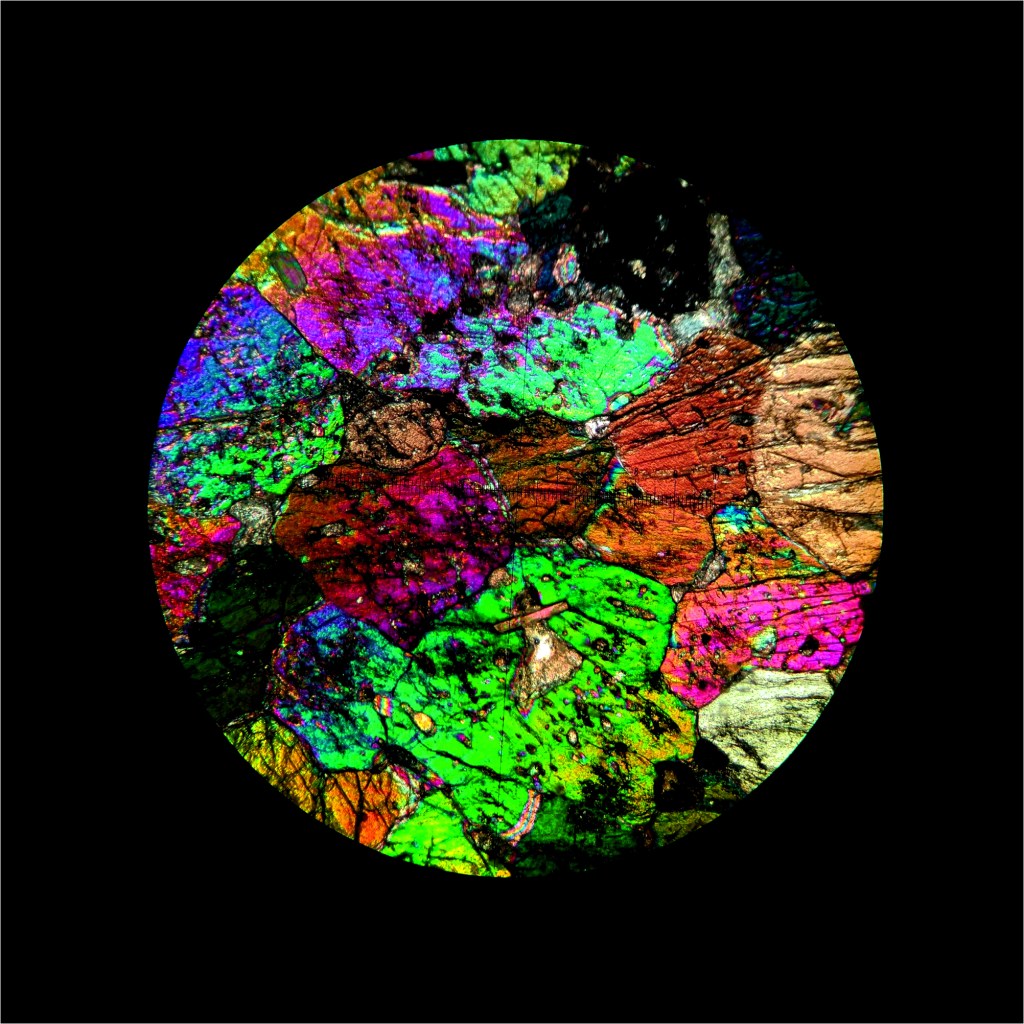
I like to call my subject e(art)h science, because thereโ€™s so much art in it! I can never imagine geology without all the visual art there is in it- from the thin sections, to the stratigraphy, from crystallography and mineral structures, to palaeontology (macro- and micro-). You can see fractals in real life when looking at the Digital Elevation Models of mountain ranges, or the sutures of an extinct ammonite fossil, or the Fibonacci spiral structural of the Nautilus. I donโ€™t have to mention how beautiful and exquisite the geodes and crystals look. Rock outcrops have a beauty of their own. However, thin sections are my favourite. Rocks are made of minerals, and minerals have different optical properties. What this essentially means, is that light interacts very differently with them. Fun fact! A rock is sliced to as thin as 0.035 mm to be able to study their mineral composition under a microscope.

Pyroxenite: Large crystals of pyroxene in Pyroxenite in XPL. Magnification: 50x, Photo By: Anusha Banerjee

(With jargon: Most minerals are anisotriopic- meaning they have different refractive indices along different directions- and in order to differentiate them, a regular transmitted-light microscope is usually not enough. For this, geologists use a special โ€œpolarisingโ€ microscope. First the light passes through a โ€œpolariserโ€, which allows light to vibrate only in one specific direction. An โ€œanalyserโ€, or second polariser changes the quality and direction of this light wave. With the help of a rotating stage, minerals are seen to have various โ€œinterferenceโ€ colours- which very simply are the wavelengths of light they intercept.)

(Without jargon: Most minerals have a complicated crystal structure and canโ€™t be differentiated using a regular microscope. Geologists use special โ€œpolarisingโ€ microscopes to identify the various minerals of a thin section. Under a polarising microscope, a special filter (called โ€œanalyserโ€) reveals the hidden colours of these minerals).

Itโ€™s truly magical.

Would you say the mundane world around you has changed since you began studying geology?

Entry into the world of geology is a one-way ticket. Once you are in love with the subject, you start seeing it everywhere. You start seeing it in the mineral grains of the “granite” tabletops of your kitchen- spoiler alert! These “granites” are not always granites – or the marble flooring of your house. Trips to the beach mean looking at the shape of ripples and understanding how the currents led to their formation. Travelling to the mountains mean understanding what rock type they might be made of and understanding the tectonism which led to their formation.

My gallery is often full of pictures of the rock slabs which make up an ancient temple complex, or polished slabs on Metro pillars. But most importantly, geology is more than just rocks, petroleum, or coal. Geology is a way of life. Once you start viewing how the Earth works and realise our place in it- you start to understand things on a deeper level, especially the greatest ongoing crisis at hand- climate change, and what it means for our species. In short: it’s not good news.

What form of artistic expression fits best in showcasing the beauty of geology?

Photography and painting! Weโ€™ve all become natural history illustrators (of rocks, fossils, and thin sections) in class some or the other time. Iโ€™ll let the pictures do the talking here. My favourite e(art)h science pages are @drrhcmadden (rock samples), @alexstrekeisen (rock microscopy) and @linajakaite (3D geologic artwork) on Instagram.

Finally, whatโ€™s your favourite rock? Why?

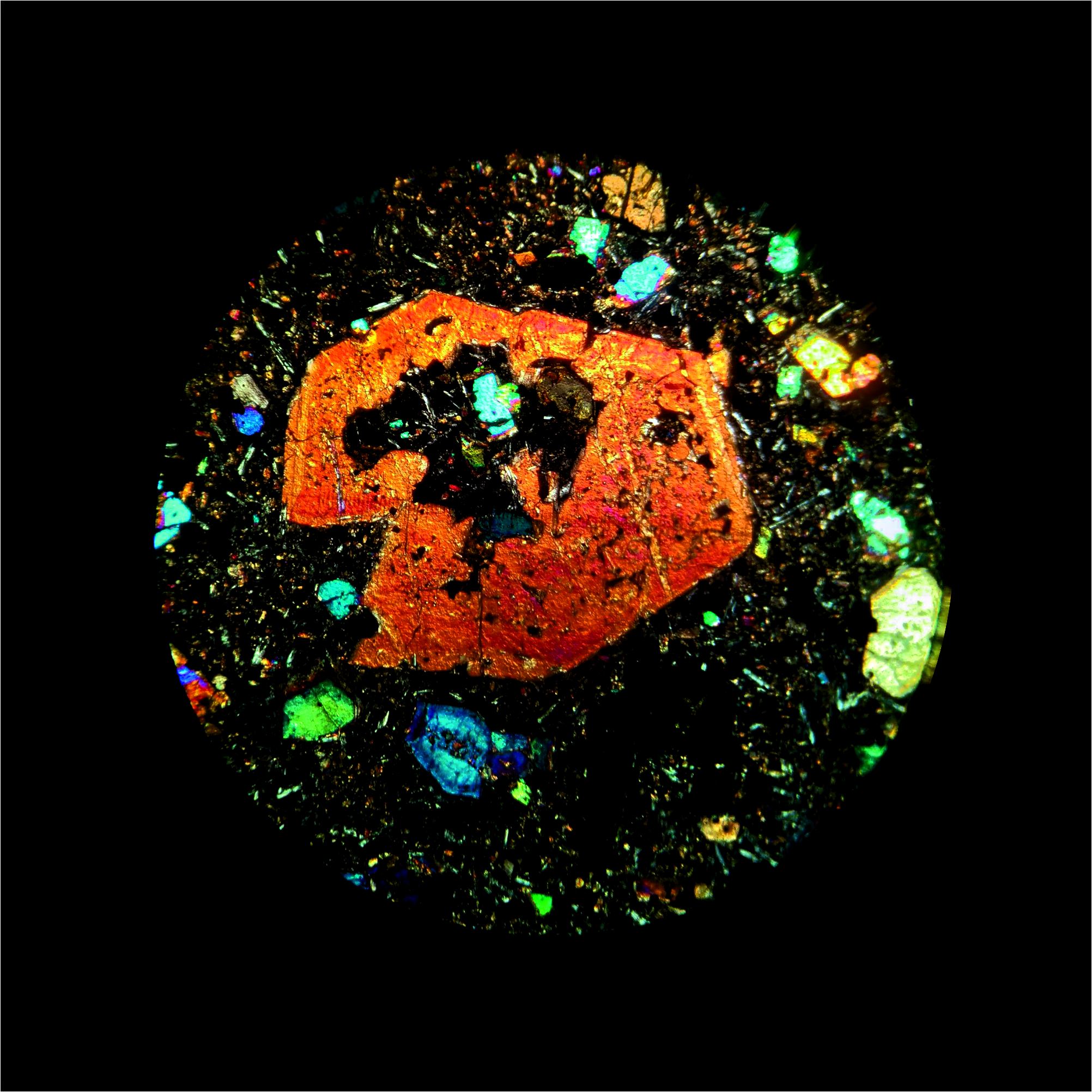
Thin section of Anusha’s favourite rock, Olivine Basalt: In XPL. Magnification: 100x. Photo by: Anusha Banerjee

I had to think about this for the longest time. There are quite a lot of interesting rocks out there, but I guess my favourite would be basalt. This rock is formed by the solidification of lava on the surface, and is abundant on the Earth, Mars and the Moon. At places, it forms a particularly interesting hexagonal-column-like structure- these are called columnar joints and I think theyโ€™re very cool! Another reason I love this rock is because even though it looks dull and uninteresting on the surface, the thin sections reveal their beautiful colours!

For more on Anusha, visit her Instagram account. And stay tuned for a secret project she is working on!

In Conversation: Sneha Bharadwaj

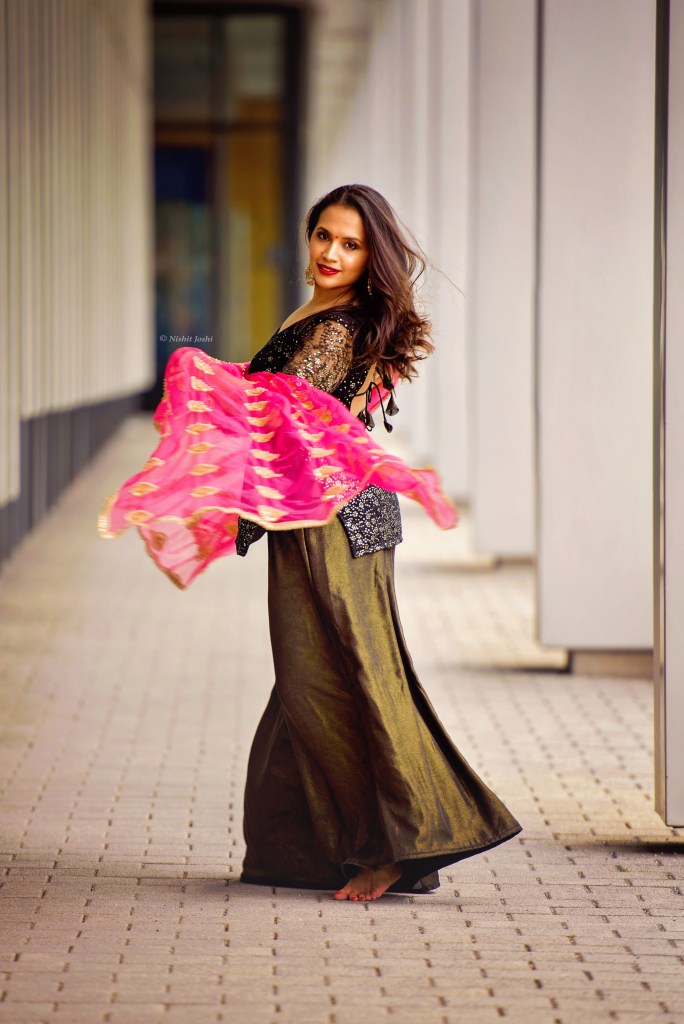
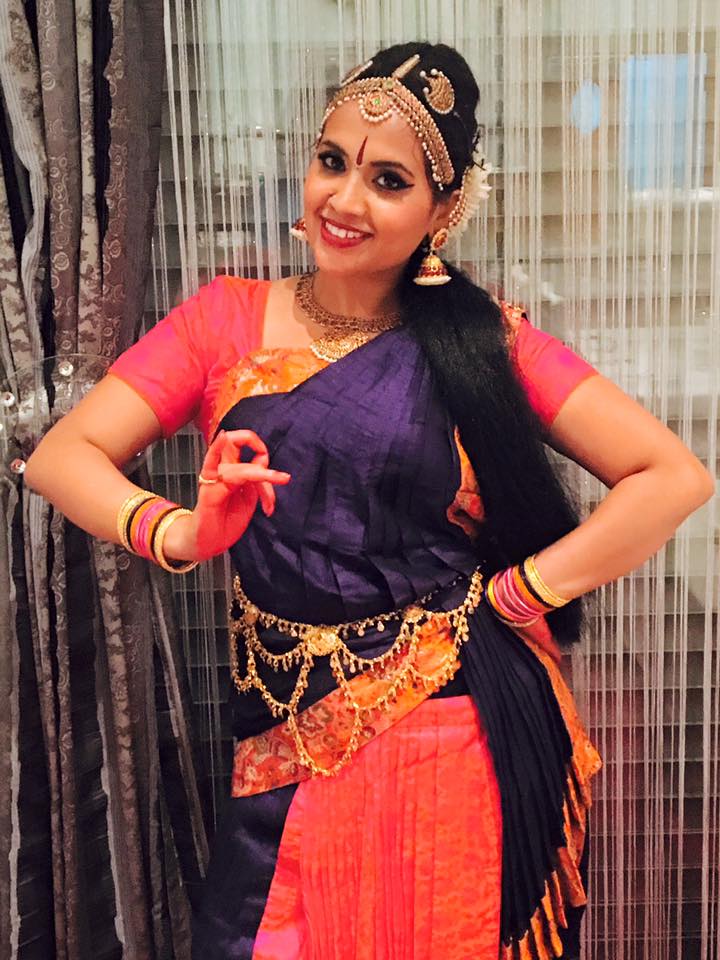
Sneha Bharadwaj is a professional Indian classical dancer and has, over many years, established a Bharatnatyam scene in Munich, Germany. She graduated from Bangalore University with a bachelors degree in choreography, and later, from Bharatidasan University with a master’s degree in fine art. A recipient of many prestigious awards, Sneha has performed at various dance festivals in and around India, Germany, USA, France, Switzerland, Poland and other countries. She is also trained in Indian Martial Arts and Yoga. She is the founder and artistic director of the Indian dance school & company in Munich, โ€˜Abhinaya Indischer Tanzโ€™ and ‘Abhinaya Tanz Kampani‘. By empowering through art, she hopes to continue celebrating South Asian art in Europe in all its glory.

In the second part of the In Conversation series, I spoke to Sneha about the art form she excels in, the highs and lows of it, and if the combination of science and dance is an arena that can be successfully explored.


How and when were you inspired to take up dancing as a hobby?

It was my mom`s dream to dance and she wanted me explore movementsโ€ฆfor as long as I remember we both use to swirl and twirl to music, and she saw me the happiest when music was on and I jumped to express. With a busy school schedule, dance became a part of me. I was 5 when I started my formal training in Indian Classical Dance Bharatanatyam, under Late Guru (teacher) H.K.Raj who nurtured me into a dancer that I am today.

Do you remember the moment when you decided to pursue it professionally?

The process to pursue Art as my profession was very organic. I PROUDLY took up Art in the universityโ€ฆbut the path, in the beginning, was scary. You see, socially, art is still not a valid profession because of the financial viability and no laid out career path, and so very early on I realized uncertainty is what you sign up for when you say you want to live a creative life.

Your question made me look back and I cannot pinpoint to a particular moment as when I decided to pursue it as my profession; art has been my constant companion, my happiness. 

What would you say is the most exciting part of your art? Is there a mundane/difficult aspect to it as well?  

Everything! The highs and the lows of creative process. Perhaps the most difficult part for me is the emotions. We artists work with our emotions, which are sometimes our own and sometimes the story or the particular character that we are working on and at some point, it does get exhausting to carry intellectual emotions and emotional empathy of a subject all through. Unfortunately (or fortunately) there is no particular login and log out in a creative process.

Whenever I experience feelings of discomfort in my life, I need to find an answer by transforming those feelings into my art. As much fun as I have in the studio, I take my role as an artist very seriously and I think being socially and politically aware of my surroundings is very, very important.

Choreographing is always like bringing new characters and stories to life and even parts of ourselves to stage. My storytelling arcs rely largely on research, community, and lived experience to form what I call a kind of constellation. And when the time comes to stop or to exhibit, I never really finish; all my works constantly grow in me, as the more you try to say, the more there is to tell. It is all about weaving a thought you have into a tapestry for others to see and be moved by.

If someone who isnโ€™t well versed in Indian Classical Dance asked you to explain your art form (Bharatanatyam) to them in 3 or 4 sentences, what would you say?

Bharatanatyam is one of the major tradition of performing arts in India. It originated in the temples of India. The classical dance form Bharatanatyam is a profound synthesis of aesthetics, philosophy, sculpture, movements, poetry and literature. The art form is a mirror for ethics, laws, and the functioning of the society of today and of the past. It gathers all these strands and sets them in motion.

As someone who has pursued art professionally for a large part of their life, have you tried exploring the scientific aspect of your work? If, that is, you believe there is a scientific aspect to dance?

We live in a world of motion, energy, space, and time. Certainly, there is physics in danceโ€ฆBharathanatyam and Classical Ballet is an orchestration of the pull of the earth and freedom of space. It is indeed interesting when an analysis of physics is added to dance but I havenโ€™t explored in depth. I hope to work on this path in the near future. 

What emotional and physical benefits does dance have on our body? Have you experienced these benefits within yourself?

I always approach my work at 3 levels:

On a physical level (Adibhuta), dancing is similar to that of other cardio activities — it works on all planes of the body, including lateral and rotational, which in turn conditions all muscles.

On an emotional level, (Adidaiva) it is an instrument to express, as it allows you to express every drop of emotion, to feel, and to unapologetically be yourself.

On a philosophical level, (Adhyatma), it is a journey inwards. By completely absorbing our attention for a long or short magical spell, it can relieve us temporarily from the dreadful burden of being who we are.

Sat-Chit-Ananda is the term I always try to see in my every practice and performance where,

Sat – To be present

Chit – One with the Art

Ananda โ€“ untainted bliss 

Do you believe we can use dance forms to communicate scientific concepts and increase accessibility to science?

Art is about connecting with peopleโ€™s emotions. Itโ€™s personal and at the same time, universal.

In art forms, we are telling stories and stories should have characters and characters should have emotions. As I have mentioned, art is not just an intellectual process but also an emotional process. So if you are able to characterize or add emotions to science then it can be performed but it won’t stand as an epic work.

Science, the law of nations, constitution or commerce, economics, etc, when highly anthropomorphized and personified, can be brought to art. Just with pure dance (termed as Nritta) one can depict many scientific concepts (gravity, the structure of atoms etc.) but it will be a visual representation. One can definitely communicate scientific theory through art, but they would not become entertainment unless you humanize them.

Science concerns itself purely with the material world (Adibuta), while art transcends one from the material world to beliefs and emotions (Adhidaiva) and graduates to the philosophical world (Adhyatma).

Of course, experiments and science can be communicated through art forms like dance, but one needs to balance it, as there is a huge difference between the intellectual and emotional sphere. As a choreographer, you have to be very careful: you must make sure the science is not incorrect and that the art form still makes an impact on the heart.

If you had the chance to work with a scientist(s) to produce a show that revolves around a scientific concept, which field of science would you choose and why?

I believe an artist’s role is almost that of an alchemist. If I had to choose a scientific field, it would be physics; collaborating with the ideas that encompass both dance and physics is definitely worth the effort. 

Learn more about Sneha here and also connect with her to witness more of her art!

In Conversation: Haseeb Ahmed

The overlap between science and art is extremely large. In more ways than one, science and art are two sides of the same coin. Apart from glaring similarities in their principles, art is perhaps one of the most organic ways of communicating science (in my humble opinion). Through a series of interviews with my friends, colleagues and mentors, called “In Conversation”, I aim to explore this amalgamation of science and art and highlight all the times science and art converge in our daily lives without us actively realising it.

In the first installment of this series, I’ve interviewed Haseeb Ahmed, who, alongside being a dear friend and a self-declared film critic, is a bourgeoning physicist and a photographer. We talked about his major, his scientific interests and photography. He broke down the science behind some of his photographs and we discussed the prevalence of physics in photography and finally, the importance of photography to mankind.


What inspired you to study physics? Was there a specific moment that sparked an interest in you or was more like a slow process?

There was never really a eureka moment. I always liked science as a kid and enjoyed reading encyclopaedias. When I was about 12 or 13 years old, I received this electronic Lego set and I built some basic robots out of those; that was an interesting experience. I joined university as an electrical and computer engineering major but after my first year and after having taken some physics courses, I changed my major to physics and here we are. So, you could say it was a slow process.

Could you describe, in one sentence, the most exciting aspect of what you studied?

I think itโ€™s very simple; everyone is curious to know how the universe and stuff around them works and that was also what was interesting for me.  

What about picking up photography as a hobby โ€“ how and when did that start?

I picked up photography when I was around 16. It was a free summer and I was looking for things to do or learn, and flipping through magazines and articles, great photographs caught my attention. I also came across the blog of a physicist turned photographer, Ming Thein and his consistency and style really inspired me. Over time, I got myself a small camera and started experimenting. Iโ€™ve always wanted to take part in something artistic and have some sort of creative output, and photography suited me best. I think I still have my first photograph somewhere around here.

As someone who has an eye for things/scenes/situations to photograph, could you recount a memory you have of something you looked at and immediately felt like you had to capture it?

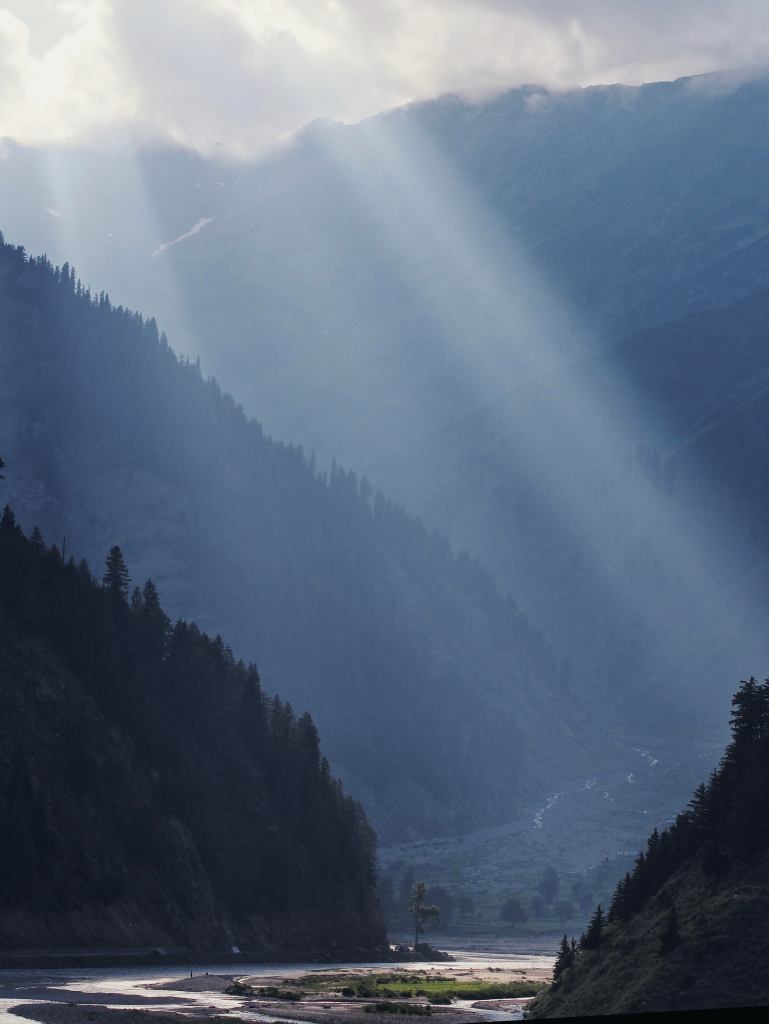
A few years ago, my family and I went on this vacation among the mountains, and at some point, while we were driving there, I witnessed a scene where a strong sun beam was shining down on a river, which was flowing through a very steep valley. I remember asking my dad to stop the car so I could take a picture!

Has there ever been a moment, in your career, where physics and photography have intertwined, to create something meaningful?

That was when I was experimenting with astrophotography and took time lapses in the middle the night. It kind of gave me the opportunity to witness the motion of the universeโ€ฆand I was also able to relate some things we had actually learned in class.

Why do you think photography is important to mankind?

Photography documents our lives. Weโ€™ve been recording our lives for the longest time and visual forms of this recording has always been important. I think anyone can take up photography and learn how to capture valuable moments. With a photograph, you can take a mundane subject and turn it into something worth remembering.


“Spectre”, Haseeb Ahmed, 2016

Tell me about this picture: the moment, the inspiration, all that.

The idea for the photograph started out when I was bored actually. It was pretty late into the night and I didnโ€™t have anywhere to go, so I set up my tripod to try something new.

Could you, as a physicist and a photographer, break down the science behind this picture? How did you capture the person at the computer in a blur, but the rest was all still?

Cameras basically operate by opening and closing a shutter and letting light fall onto a sensor(or film if youโ€™re old school). If youโ€™re trying to take a photograph of people in general everyday activities for example, you want to keep the shutter open for a few microseconds at most, since at those timescales, we seem to be frozen in place. Keep the shutter open for too long, and you get blurry photographs. Motion blur is usually seen as a nuisance but here by using a camera set up on a tripod and keeping the shutter open for a few seconds, Iโ€™m deliberately trying to add it to the photograph whilst keeping everything around me still.

Is there any artistic meaning behind this photo?

The motion amidst the static objects adds another element to the photo, a temporal moment. In a way, it conveys how fleeting any moment it.


“Through The Looking Glass”, Haseeb Ahmed, 2017

I have similar questions about this photo as well. Tell me about the moment you decided to capture whatever was happening around you and tell me about the science behind this picture.  

My mom was visiting me (in Bremen, Germany) and my host family and I were showing her around. And the thing about me is that when I go out, I often fall back from the group to take a few pictures or capture a moment that catches my eye. This is one of those pictures.

I like working with light, reflection and motion for my photographs and the many reflections   on these glass panes from the light falling on them made the scene other worldly, and added a feeling of ambiguity to it. There are all these figures you canโ€™t make out on the right while on the left, you can see the โ€˜real worldโ€™. All of these elements put together made the moment worth taking a picture of.

Is there any artistic meaning behind picture as well?

It felt like there was a portal to another dimension and it looked like people were moving through that portal. You canโ€™t see the people clearly; itโ€™s as if they are in some sort of a transition and that was what seemed artistic to me.

Take a look at some more of Haseeb’s photography here.